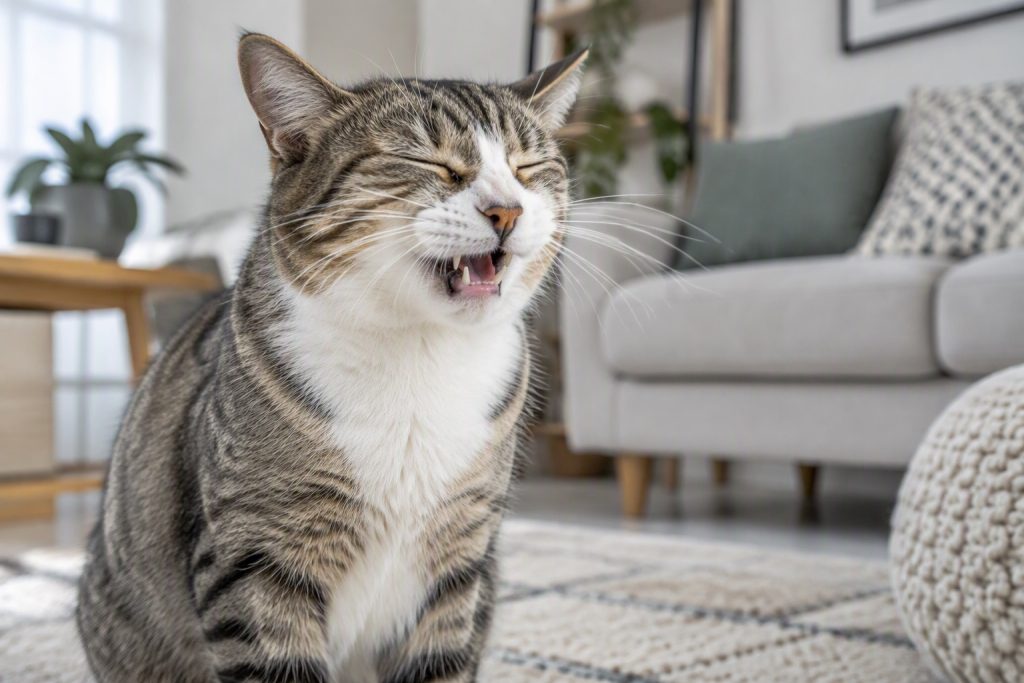
An occasional sneeze in a cat is usually harmless and often clears on its own. It becomes worth worrying about when sneezing is frequent, persistent, or joined by thick coloured discharge, watery eyes, fever, loss of appetite, or trouble breathing. Those combinations point to infection, allergies, or a foreign object rather than a passing tickle, and a cat who is unwell as well as sneezing should see a vet.
- A rare sneeze with no other signs is usually nothing.
- Thick yellow or green discharge needs a vet.
- Breathing trouble is an emergency.
- Persistent sneezing beyond a few days should be checked.
Is my cat’s sneezing a sign of something serious?
Most sneezing is a normal reflex that clears dust, pollen, or a stray hair from the nose. A single sneeze, or a brief burst after your cat has been sniffing something dusty, is not a cause for concern. What matters is the pattern and the company it keeps. Persistent sneezing over several days, sneezing that produces discharge, or sneezing alongside lethargy, poor appetite, or noisy breathing suggests something more than an irritant. A cat who sneezes and then paws at her nose, or who has swelling or bleeding, may have a foreign body such as a grass seed lodged in the nasal passage. Cats with flat faces, like Persians, often sneeze more because of their shorter airways. If your cat seems otherwise bright, eating, and playful, you can watch for a day or two. If she seems unwell at all, book a vet visit rather than waiting.

A breathable plastic grooming tool takes the undercoat first, which is where matting starts. Try it after a…
What causes sneezing in cats?
The causes fall into a few groups. Environmental irritants include dust, smoke, strong cleaning products, perfume, and pollen, and these usually cause dry sneezing with no discharge. Infections, both viral and bacterial, are the next common cause; upper respiratory infections often bring watery or thick discharge and a runny nose. Allergies to pollen, mould, or food can cause sneezing with itchy eyes and skin. Foreign bodies such as grass seeds, bits of string, or a piece of cat litter lodged in the nose cause sudden, violent sneezing, often one-sided. Dental disease and nasal polyps or tumours are less common but more serious causes, especially in older cats with one-sided discharge or nosebleeds. Rarely, a cat sneezes because of a congenital defect. Because the same symptom has so many possible origins, the details, how long it has lasted, whether it is one-sided, and what the discharge looks like, guide your vet towards the right answer.
When does sneezing become an emergency?
Sneezing alone rarely needs emergency care, but certain signs do. Seek urgent help if your cat is struggling to breathe, breathing with her mouth open, or making a whistling or rasping sound, because cats breathe through their noses and a blocked airway is serious. Bleeding from the nose that does not stop, a swollen or deformed nose, or a sudden collapse all warrant immediate attention. A kitten, a senior cat, or a cat with a long-term illness who stops eating and drinking because she cannot smell her food is also urgent, as cats can become dangerously dehydrated quickly. If your cat has been sneezing violently and one nostril is affected, a foreign body is possible and should be removed by a vet rather than at home. Never try to pull an object from your cat’s nose yourself, as you may push it further in or cause bleeding.
What is cat flu and how is it treated?
Cat flu is a common term for upper respiratory infections, most often caused by feline herpesvirus or feline calicivirus. It spreads easily between cats through sneezing, shared bowls, and close contact, which is why vaccination and hygiene matter. Signs include sneezing, runny nose, watery or sticky eyes, fever, and going off food. Many cases are mild and managed at home with gentle support, but the infection can be serious in kittens, seniors, and unwell cats. There is no cure that kills the virus outright, so treatment focuses on comfort: keeping the nose clear, encouraging eating with warm, smelly food, and treating secondary bacterial infection with antibiotics when your vet prescribes them. A blocked nose stops a cat smelling food, and a cat who will not eat needs veterinary support, sometimes with fluids. Our guide on cat eye discharge covers the eye signs that often accompany flu.
Nail scissors, bath brush, de-shedding glove and a drying towel — the full groom in one box. Cuts…
How can I help a sneezing cat at home?
Supportive care can make a real difference for a cat with mild sneezing. Keep her warm, quiet, and away from draughts, and gently wipe discharge from her nose and eyes with a clean, damp cloth, using a fresh piece for each eye to avoid spreading infection. Running a shower to create steam, or using a humidifier, can loosen a stuffy nose, and sitting with her in a steamy bathroom for a few minutes may help her breathe more easily. Offer warm, strongly scented food, since a cat who cannot smell will not eat, and make sure fresh water is always available. Wash food bowls, water bowls, and bedding often, and keep her separate from other cats while she is unwell. Do not give human cold remedies, decongestants, or painkillers, as many are toxic to cats. If she is not improving within a day or two, or is getting worse, see your vet.
How do I stop sneezing spreading to my other cats?
Because many causes of sneezing are infectious, isolating the affected cat is the first step. Keep her in a separate room with her own bowls, litter tray, and bedding, and wash your hands between handling her and your other cats. Do not share food or water bowls, and clean surfaces she has used with a pet-safe disinfectant. Where possible, avoid moving the same brush or toy between cats without washing it. Keep vaccinations up to date for all cats, since core vaccines reduce the severity of the most common respiratory viruses, and our article on the cat vaccination guide explains the schedule. New cats should be kept separate from residents for a settling period and checked by a vet first. If several cats in the household begin sneezing, speak to your vet, because a shared infection needs a coordinated plan rather than treating one cat at a time.
Frequently asked questions
- Can allergies cause sneezing in cats? Yes, pollen, dust, and mould can cause sneezing, often with itchy eyes and skin.
- My cat sneezes but seems fine. Should I worry? If she is eating, playing, and has no discharge, watch for a day or two and check with a vet if it persists.
- What does yellow or green snot mean? It often suggests infection, so it is worth a vet visit.
- Can cat litter cause sneezing? Dusty litter can irritate the nose; a low-dust litter may help.
- Is sneezing in kittens more serious? Yes, kittens have less reserve, so sneezing with poor appetite should be checked promptly.