

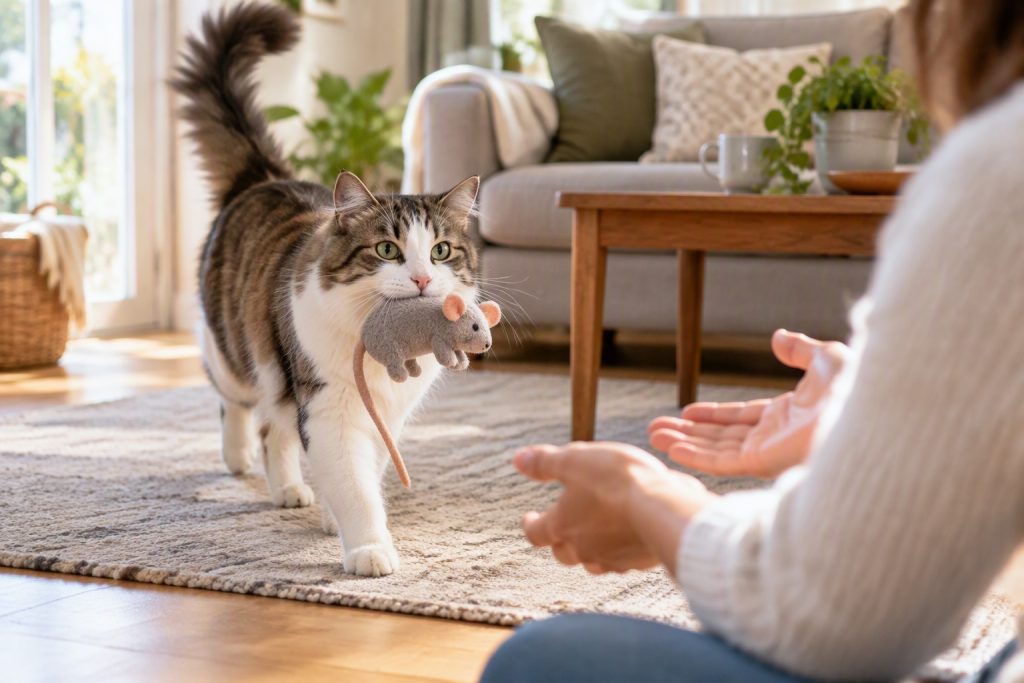
Cats bring dead animals home because hunting is instinctive, and carrying prey back is part of the natural sequence that follows a successful catch. Your cat is not trying to feed you or teach you to hunt in a human sense; she is acting on deep predatory wiring and, in many cases, bringing the prize to a safe place. It is normal behaviour, not a sign of aggression or dislike.
- Bringing prey home is natural hunting behaviour.
- It is usually not a gift or a lesson.
- Do not scold her for it.
- A bell and play reduce the behaviour.
Why does my cat bring me dead animals?
Hunting is one of the strongest instincts a cat has, and the sequence runs from stalking to catching, killing, and then carrying the prey to a safe spot to eat or store it. In a home, the safe spot may be your kitchen, hallway, or bedroom, so the prey ends up where you find it. Some cats carry prey to a quiet, familiar place because it feels secure, away from competitors. Others may be responding to the comfort of home as a place to consume or cache food. It is not evidence that your cat is underfed; even well-fed cats hunt, because the drive is separate from hunger. Nor is it a deliberate attempt to feed you, though the behaviour can look that way. Kittens learn hunting from their mother, and some cats bring prey to their owners because the owner is part of their social group. The behaviour is simply your cat doing what cats evolved to do.

A rotating ABS plastic and feather wand fits a cat that needs a target more than another thing…
Is my cat trying to feed me?
Probably not, at least not in the way people imagine. The popular idea that a cat brings prey to feed her owner or to teach them to hunt is mostly a human interpretation of a feline instinct. What is really happening is a fixed behavioural sequence: hunt, catch, and then transport the catch somewhere safe. Your home, and you, happen to be part of the environment where she feels secure. Some cats do bring prey to their owners specifically, which suggests the owner is part of their social circle and the cat is sharing the space rather than delivering a meal. Others simply leave the prey where they happen to be. There is no evidence that cats understand the nutritional needs of humans or that they are trying to supplement your diet. Treat it as a compliment of sorts, a sign she feels safe, but not as a deliberate act of provisioning. Our article on why cats bring gifts explores the same instinct.
Should I praise or scold my cat for bringing prey?
Neither is very useful, but scolding is the worse option. Punishing your cat for a natural behaviour will not stop the hunting instinct; it will only make her confused or anxious, and it may damage your bond or teach her to hide the evidence. Praising her is harmless but pointless, since she does not need encouragement to do something instinctive. The calm approach is to accept the behaviour without drama. If you must remove the prey, do so quietly and without fuss, and clean the area thoroughly. If she is bringing live animals indoors, you can intervene to reduce the harm by using a deterrent or by keeping her indoors at peak hunting times. Focus your energy on prevention rather than on reacting to each incident. Your cat is not being naughty, so there is nothing to correct in her behaviour. Managing the environment is far more effective than trying to train the instinct away.
How do I reduce the number of dead animals?
You can reduce the toll with a few practical measures. A collar with a bell gives prey a warning, and while it does not stop every hunt, it can cut success rates, so choose a breakaway collar for safety. Keeping your cat indoors at dawn and dusk, when prey is most active, limits opportunities, and staying in at night is also safer for her. Providing plenty of interactive play that lets her stalk and pounce on toys satisfies the hunting drive without real prey. Puzzle feeders and enrichment reduce boredom, which sometimes drives hunting. If she has access to a garden, removing dense ground cover and bird feeders near the house can reduce the number of visitors she can catch. Remember that hunting is normal, and a cat who hunts is not a bad cat. Our article on why a cat brings toys shows how the same instinct appears with playthings.

A plush toy that gives a cat a soft target to pounce on — a soft target takes…
Is it dangerous for my cat to hunt?
Hunting carries some risks for your cat, which is worth knowing. Prey such as rodents and birds can carry parasites and, rarely, diseases, and cats who hunt may need regular worming and flea treatment. Your vet can advise on a suitable parasite-prevention plan. Cats who hunt can also be injured by prey that fights back, or by hazards in the environment such as traffic, traps, and poisons. If your cat is outdoors and hunting, ensure her vaccinations are up to date and that she is identifiable with a microchip and a breakaway collar. Some cats also develop a habit of eating prey, which can cause stomach upset. There is also the welfare of the wildlife to consider, which is why reducing hunting is a good goal for both reasons. If your cat shows signs of illness after catching or eating prey, such as vomiting, lethargy, or diarrhoea, contact your vet rather than waiting.
How do I handle a dead animal safely?
Handle it with care and hygiene in mind. Wear gloves if you have them, and use a plastic bag or a shovel to lift the carcass rather than your bare hands, since prey can carry parasites and bacteria. Double-bag it and dispose of it according to local rules, usually in the general waste rather than the recycling or compost. Wash your hands thoroughly afterwards with soap and water, even if you wore gloves. If your cat has been in contact with the carcass, wipe down the area and clean any surfaces with a pet-safe disinfectant. Check your cat for cuts or bites, and watch for any signs of illness over the next few days. If she has eaten the prey, monitor her for stomach upset and mention it to your vet if she seems unwell. Never scold or punish your cat during the clean-up, as she will not connect it to the act.
Frequently asked questions
- Is it normal for cats to bring home dead animals? Yes, it is natural hunting behaviour and very common.
- Does my cat bring prey because she is hungry? No. Hunting is instinctive and occurs even in well-fed cats.
- Will a bell stop my cat hunting? It can reduce success rates but rarely stops the behaviour entirely.
- Should I punish my cat for bringing prey? No. Punishment does not stop instinct and can harm your bond.
- Can I get sick from my cat’s prey? There is a small risk; use gloves, bag the carcass, and wash your hands well.





