

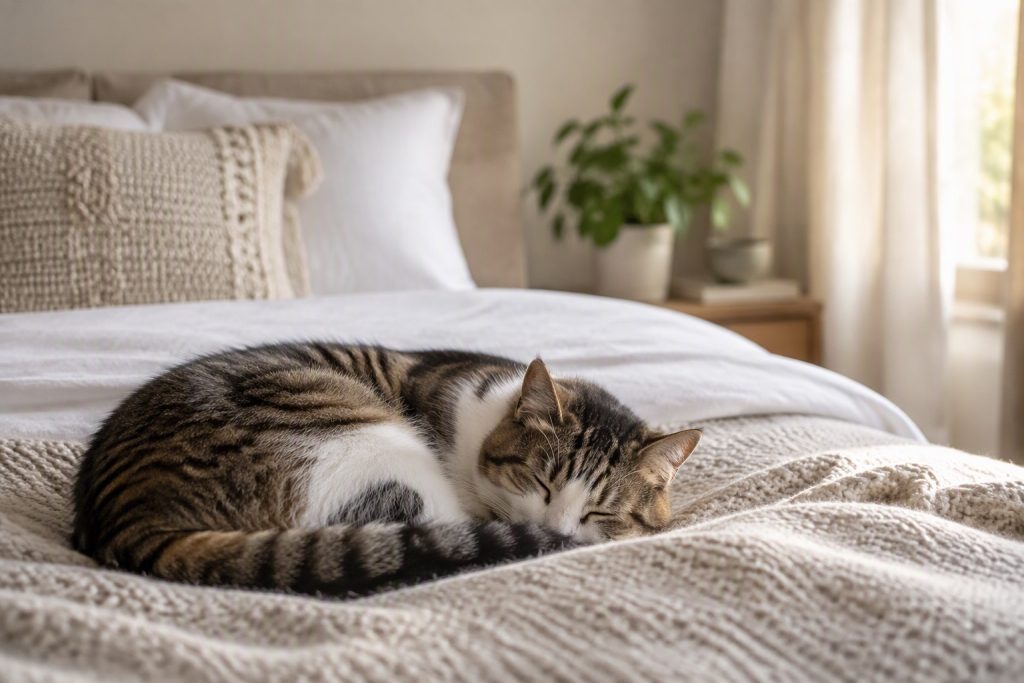
Cats sleep at the foot of the bed for a mix of comfort, temperature, and instinct. The foot is often cooler than the head, it lets a cat keep watch over the room and the doorway, and it gives her space to stretch or leave without disturbing you. It is not a sign of distance. For most cats, sleeping at your feet is a comfortable compromise between closeness and independence.
- The foot of the bed is cooler and roomier.
- It lets her watch the room and door.
- It is not a sign she likes you less.
- Position changes with weather and mood.
Why does my cat sleep at the foot of the bed?
Several factors push a cat towards the foot of the bed. Temperature is a big one: your head and upper body give off more heat, and on a warm night a cat will seek the cooler end, while on a cold night she may move closer. Space matters too, since the foot usually offers more room to stretch out, roll, and change position without touching you. Instinct plays a part as well. Cats like to rest where they can monitor their surroundings, and the foot of the bed often gives a clear view of the door and the room, so she can relax while still feeling in control. Some cats simply prefer not to be disturbed, and the foot keeps a little distance from your movements. It can also be about access: the foot is easier to reach and easier to leave. Our article on why a cat sleeps on your head shows the opposite preference.

Cervical pillow, plush hammock, floor mat and paw cushion — four places to nap. Gives a cat a…
Does sleeping position mean anything about how my cat feels?
Position is a useful clue, though it is not a mood ring. A cat who sleeps at the foot of the bed but stays relaxed, with a loose body and soft breathing, is simply comfortable. Curling tightly can mean she is cold or conserving heat, while sprawling with limbs out suggests she feels safe and warm. Sleeping at the foot and facing the door may indicate she is keeping watch, which is normal for a cat who wants to feel secure. If she suddenly changes position, that can reflect a temperature change, a new routine, or a physical discomfort. A cat who used to sleep next to you and now sleeps alone, especially if she seems stiff or avoids being touched, may be in pain and worth a vet check. Read the position alongside her overall behaviour rather than in isolation. Relaxed body language is the best sign that all is well.
Is it bad if my cat sleeps at my feet and not near my head?
No, it is not a problem, and it does not mean your cat is distant or unhappy. Cats choose sleeping spots based on comfort, temperature, and security, not on a ranking of affection. Many cats who adore their owners still sleep at the foot of the bed, and plenty of cats sleep on a chair across the room while remaining deeply bonded. The idea that a cat at your feet is less attached is a myth. What matters is the quality of her waking interactions: does she seek you out, greet you, play, and relax in your company? If she does, her sleeping position is just a preference. Some cats move closer in winter and drift away in summer, following warmth and coolness. If your cat suddenly stops sleeping on the bed entirely and also seems withdrawn or unwell, that change is worth noticing, but the position alone is nothing to worry about.
How do I make the foot of the bed comfortable for her?
If your cat has chosen the foot of the bed, you can make it an even better spot. Add a soft, washable blanket or a small pet bed at the foot, so she has a defined place that feels like hers, and place a familiar-smelling item there to encourage use. Keep it free of clutter and heavy covers she might overheat under, and make sure she has a route on and off the bed that does not require a big jump, especially for older cats. A low step or stool helps a senior cat reach the bed safely. If the foot of the bed gets draughty, a blanket helps; if it gets hot, a cooling mat can make it more appealing in summer. Avoid trapping her under heavy bedding. A dedicated bed at the foot, or a covered bed nearby, gives her the enclosed comfort many cats like. Our article on whether cats need beds covers how to choose one.

A thickened cloth bed is stepped into rather than climbed over. Try it near the window first, then…
Can I encourage my cat to sleep closer?
You can gently encourage it, but you cannot force it, and trying too hard usually backfires. Start by making the area near your head appealing: a soft blanket or a small bed on the pillow side, kept clean and free of strong smells, and let her discover it herself. Offering a treat or a brief, calm petting session there, especially before sleep, can build a positive association. Warmth draws cats in, so on a cool night she may naturally move closer if you make the spot cosy. Respect her choice if she prefers the foot, though. Picking her up and moving her can make the spot feel unsafe and push her away. Some cats simply never sleep near a person’s head, and that is normal. The bond is not measured by proximity at night. If she seems to avoid the bed entirely, check whether the mattress, bedding, or your movement is disturbing her, or whether pain is a factor.
When should I worry about changes in sleeping position?
A consistent preference for the foot of the bed is nothing to worry about. A sudden change in sleeping habits is more telling. See your vet if your cat, who normally sleeps with you, begins sleeping alone, hiding, or avoiding the bed altogether, especially if she also eats less, seems stiff, or is irritable when touched. Increased sleeping, restlessness at night, or difficulty settling can signal pain, illness, or, in older cats, cognitive changes. A cat who stops jumping onto the bed may be struggling with arthritis or another mobility problem, and that is worth investigating rather than accepting as normal ageing. If her sleeping position changes because she is seeking cooler or warmer spots constantly, or if she seems uncomfortable, ask your vet. Health topics that persist are best checked early, since cats hide discomfort well and subtle changes are often the first sign.
Frequently asked questions
- Why does my cat sleep at my feet and not by my head? The foot is cooler, roomier, and gives a clear view, not a sign of distance.
- Does my cat love me if she sleeps at my feet? Yes. Sleeping on your bed at all shows she feels safe with you nearby.
- Why did my cat suddenly move to the foot of the bed? Often temperature or a new routine, but a sudden change with other signs can mean discomfort.
- Should I move my cat closer at night? No, let her choose; moving her can make the spot feel unsafe.
- Why does my cat sleep at my feet in summer? She is likely seeking the cooler end of the bed.



