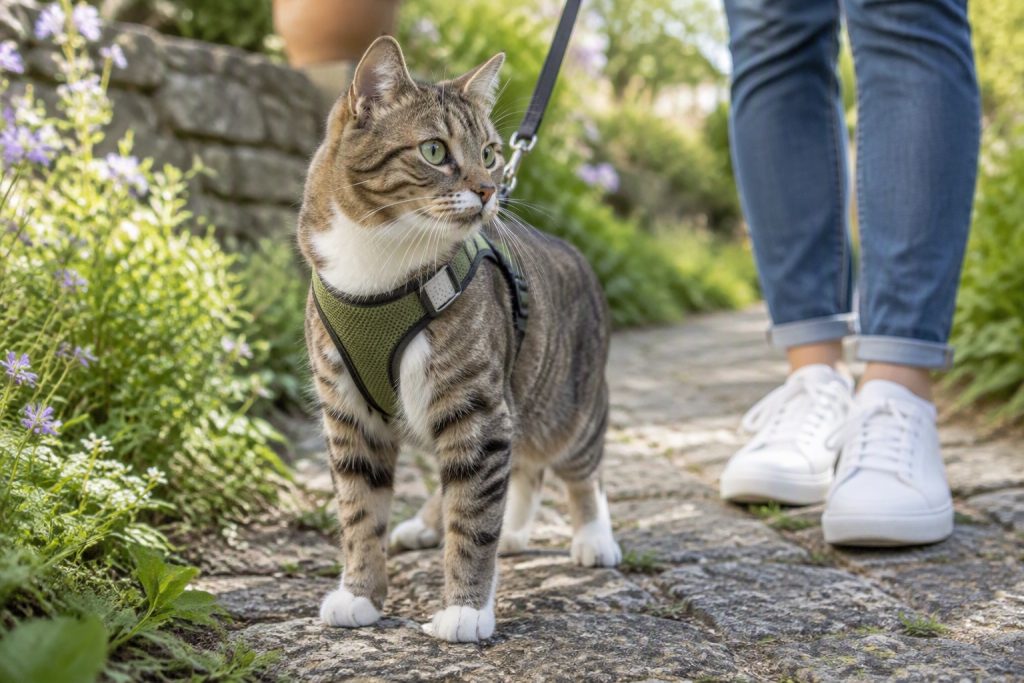
The best cat harness for walking is an H-style or vest-style harness that fits snugly but allows full shoulder movement, has several adjustment points, and cannot be backed out of. A harness with a secure buckle and a leash attachment on the back suits most cats. Fit and gradual training matter far more than the brand, so measure your cat carefully and let her wear the harness indoors before you ever step outside together.
- Choose an H-style or vest harness with adjusters.
- It must be snug but allow full shoulder movement.
- Check she cannot slip out by backing up.
- Train indoors first, then step outside slowly.
What is the best harness for walking a cat?
Two designs dominate, and both work well when fitted correctly. The H-style harness has straps that sit across the chest and behind the front legs, connected along the back, and it is lightweight and cool, which many cats prefer. The vest-style harness wraps more of the body, distributing pressure over a wider area, which suits cats who pull or who seem uncomfortable in a thin harness. Whichever you choose, look for multiple adjustment points, at the neck, chest, and girth, so you can achieve a close fit on an animal whose body is far more flexible than a dog’s. A secure buckle that will not pop open under pressure is essential, and a leash attachment on the back, rather than the chest, is safer for cats because it discourages the forward lunge that can slip a harness off. Breathable, washable material keeps her comfortable, and reflective stitching helps in low light. Our guide to harness training in seven days walks through the whole process.
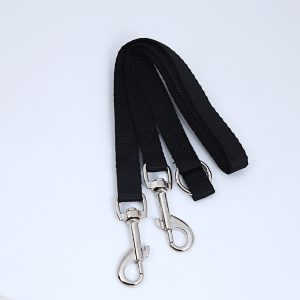
Black double-ended leash with two clips. Made from nylon. Supplied in blue, black, red, purple, green and pink.…
Should I use a harness or a collar for walks?
For walking, a harness is far safer than a collar. A cat’s neck is delicate, and any pull on a collar can injure the throat or, worse, allow the cat to slip free and bolt. A harness spreads the load across the chest and body, which is comfortable and secure, and it is much harder for a cat to escape. Collars still have their place, but they should be breakaway collars that open under pressure, so a cat who snags her collar on a branch or fence can free herself rather than choke. That safety feature matters for any cat who goes outdoors or wears identification. The best setup for a cat who walks on a leash is a well-fitted harness plus a breakaway collar carrying her ID tag, so she is secure on the leash and identifiable if she ever gets loose. Our article on why breakaway collars matter explains the risk of ordinary collars.
How do I measure and fit a cat harness?
Measure your cat before you buy, using a soft tape. Take her chest girth, around the widest part of the ribcage just behind the front legs, and her neck measurement, at the base of the neck rather than up by the ears. Compare these to the harness’s size chart and, when in doubt, size up, because a harness that is too small will pinch and one with room to adjust can be tightened. When it arrives, fit it with two fingers’ worth of space under each strap, so it is snug but not tight. Check the fit by watching her move: the harness should not slide sideways or bunch up when she walks or jumps. Then test the escape factor by gently pulling backward as if she were backing away, and see whether the harness holds. If she can slip a leg out, tighten the chest strap and try again. A harness that is not secure is not safe, no matter how good it looks.
How do I stop my cat slipping out of a harness?
Escaping is the most common harness problem, and it usually comes down to fit and style. Cats are experts at the backward wiggle, so a loose harness gives them room to pull a leg out and back away. Tighten the straps so the harness hugs the body, with only two fingers of slack, and check the fit each time you put it on, since it can loosen as she moves. If she still slips out, switch to a vest-style harness that covers more of the body, or add a second attachment point if the harness offers one. Some cats are simply determined escape artists, and for them, an H-style harness with a snug chest strap, worn with a breakaway collar attached to the leash as a backup, is the safest option. Never walk a cat in a harness that she can back out of, and never rely on the harness alone if she is frightened, because a scared cat can wriggle free in seconds.
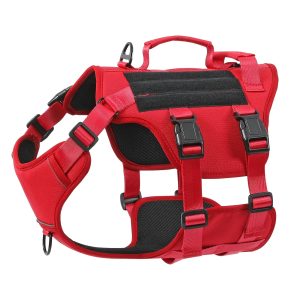
A fabric and Oxford cloth harness stays close enough that a cat cannot back out of it. Take…
How do I train my cat to walk on a harness?
Training is gradual and positive, and it starts indoors. Leave the harness out with treats nearby so it becomes familiar, then put it on for a few seconds, reward her, and take it off. Build up to wearing it for a few minutes around the house, then add the leash and let her drag it under supervision. Once she is relaxed indoors, open a door to a quiet, enclosed outdoor space and let her decide whether to step out, following her rather than leading. Never pull her along, because a cat who feels dragged will panic and may refuse the harness for good. Keep early walks short, in a quiet spot, and let her stop and sniff as much as she likes. Some cats take to it in days and others need weeks, and some never enjoy it, which is fine. The point is her comfort, not the walk itself. A gentle, gradual schedule is what makes it work.
Is walking a cat on a harness safe?
Walking on a harness is far safer than letting a cat roam free, because it keeps her away from traffic, other animals, and hazards while still giving her outdoor enrichment. That said, it is not risk-free. Choose quiet locations away from busy roads and dogs, and keep the leash short so she cannot dart into danger. Watch for hazards on the ground, such as broken glass or discarded food, and avoid areas treated with pesticides or where other cats may have marked, since those can cause stress or disease. Make sure her vaccinations, flea and worm treatments, and identification are up to date, because she may meet parasites or other animals. In hot weather, avoid hot pavement that can burn her paws, and never leave her tied up alone, since a tethered cat can panic and injure herself. With sensible precautions, harness walking is a safe and rewarding way to give an indoor cat supervised fresh air.
Frequently asked questions
- Can all cats be trained to walk on a harness? Many can, with patience, but some never take to it. Let your cat set the pace.
- Should I use a leash on a collar instead? No. A harness is safer, because a collar can injure the neck or let her slip free.
- How tight should a cat harness be? Snug, with about two fingers of space under each strap, so she cannot back out of it.
- How long does harness training take? Some cats adapt in a few days, others need several weeks of short, positive sessions.
- Is it safe to walk a cat outdoors? Yes, in quiet areas, with up-to-date vaccinations and parasite treatment, and a short leash.