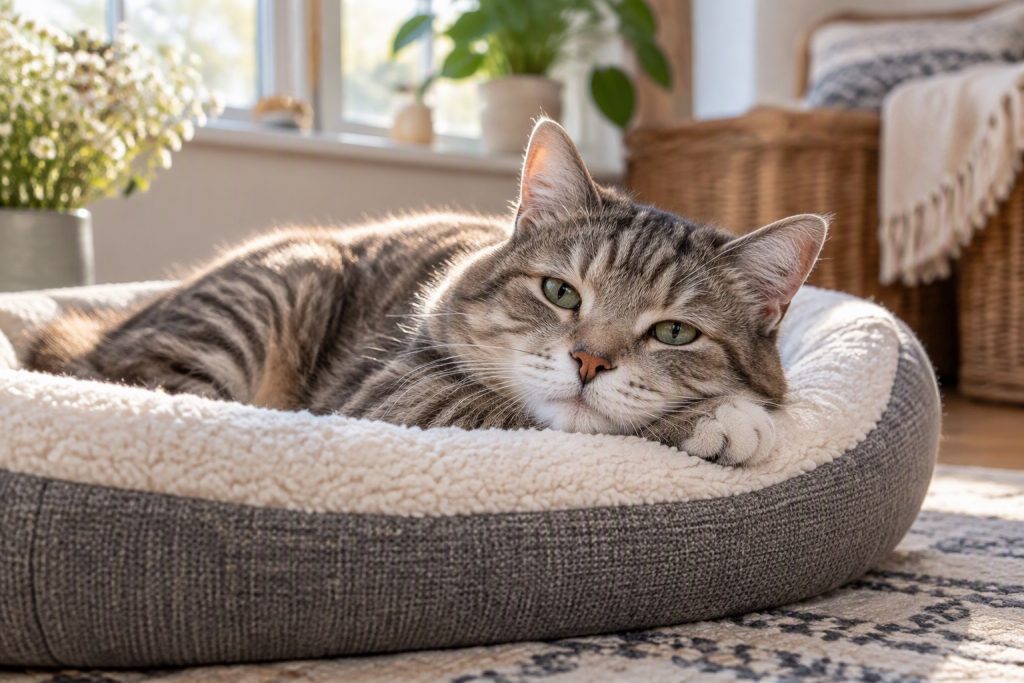
A cat is usually considered senior from around 11 years old, and caring for one means more frequent vet checks, close attention to weight and hydration, softer and warmer bedding, and a litter box that is easy to reach. Small adjustments to the home keep an older cat comfortable and independent for longer. Watch for changes in appetite, grooming, and mobility, and treat them as reasons to see a vet early rather than signs of ordinary ageing.
- Book vet check-ups twice a year from around 11.
- Watch weight, hydration, and appetite closely.
- Offer soft, warm, easy-to-reach beds.
- Keep litter boxes low-sided and accessible.
When is a cat considered senior?
Cats generally enter their senior years around 11, though large cats may age a little faster and small ones a little slower. From 11 to 14, a cat is often called senior, and from 15 onward, geriatric. Ageing in cats is gradual and easy to overlook, because cats are experts at hiding change. A senior cat may sleep more, move a little stiffly, groom less thoroughly, and become more set in her routines. None of that is necessarily a disease, but it does mean her needs shift. The important thing to understand is that many changes people dismiss as “just old age” are actually treatable conditions, such as arthritis, dental disease, kidney problems, or thyroid issues. Because cats mask discomfort so well, the burden falls on you to notice the small shifts and act on them. Regular check-ups and a watchful eye make the biggest difference to how well a senior cat ages.

A thickened cloth bed is stepped into rather than climbed over. Try it near the window first, then…
How often should a senior cat see the vet?
From around 11 years old, twice-yearly vet visits are the standard recommendation, rather than the annual check-up that suits younger cats. Cats age faster than people, so six months in a cat’s life is roughly equivalent to two to three human years, which means a lot can change between yearly visits. A routine senior check often includes a physical examination, weight and body condition scoring, a dental check, and blood and urine tests to screen for kidney disease, thyroid problems, diabetes, and other conditions common in older cats. Catching these early matters enormously, because many can be managed for years with diet, medication, or simple changes if they are found before symptoms become severe. Between visits, weigh your cat monthly and note any changes in appetite, drinking, litter box habits, or behaviour, then bring that information with you. Your vet can only act on what you report, so your observations are genuinely valuable.
How do I keep a senior cat comfortable at home?
Small, thoughtful changes make a senior cat’s daily life much easier. Provide warm, soft, well-padded beds in quiet spots she already uses, and consider one with low sides so she can step in without jumping. If she has trouble reaching her favourite high perch, add a ramp or a set of steps rather than removing the perch, because cats value their routines. Keep food and water within easy reach, and raise the bowls slightly if she is stiff, so she does not have to stoop. Swap deep litter boxes for low-sided ones, and make sure at least one box is on the same floor as her main living area, since stairs become hard work. Warmth helps arthritic joints, so leave a heated bed or a sunny spot available. Avoid moving furniture around, as senior cats rely on familiar layouts and can become disoriented by change. Our guide to the best bed for an older cat covers supportive options.
What health problems are common in older cats?
Several conditions become far more common with age, and knowing them helps you spot the signs. Kidney disease is very common in senior cats and shows up as increased drinking and urination, weight loss, and reduced appetite. Hyperthyroidism causes weight loss despite a good or increased appetite, along with restlessness and sometimes vomiting. Diabetes leads to increased thirst and urination, weight loss, and lethargy. Arthritis is extremely common but under-diagnosed, showing as stiffness, reluctance to jump, reduced grooming, and irritability. Dental disease is also frequent and painful. Cancer, heart disease, and cognitive decline become more likely too. Many of these conditions share early signs, which is exactly why regular blood and urine tests matter. If you notice weight loss, appetite changes, increased thirst, or reduced activity, do not assume it is simply age. Book a vet visit, and bring your weight log, because early diagnosis makes a real difference to how long and how comfortably a senior cat can live.

Cervical pillow, plush hammock, floor mat and paw cushion — four places to nap. Gives a cat a…
How do I feed a senior cat?
Senior cats have different nutritional needs, and their appetite can be fragile. Many older cats benefit from a highly digestible diet with high-quality protein to maintain muscle, and from wet food, which supports hydration and is easier to eat for a cat with dental problems. Some cats need a prescription diet if they have kidney disease, diabetes, or another diagnosed condition, so follow your vet’s advice rather than guessing. Warm the food slightly to make it more aromatic, since older cats often have a reduced sense of smell and may lose interest in food that seems bland. Offer smaller, more frequent meals, and keep food and water in easy-to-reach, quiet spots. Watch her weight closely, because weight loss in a senior cat is never normal, and weigh her monthly as described in our guide to checking your cat’s weight at home. If she stops eating for more than a day, contact your vet, because cats who do not eat can become seriously ill quickly.
How do I know when a senior cat’s quality of life is slipping?
Quality of life is about the things a cat still enjoys, not just whether she is alive. Look at whether she still eats, grooms, seeks affection, moves around, and shows interest in her surroundings. Signs that things are changing include hiding more, withdrawing from contact, losing interest in food, struggling to move, and seeming uncomfortable despite treatment. Track good days and bad days over time, and note whether the bad ones are becoming more frequent. This is not a decision you have to make alone. Talk to your vet about what treatments are available, what her condition means for her comfort, and what to expect. For many conditions, there is more that can be done than owners realise, and a good conversation often restores both the cat’s comfort and your confidence. If treatment can no longer keep her comfortable, your vet can help you think through the kindest choice, without pressure.
Frequently asked questions
- At what age is a cat senior? Around 11 years old for most cats, with 15 and over often called geriatric.
- Why is my senior cat losing weight? Weight loss is never just age. It can signal kidney, thyroid, or dental problems, so see your vet.
- Do senior cats sleep more? Yes, they often sleep more and move less, but a sudden change in activity is worth checking.
- Should I switch my senior cat to senior food? Only with veterinary advice, since some older cats need specific diets for their condition.
- How can I help an arthritic older cat? Add soft bedding, ramps, low-sided litter boxes, warmth, and ask your vet about pain relief.