

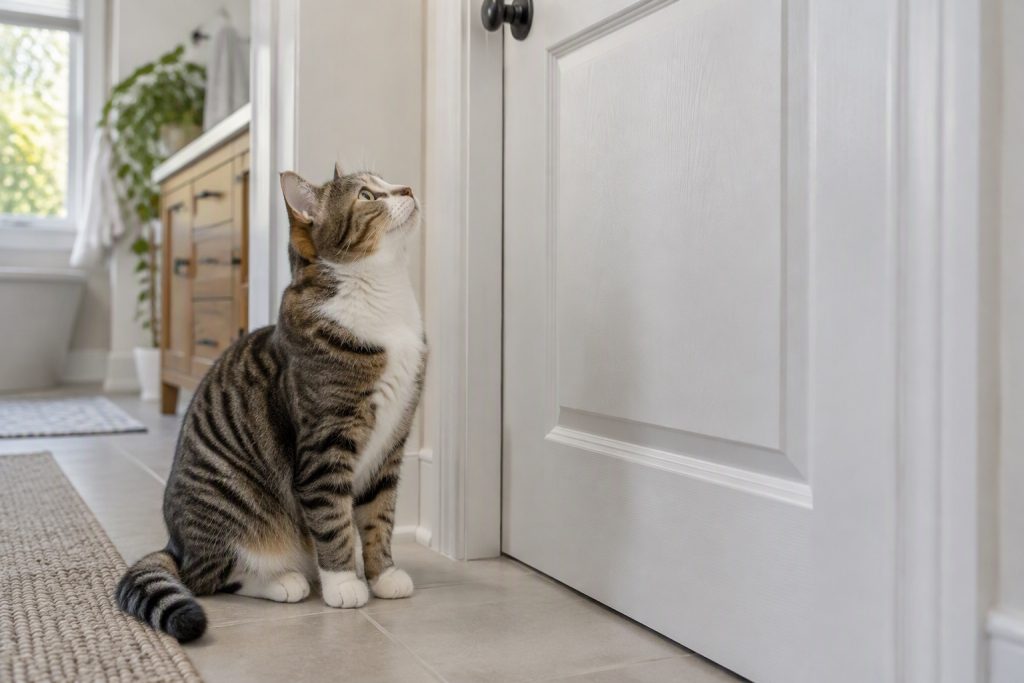
Cats follow their owners to the bathroom because you are a central part of their social world and they want to be where you are, especially when a door closes between you. The bathroom is also small, enclosed, and quiet, which many cats find appealing. It is usually a sign of affection and curiosity rather than anything concerning, and most cats do it simply because they do not want to be left out of whatever you are doing.
- You are her main social partner.
- A closed door makes the room more interesting.
- Small, enclosed rooms feel safe to cats.
- It is usually affection, not anxiety.
Why does my cat follow me to the bathroom?
Despite their reputation for independence, cats are social animals who form strong bonds, and many treat their owner as a companion rather than a servant. Following you from room to room is a way of staying close to the individual she feels safest with. The bathroom adds a few extra hooks. It is a small, enclosed space, and cats gravitate to enclosed areas because they feel secure and easy to monitor. It is also a room you disappear into and shut the door behind you, and a closed door is almost irresistible to a curious cat, who may simply want to know what is happening in there. Water is another draw, since the sound of a running tap or shower often interests cats. Put together, a small safe room, a closed door, and your presence make the bathroom one of the most appealing places in the house. Our article on why your cat follows you explores the broader pattern.

Rainbow-striped plush cylinder. Keeps a bored indoor cat busy and burns off restless energy. Made from fleece and…
Is it normal for cats to follow you everywhere?
Yes, for many cats it is entirely normal, especially for those who are closely bonded to one person. Some cats are naturally more velcro-like than others, following their human from room to room, sitting on their lap, and supervising every task. This is often a sign of a secure, affectionate relationship rather than a problem. It is more common in cats who were hand-reared, who were separated from their mother early, or who are simply sociable by temperament. Certain breeds, such as Siamese and Burmese, are famously people-oriented. A cat who follows you constantly and seems relaxed, purring and curious, is a happy cat who enjoys your company. The behaviour only becomes a concern if it comes with signs of distress, such as pacing, crying when you leave, over-grooming, or refusing to eat alone. Otherwise, treat the following as a compliment, because it means you are her chosen person.
Why does my cat want in when I close the door?
A closed door turns an ordinary room into a mystery, and cats hate being excluded from anything. From her point of view, you have gone into a small space and shut her out, which is both socially odd and intensely interesting. She may also be checking that you are safe, since cats in a social group keep track of each other. Some cats are genuinely upset by a closed door because it separates them from their person, and they will meow, scratch, or push at it until it opens. Others simply want to investigate the new territory the door has hidden. The strength of the reaction varies with temperament and how bonded she is to you. If she is only mildly curious, she will lose interest when you come out. If she is distressed, that is worth noticing, because a cat who panics at separation may benefit from gradual practice at being alone.
Does following me mean my cat is anxious?
Usually not, but context matters. A relaxed cat who follows you around with a soft body, normal appetite, and a wagging tail held high is simply being social. Anxiety looks different. Signs of separation-related stress include crying or yowling when you leave, urinating or defecating outside the box when alone, over-grooming to the point of bald patches, refusing to eat when you are away, and pacing or destructive behaviour. A cat who follows you but is otherwise calm and confident is not anxious. A cat whose following has increased suddenly, especially after a move, a loss, or a change in routine, may be feeling insecure, and that is worth addressing gently with routine, enrichment, and reassurance. If the distress is severe, a vet or behaviourist can help. Our article on why cats stare at you covers another common, often affectionate behaviour.
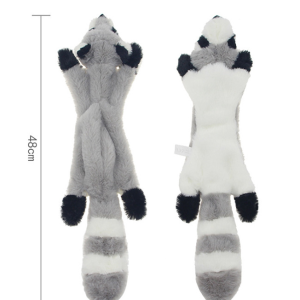
Made from cloth Key features 【Name】 : cat simulation animal sound shell toy[Fill]: No fill, 2 built-in BB…
Should I let my cat in the bathroom?
There is no harm in letting her in, as long as the room is safe. A bathroom contains hazards worth managing: cleaning products, medications, razors, and open toilet lids. Cats can be poisoned by licking cleaning residues, so store chemicals in closed cupboards and rinse surfaces well. Keep the toilet lid down, especially for kittens, and never leave medication where a cat could bat it onto the floor. If the surfaces are safe and clean, letting her in while you shower or get ready is a simple way to give her the closeness she wants, and many cats enjoy the warm, steamy room. Some owners find it easier to leave the door ajar so the cat can come and go without scratching. If you would rather have privacy, closing the door is fine, but expect some protest at first. A cat who is used to following you in will adjust, especially if you give her attention before and after.
How do I get privacy from my cat?
You can absolutely set boundaries, and most cats adjust to them with a little consistency. If you want the door closed, close it calmly and ignore the scratching or meowing that follows, since responding teaches her that persistence works. Give her something better to do: a puzzle feeder, a window perch, or a warm bed near the bathroom door can occupy her while you are busy, so she is not just waiting outside. Build a routine of attention before and after your bathroom time, so she knows she is not being abandoned. For a cat who becomes genuinely distressed, practise short separations and reward calm behaviour, increasing the time gradually. Never punish her for following or scratching, because that adds stress without teaching anything useful. In most cases, a bit of enrichment and a predictable routine are all it takes for both of you to get what you need, her some company and you some privacy.
Frequently asked questions
- Why does my cat follow me into the bathroom? She wants to be near you, and the small enclosed room with a closed door is especially interesting.
- Do cats follow their owners because they love them? Often, yes. Following is a common sign of a strong social bond.
- Is it bad to shut my cat out of the bathroom? No, as long as she has food, water, and enrichment. She will adjust to the boundary.
- Why does my cat scratch the bathroom door? She wants in and has learned that scratching sometimes works. Ignore it and offer an alternative.
- My cat follows me everywhere. Is she clingy? Some cats are naturally people-oriented. If she is relaxed and eating well, it is normal.





