

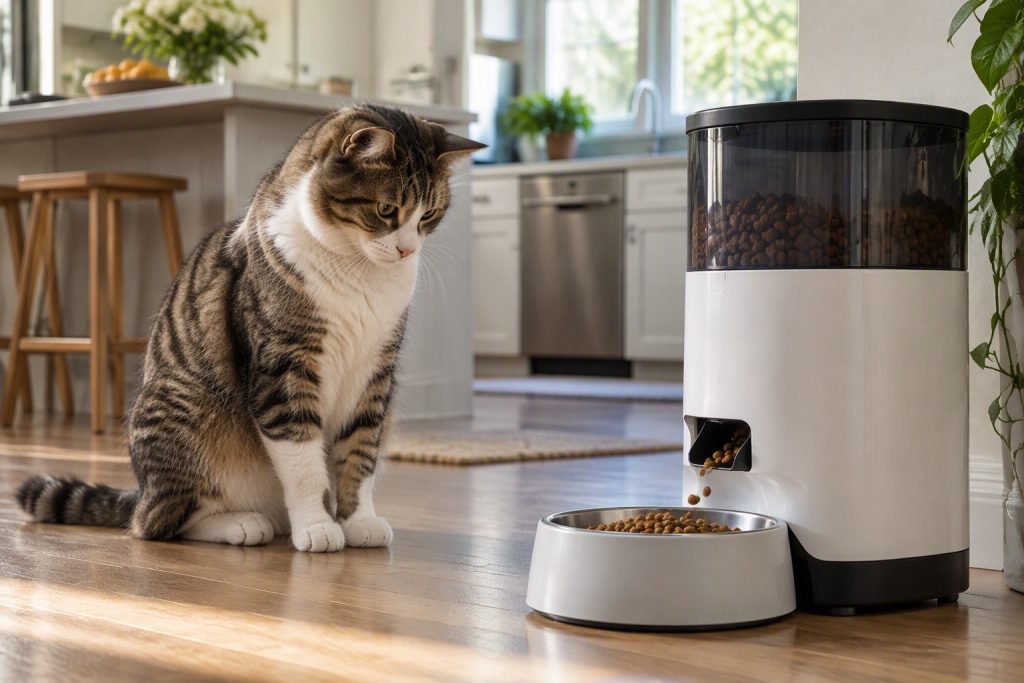
The best automatic cat feeder is one that dispenses accurate portions on a schedule you control, has a secure lid and a reliable power source, and is easy to clean. Features matter far less than reliability. A feeder that jams, over-serves, or that your cat can crack open will cause more problems than it solves, so choose simplicity and build quality first.
- Prioritise portion accuracy and reliability.
- Choose a secure lid and a stable base.
- Look for easy-to-clean, dishwasher-safe parts.
- Battery backup prevents missed meals.
What should I look for in an automatic cat feeder?
The most important qualities are accuracy, reliability, and hygiene, in that order. Look for a feeder that lets you set exact portion sizes, because a device that dumps an approximate amount makes it hard to manage your cat’s weight or follow a vet’s feeding plan. Reliability matters just as much, since a feeder that jams leaves your cat hungry and can damage the trust you have built around mealtimes. A secure lid keeps food fresh and stops clever cats from helping themselves, and a stable, non-slip base prevents the whole thing sliding across the floor when a determined cat pushes at it. Easy-to-clean parts are essential, because food residue builds up in crevices and can spoil. Finally, consider whether you want a programmable timer, a voice recorder, or app control, and whether the feeder can run on batteries so a power cut does not skip a meal.
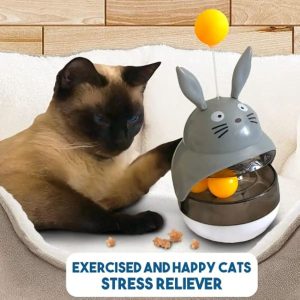
Gravity-fed dispenser with a rolling ball at the top. Made from plastic. Made for climbing and perching. Gives…
Are automatic feeders good for cats?
For many cats, yes, and for some they are genuinely transformative. Cats thrive on routine, and a feeder that delivers meals at consistent times can reduce the anxious pacing, early-morning wake-ups, and constant begging that come from unpredictable feeding. They are especially useful for households where everyone is out during the day, for cats who need measured portions to manage weight, and for multi-cat homes where one cat steals another’s food. A feeder can also help a cat who associates you with food to stop pestering you specifically, because the meals come from a machine rather than your hand. The downsides are real but manageable: mechanical failures, cleaning chores, and the loss of the bonding that comes from feeding your cat by hand. Used well, an automatic feeder supports routine and portion control; used carelessly, it can become a source of stress if it malfunctions.
How do I choose between portion and gravity feeders?
Portion feeders dispense a set amount at set times and are the better choice for most owners, because they support weight management and a predictable schedule. Gravity feeders simply keep a reservoir of food topped up as your cat eats, which is convenient but makes it almost impossible to track how much she is actually eating, and it can lead to overeating in cats who nibble all day. Gravity feeders also leave food exposed to air, which dulls freshness over time. If your cat is a healthy weight and self-regulates well, a gravity feeder may be fine, but if she gains weight easily or you are following a feeding plan, a portion feeder is far safer. For cats who bolt their food, a slow feeder bowl is a useful addition, and our guide to slow feeders for cats explains how they work alongside a scheduled feeder.
How do I stop my cat from breaking into the feeder?
Some cats learn to paw, tip, or pry open a feeder, so choose a model with a locking lid and a design that does not release food when the unit is knocked. Place the feeder against a wall or in a spot where it cannot be tipped easily, and make sure it sits on a non-slip surface. If your cat is food-obsessed, feeding smaller, more frequent portions can reduce the drive to break in, and adding a puzzle feeder or a slow feeder gives her a legitimate challenge instead. Never leave the feeder where she can reach the food hopper directly, and check the latch regularly for wear. If she is genuinely raiding it, a portion-controlled feeder with a firm mechanism usually solves the problem, but it is also worth reviewing whether her daily calorie intake is simply too low, which drives scavenging behaviour.
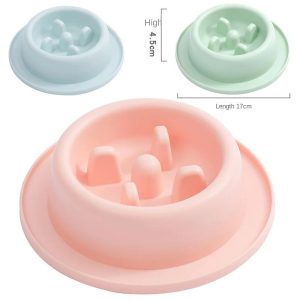
Round bowl with a removable flower insert. Made from PP. Made for daily feeding and fresh water. Keeps…
How do I keep food fresh in an automatic feeder?
Freshness depends on a good seal and regular cleaning. Choose a feeder with an airtight lid and a hopper that closes properly, and store the bulk of your cat’s food in its original bag or an airtight container rather than pouring it all into the hopper, where it sits exposed to air. Only fill the hopper with as much as your cat will eat in a few days so the food does not go stale. Wash the removable parts weekly with warm soapy water and let them dry fully before refilling, because oils from kibble can turn rancid and leave a smell that puts cats off. Our guide to cat food storage covers how to keep kibble and wet food fresh in more detail. If the food smells stale or your cat suddenly refuses the feeder, clean it thoroughly and check the expiry date before assuming she is being fussy.
When is an automatic feeder a bad idea?
An automatic feeder is a poor fit for some situations. Cats on prescription or medicated diets that must be measured precisely, cats who need wet food, and cats with medical conditions such as diabetes who require carefully timed meals may need a person involved rather than a machine. A feeder is also the wrong choice if your cat is prone to overeating, since a malfunction or a clever break-in can lead to a dangerous binge. Very young kittens and cats who need to be monitored for appetite changes are better fed by hand, because a feeder hides how much she is actually eating, and appetite is an important health signal. If you rely on a feeder and it fails while you are away, your cat may go hungry, so a backup plan matters. When in doubt, ask your vet whether your cat’s needs suit an automatic feeder.
Frequently asked questions
- Can I feed wet food in an automatic feeder? Most standard feeders are designed for dry food only. Some models have cooled compartments for wet food, but they are less common and need careful cleaning.
- How many meals can a feeder dispense? It varies by model. Many allow several programmed meals a day, so match the capacity to your cat’s feeding schedule.
- What if the power goes out? Choose a feeder with battery backup so scheduled meals continue during a power cut.
- Will an automatic feeder make my cat less attached to me? No. Feeding is only one part of your bond, and play, grooming, and company matter just as much.
- Do automatic feeders work for multiple cats? Some do, but if one cat steals food, a microchip-activated feeder that opens only for a specific cat is the better solution.





