

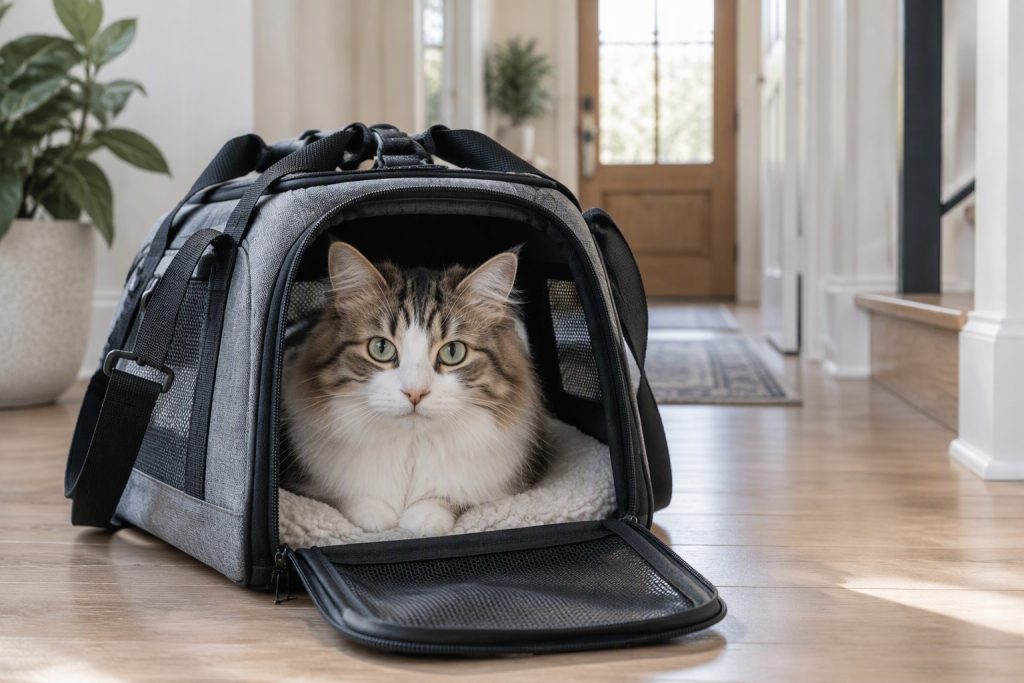
The best cat carrier for vet visits is a sturdy, well-ventilated one that opens from the top as well as the front, is large enough for your cat to stand and turn around, and can be secured with a seatbelt. Top-loading access matters most, because it lets the vet examine your cat without tipping her out. Familiarity and calm handling matter as much as the carrier itself.
- Choose top-opening and front-opening access.
- Size it so she can stand and turn around.
- Leave it out at home so it feels normal.
- Secure it with a seatbelt in the car.
What makes the best cat carrier for vet visits?
A good carrier is safe, easy to handle, and as stress-free as possible for your cat. Look for solid construction with good ventilation on multiple sides, secure latches that will not pop open if the carrier is jostled, and a design that can be carried with one hand. Top-opening access is the feature most vets recommend, because it allows them to lift your cat out gently or examine her while she stays in the base, which is far less stressful than tipping the whole carrier. A carrier that separates into a top and bottom is especially useful. A removable, washable liner makes cleanup easy if your cat has an accident. Check that the carrier is sturdy enough to protect her in the car, and that the door latch is reliable. Comfort and safety together make the difference between a traumatic trip and a manageable one.
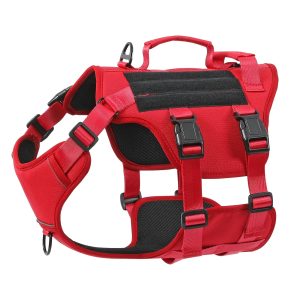
A fabric and Oxford cloth harness stays close enough that a cat cannot back out of it. Take…
Should I choose a hard or soft carrier?
Both have advantages, and the right choice depends on your cat and how you travel. Hard-sided carriers are more protective in a car, easier to clean, and sturdier for a cat who pushes at the sides, which makes them a common choice for vet visits. They tend to be heavier and bulkier to store. Soft-sided carriers are lighter, often more affordable, and easier to stash, and many have top and front openings. The downside is that they offer less crash protection and can be harder to clean, and a determined cat may scratch at the fabric. If you drive often, a hard carrier with a seatbelt loop is the safer option. If you mostly walk to the vet or want something easy to carry, a well-made soft carrier can work well. Whichever you pick, make sure it has secure fastenings and enough ventilation, and check the weight rating before you buy.
What size carrier does my cat need?
Choose a carrier large enough for your cat to stand up, turn around, and lie down comfortably, which is usually a carrier around one and a half times her body length. A carrier that is too small is stressful and can be unsafe, because she cannot brace herself or settle, while one that is far too large offers less sense of security and more room to slide around in the car. If your cat is large, measure her from nose to tail base and choose a carrier that comfortably exceeds that. Height matters too, since she should be able to stand without crouching. Many owners buy a carrier sized for a kitten and never upgrade, which leaves an adult cat cramped. A carrier that fits properly is easier to get her into and keeps her calmer in transit. Our guide to getting your cat into a carrier without a fight covers how to make her comfortable with it.
How do I get my cat into the carrier without a fight?
The trick is to make the carrier a familiar, ordinary object rather than something that appears only before a vet trip. Leave it out at home with the door open, put a soft blanket and a favourite toy inside, and feed treats near or inside it so your cat associates it with good things. If she is comfortable with it, she will walk in on her own when you need to travel. On the day of the visit, place her in calmly and gently rather than chasing her around the room, which only adds stress. If she resists, a top-loading carrier lets you lower her in from above, which is often easier than pushing her through a front door. Never scruff or force her roughly. Practising short, positive sessions in the weeks before a visit makes the real thing far less dramatic for both of you.

Bundle of multicoloured printed leashes. Made from fabric. Made for walks, travel and everyday wear. Keeps your cat…
How do I make the carrier less stressful?
Small details make a big difference. Leave the carrier out permanently so it becomes part of the furniture, and let your cat use it as a bed or a hiding spot, which removes the association with unpleasant trips. Spray or wipe it with a calming pheromone product a few minutes before travel, and line it with a familiar-smelling blanket. Cover the carrier with a light towel in the car, since many cats feel safer in the dark, and keep the car quiet. Avoid feeding a large meal right before the trip, which can lead to car sickness. Move the carrier gently and speak softly, and never open it in the car. For a cat who is very anxious, ask your vet about calming options in advance. Our guide to cat vaccinations explains what to expect at routine visits so you can prepare calmly.
How do I keep my cat calm during the vet visit?
Keep the carrier covered and elevated on your lap or a chair in the waiting room rather than on the floor, which feels vulnerable to a cat. Minimise waiting time by booking a quiet slot if your clinic offers one, and stay calm yourself, because cats pick up on your tension. Speak softly, keep your hands steady, and let the vet and nurse handle her with the carrier’s top opening where possible. Bring a favourite treat or a toy, and if she is food-motivated, ask whether you can offer a treat during the exam. Afterwards, give her a quiet, familiar space at home to decompress, and do not expect immediate affection, since some cats sulk for a few hours. Over time, pairing visits with treats and calm handling helps her tolerate them better. If your cat is genuinely terrified of the vet, tell the clinic in advance so they can adapt.
Frequently asked questions
- Should I leave my cat’s carrier out at home? Yes. Leaving it out so it becomes a familiar resting spot reduces stress when you actually need to travel.
- Is a top-loading carrier better for vet visits? Generally yes. It lets the vet examine your cat without tipping her out, which is calmer for everyone.
- How do I clean a cat carrier? Wipe it with pet-safe cleaner and wash the liner after each trip, especially if your cat had an accident or was unwell.
- Can I use a cardboard box instead of a carrier? A sturdy box can work in an emergency, but a proper carrier is safer and less stressful for routine travel.
- How do I secure a carrier in the car? Thread the seatbelt through the carrier’s handle or use a carrier with a seatbelt loop so it cannot slide or tip.





