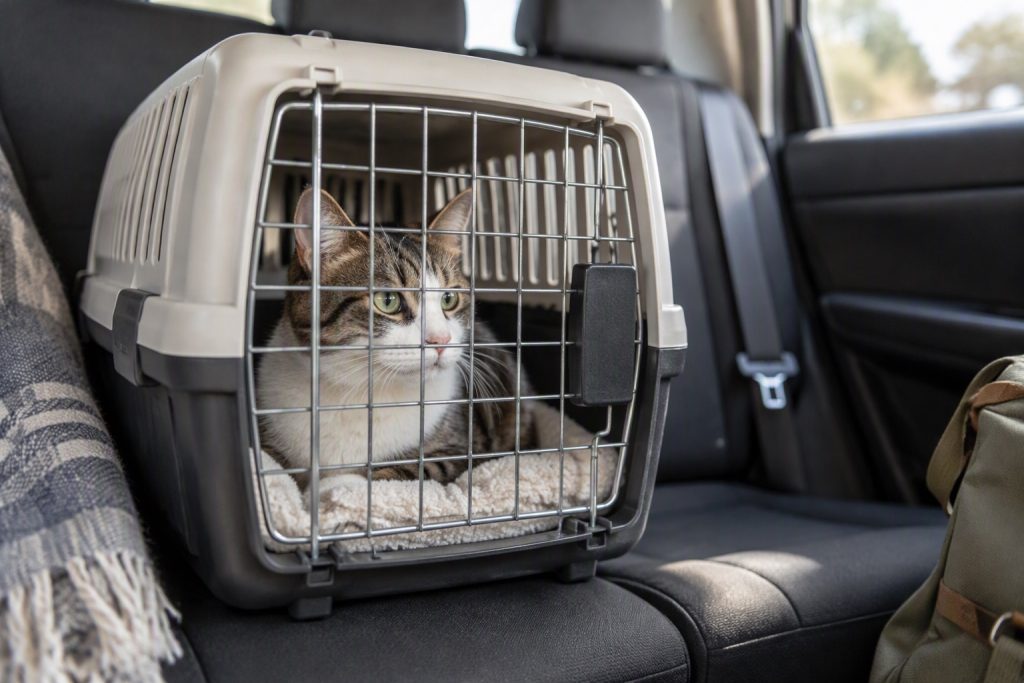
Travelling with a cat goes best when you plan ahead, use a secure carrier, and keep the trip as calm and routine as possible. Cats dislike change and unfamiliar surroundings, so preparation in the days beforehand matters as much as what you do on the day. Short, gradual introductions to the carrier and car make a real difference.
- Use a secure, well-ventilated carrier every time.
- Get her used to the carrier before the trip.
- Keep the car cool and the carrier covered.
- Bring familiar items and water from home.
How do I travel with a cat?
Whether the trip is a short drive to the vet or a longer journey, the basics are the same: a secure carrier, a calm environment, and as little disruption as possible. Always transport your cat in a carrier, never loose in the car, because a loose cat can distract the driver, get under the pedals, or be injured in a sudden stop. Secure the carrier with a seatbelt or place it on the floor behind a seat so it cannot slide. Keep the car cool and quiet, cover the carrier with a light towel so she feels hidden, and avoid playing loud music. Do not feed a large meal right before travel, which can cause car sickness, and bring water and a small litter setup for longer trips. Stop occasionally on long journeys to check on her. The goal is to make the experience as boring and predictable as possible, because calm and boring is exactly what a cat needs.
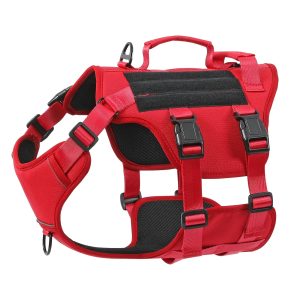
A fabric and Oxford cloth harness stays close enough that a cat cannot back out of it. Take…
How do I prepare my cat for a trip?
Preparation starts days or weeks before you travel. Leave the carrier out at home with the door open and something familiar inside, so it becomes an ordinary object rather than a signal of a vet visit. Practise short trips in the car, starting with simply sitting in the parked car with the engine off, then a brief drive around the block, gradually building up. Reward her with treats and calm praise each time. Get her used to being handled and to the harness or carrier you plan to use. If you are flying or crossing borders, check the paperwork and health requirements well in advance, since some destinations need vaccination records or certificates. Pack familiar bedding that smells like home, and keep her routine as normal as possible in the days before you leave. Our guide to getting your cat into a carrier without a fight walks through the carrier-training steps in detail.
What should I pack for travelling with a cat?
Pack for comfort, safety, and accidents. Bring her usual food and a portable bowl, since a sudden change in diet can upset her stomach, and water from home if possible, because unfamiliar water can also cause digestive upset. Include a litter tray and a bag of her usual litter for longer trips, along with waste bags. Pack any medication, her vaccination records, and a first-aid basic kit. Bring a familiar blanket or toy that smells like home, a towel for accidents or to cover the carrier, and a spare liner. A harness and lead are useful for safe handling at rest stops, and a secure carrier is essential. For a plane trip, check the airline’s carrier size and documentation requirements. Having everything organised before you leave reduces stress for both of you and means you are not searching for supplies in an unfamiliar place.
How do I keep my cat calm during travel?
Calm during travel comes from preparation and a comfortable environment. Use a carrier she already knows, keep it covered with a light cloth so she feels secure, and keep the car at a comfortable temperature with minimal noise. Speak softly and avoid sudden movements. Some cats respond well to a pheromone spray on the carrier liner, applied a few minutes before travel. For a very anxious cat, ask your vet in advance about calming options, since some remedies need time to work and not all are suitable for every cat. Do not sedate a cat without veterinary advice, and never give human medication. On long trips, offer small amounts of water and a chance to use a litter tray during breaks. If she cries, reassure her calmly rather than constantly opening the carrier, which can make her more unsettled. A calm, quiet environment is the most reliable way to reduce travel stress.

Green cross-body seat-belt strap with clips. Made from cloth. Supplied in black, pink, sky blue, blue, green and…
How do I travel with a cat by plane?
Air travel needs more planning than a car trip. Check the airline’s rules for in-cabin or cargo travel, the maximum carrier size, and any health certificates or vaccination requirements, and book early since in-cabin pet spaces are limited. Confirm the carrier meets the airline’s specifications and is well ventilated. Ask your vet whether your cat is fit to fly, and discuss calming options and feeding timing, since you may need to withhold food for a period before the flight. Bring her vaccination records and any required paperwork in your hand luggage. At the airport, keep her in the carrier and covered where possible, and avoid opening it in busy areas. On arrival, give her a quiet space to settle. If flying seems too stressful for your cat, consider whether a pet sitter or a trusted boarding arrangement at home might be kinder for a short trip.
How do I help my cat settle at the destination?
When you arrive, set up a small, quiet room with her litter tray, food and water, and a familiar bed before letting her explore. Keep her confined to that space at first, so she is not overwhelmed by an unfamiliar home, and let her come out at her own pace. Keep her usual food and routine as consistent as possible, since familiarity helps her feel secure. Spend calm time with her, and avoid introducing lots of new people or animals right away. If she hides, give her space rather than pulling her out, and let curiosity bring her forward. For trips where you plan to walk her, harness training beforehand makes outdoor time safer, and our guide to harness training a cat in 7 days explains how to build that skill. With a secure base and a familiar routine, most cats adjust to a new place within a few days.
Frequently asked questions
- Should I sedate my cat for travel? Only with veterinary advice. Never give human medication, and some sedatives are unsuitable for certain cats.
- How long can a cat travel in a carrier? Cats can manage several hours if they have water and breaks, but plan long journeys carefully and check on her regularly.
- Can I travel with my cat on public transport? Policies vary. Check the rules in advance and keep your cat in a secure carrier at all times.
- Why does my cat cry in the car? Many cats find car travel stressful. Carrier training, a covered carrier, and short practice trips help reduce it over time.
- Should I feed my cat before a long trip? Give only a light meal a few hours before travel to reduce the risk of car sickness, and offer water along the way.