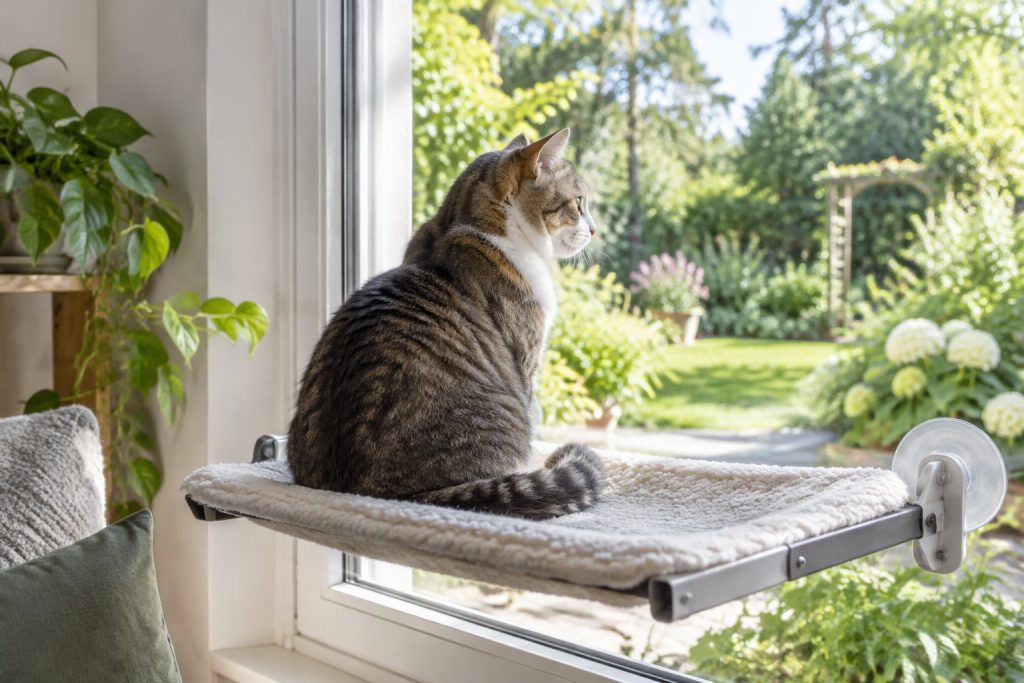
A good cat window perch is stable, wide enough for your cat to stretch out, and rated to hold at least double her weight. Suction-cup perches suit smooth glass and are easy to move, while wall-mounted or radiator-mounted shelves are more secure for heavier cats. Whichever you choose, the perch must attach to a surface that can take the load, and it should sit at a height your cat can reach safely.
- Choose a perch rated well above your cat’s weight.
- Suction cups need smooth, clean glass to hold.
- Wall-mounted shelves are the most secure option.
- Place it at a height she can reach safely.
What should I look for in a cat window perch?
Start with stability, because a perch that wobbles will be abandoned no matter how appealing the view. Check the weight rating and choose one that holds at least twice your cat’s weight, which gives a margin for the sudden jump that cats make when landing. Look at the surface: a soft, washable cover is more comfortable than bare plastic, and a slight lip or raised edge helps a cat feel secure. Size matters too, since a perch she cannot lie flat on defeats the purpose, so measure her stretched out and buy accordingly. Consider how it attaches, whether that is suction cups, brackets, or a clamp, and whether your window or wall can support it. Finally, think about the view. Cats want something to watch, so a perch facing a garden, a street, or a bird feeder gets far more use than one facing a blank wall.
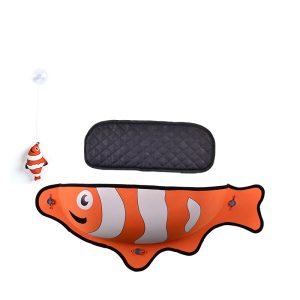
Pet Hammock Window Hanging Beds For Cats Rest Sleeping Playing House. Part of the KiKi Meow Cat Beds…
What types of window perch are there?
Suction-cup perches are the most popular because they attach directly to glass with no drilling, and they can be moved or repositioned easily. They work best on smooth, clean glass and fail on textured, frosted, or dirty surfaces. Wall-mounted shelves are drilled into the wall and are far more secure, making them a good choice for larger or heavier cats. Radiator-mounted or clamp-style perches hook over a radiator or a windowsill, which keeps them low and simple. Some perches are freestanding frames that hold a hammock or a platform at window height, needing no fixing at all. There are also shelf-and-bracket designs that combine a perch with storage or a scratching surface. Each type suits a different home: renters often prefer suction or freestanding options, while owners who can drill get the most security from wall-mounted shelves. Match the type to your window and your cat’s size, and you will avoid the common mistake of buying something that sags or falls.
How much weight does a window perch need to hold?
A perch should be rated for at least twice your cat’s weight, and more is better. An average cat weighs around four to five kilograms, but the force of a landing jump is much greater than her standing weight, so a perch rated only for her body weight may fail when she leaps onto it. If you have a large breed or an overweight cat, look for a perch rated for ten kilograms or more. For suction-cup models, the rating assumes a clean, smooth surface and correctly seated cups, so recheck the hold regularly and clean the glass before each reattachment. Wall-mounted shelves rely on the fixings and the wall itself, so use appropriate anchors and, if unsure, fix into a stud. Never test a perch by leaning on it yourself in a way that could damage the mounting, and instead check the manufacturer’s rating and follow the instructions exactly.
How do I install a window perch safely?
Read the instructions fully before you start, because small errors in mounting are what cause perches to fall. For suction cups, clean the glass with warm soapy water and dry it completely, then press each cup firmly and, if the design allows, moisten it slightly to improve the seal. Attach the perch, then wait a while before letting your cat use it, so you can confirm it holds. For wall-mounted shelves, drill into a stud or use suitable wall anchors, and check that the shelf is level and secure before your cat goes near it. Place the perch at a height she can reach by jumping from a stable surface, and never above something that could hurt her if the perch did give way. Avoid placing it over a hard floor or a hot radiator. Once installed, check the fixings every few weeks, since suction cups in particular loosen over time.
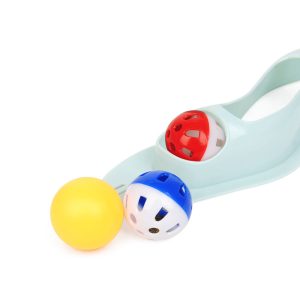
Wavy Pet Sucker Track Ball Cat Toy Adhesive Glass Wall Cat Supplies. Part of the KiKi Meow Cat…
How do I get my cat to use it?
Cats are cautious about new things, so make the perch inviting rather than forcing her onto it. Put it in a window she already likes, and place a favourite blanket or a soft cushion on it so it smells familiar. If she is food-motivated, put a treat or a small portion of food on the perch for a few days, letting her discover it herself. A bird feeder or a hanging toy outside the window gives her a reason to stay, and the movement is often irresistible. Do not lift her onto the perch, which usually makes her distrust it. If she ignores it for a week, check the stability and the view, and try moving it to a different window. Some cats prefer a higher perch, others a lower one, so experiment. Pair the perch with a nearby scratching post or shelf so she can climb to it, since a route up makes any high spot more appealing.
Window perch or cat tree — which should I choose?
They serve different needs, and many homes benefit from both. A window perch gives a cat a front-row seat to the outside world, which is enriching and especially valuable for indoor cats who need mental stimulation. A cat tree offers height, scratching surfaces, and multiple levels, so it supports climbing and exercise as well as resting. If space is tight, a wall-mounted shelf system can combine the two by creating a climbing route that ends at a window perch, and our guide to wall-mounted cat shelves for beginners shows how to plan one. In a small apartment, a compact tree that reaches window height may be the better single purchase, as our look at the best cat tree for a small apartment explains. If your cat mainly wants to watch the world, prioritise the perch.
Frequently asked questions
- Do suction cup perches really stay up? They do on clean, smooth glass with correctly seated cups. Check them regularly, since the seal weakens over time.
- How much weight should a cat perch hold? At least twice your cat’s weight, and ideally more, because the force of a landing jump exceeds her standing weight.
- Can I put a window perch on a wall instead of glass? Yes. Wall-mounted shelves are usually more secure than suction cups and suit heavier cats, but they need proper fixings.
- Why won’t my cat use her perch? It may be unstable, too small, or facing nothing interesting. Try a familiar blanket, a treat, and a better view.
- Is a window perch good for an indoor cat? Yes. It gives her enrichment, a view, and a warm spot, which helps prevent boredom in cats who never go outside.