Introduce a second cat slowly, in stages, over one to several weeks: keep them in separate rooms at first, swap scents, then feed them on opposite sides of a closed door, then allow brief visual contact through a barrier, and only then a supervised meeting. Rushing any stage is the most common cause of long-term conflict. Patience here decides whether they become companions or permanent enemies. Most of the work happens before the two cats ever share a room, so do not skip the early stages to save time.
- Start with complete separation in separate rooms.
- Swap scents before any face-to-face meeting.
- Feed on opposite sides of a closed door.
- Progress only when both cats are relaxed.
How long does it take to introduce a second cat?
There is no fixed timeline, but a realistic introduction takes one to several weeks, and some pairs need a couple of months. Kittens and easygoing adults often settle faster, while two adults who are both used to being the only cat can take much longer. The pace should be set by the cats, not the calendar. Move to the next stage only when both are calm: eating normally, using the litter box, and showing curiosity rather than fear or aggression at the barrier. If either cat hisses, hides, or stops eating, slow down and spend more time at the current stage. Rushing to a face-to-face meeting because you feel sorry for the new cat is the single biggest mistake owners make. A slow introduction is not wasted time; it is the work that prevents months of tension later. Think of it as building a relationship rather than running an experiment, and let each small success set the pace.

Tray, scoop, anti-splash mat and clumping litter. The whole litter corner, one box.
How do I start with scent swapping?
Scent is the first language cats use to recognise friend or stranger, so begin there while they are still in separate rooms. Rub a soft cloth gently around the new cat’s cheeks and head, where the scent glands are, then let the resident cat sniff it while you offer treats. Repeat the other way around, so each cat learns the other’s smell in a positive context. You can also swap bedding, blankets, and toys between rooms, and stroke each cat with the same cloth without washing it in between. Keep sessions short and pair every exposure with food or play, so the unfamiliar smell predicts something good. Never force a cat to sniff a cloth she is avoiding. This stage often takes several days, and it is worth doing thoroughly, because a cat who already knows the other’s scent is far less alarmed when they finally meet.
When do I move to feeding on opposite sides of a door?
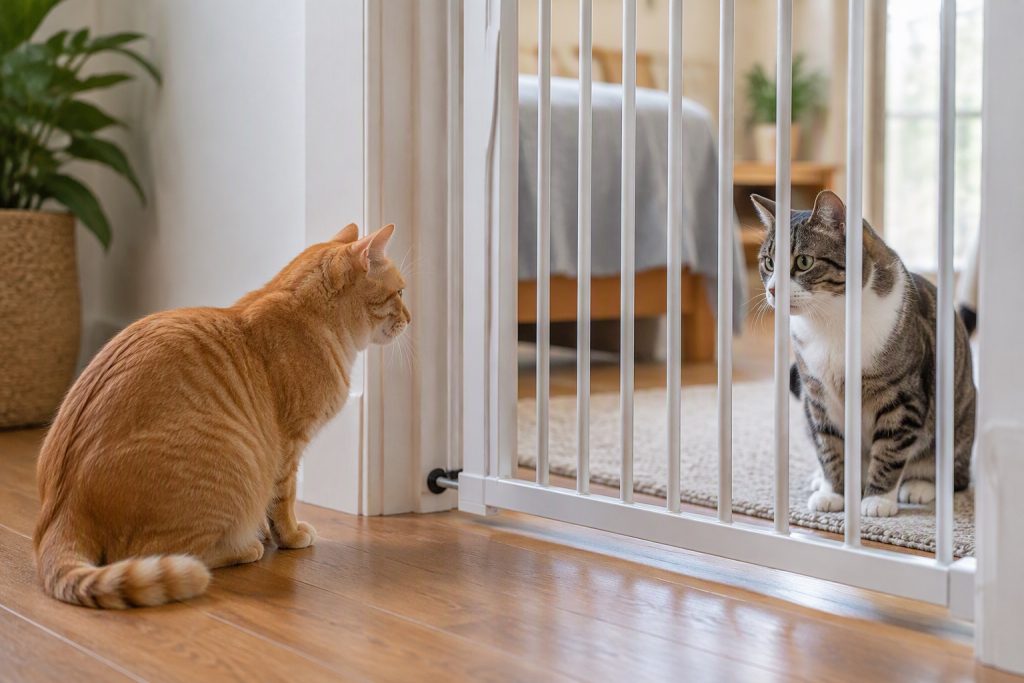
Once both cats are relaxed about the other’s scent, set up feeding on opposite sides of a closed door. Place their bowls a few feet from the door on each side, so they eat while aware of each other but not face to face. If both eat calmly, move the bowls a little closer over several days until they are eating right at the door. If either cat stops eating, backs away, or hisses, move the bowls further apart and rebuild more slowly. This step teaches them that the other cat’s presence predicts food, which is one of the strongest positive associations you can build. Once they eat comfortably at the door, crack it open a centimetre or two and feed again, then widen the gap gradually. A baby gate or a screen door works well for the visual stage, letting them see each other without direct contact.
How do I handle the first face-to-face meeting?
Keep the first real meeting short, supervised, and positive. Choose a neutral room rather than one cat’s territory, and have treats, toys, and a towel ready. Let them see each other with a barrier between them first, then allow a brief open meeting of a few minutes. Do not hold either cat, and do not pick one up to introduce them, since that removes her ability to retreat. Watch for relaxed body language: soft ears, slow blinks, curious sniffing. Separate them at the first sign of tension, before it escalates into a fight, and end on a calm note. Repeat these short sessions daily, extending them as things go well. If one cat chases or stares, distract with a toy and give the other an escape route. Never punish a hiss or a swat, since that adds fear to an already tense situation.

Cervical pillow, plush hammock, floor mat and paw cushion — four places to nap.
What do I need to set up for two cats?
Resources matter more than space. Provide one litter box per cat plus one extra, placed in separate locations, and follow good litter box placement so neither cat has to pass the other to toilet. Offer separate feeding stations, multiple water bowls, and several resting spots at different heights, because cats defuse tension by spreading out vertically. Scratching posts, perches, and hiding places reduce competition, and a few extra toys help each cat play without competing. During the early weeks, keep the new cat in her own base room when you cannot supervise, which mirrors the setup in our guide to the first 30 days with a rescue cat. Duplicate the essentials rather than expecting them to share, because sharing is what cats argue about most.
What if they fight or never get along?
Occasional hissing and swatting during the introduction is normal, but real fights — with yowling, fur flying, and injuries — are not, and you should separate the cats immediately and go back to a slower stage. Never put your hands between fighting cats; use a barrier, a thick blanket, or a loud noise to interrupt, then separate them safely. If tension persists for weeks despite a careful introduction, a vet or a qualified cat behaviourist can help. Some pairs simply never become friends, and that is acceptable as long as they tolerate each other and each has enough space, resources, and territory to avoid conflict. The goal is a peaceful household, not a friendship. In some cases, calming aids, pheromone diffusers, or a structured reintroduction can tip the balance, so it is worth seeking professional advice before concluding it cannot work. Reintroducing from scratch, with the cats fully separated again, sometimes succeeds where the first attempt did not.
Frequently asked questions
- Should I let them fight it out? No. Real fighting risks injury and creates lasting fear. Separate them and return to a slower stage of the introduction.
- How long should I keep the new cat in one room? Until she is calm and both cats are comfortable at the door. This often takes one to two weeks, sometimes longer.
- Do two cats need two litter boxes? Yes, at minimum. One box per cat plus one extra, in separate spots, prevents guarding and accidents.
- Will they ever become friends? Many do, but some only tolerate each other. A calm, conflict-free household is a successful outcome even without affection.
- What if the resident cat stops eating? That is a sign of stress. Slow the introduction down, go back a stage, and if it continues, speak to your vet.