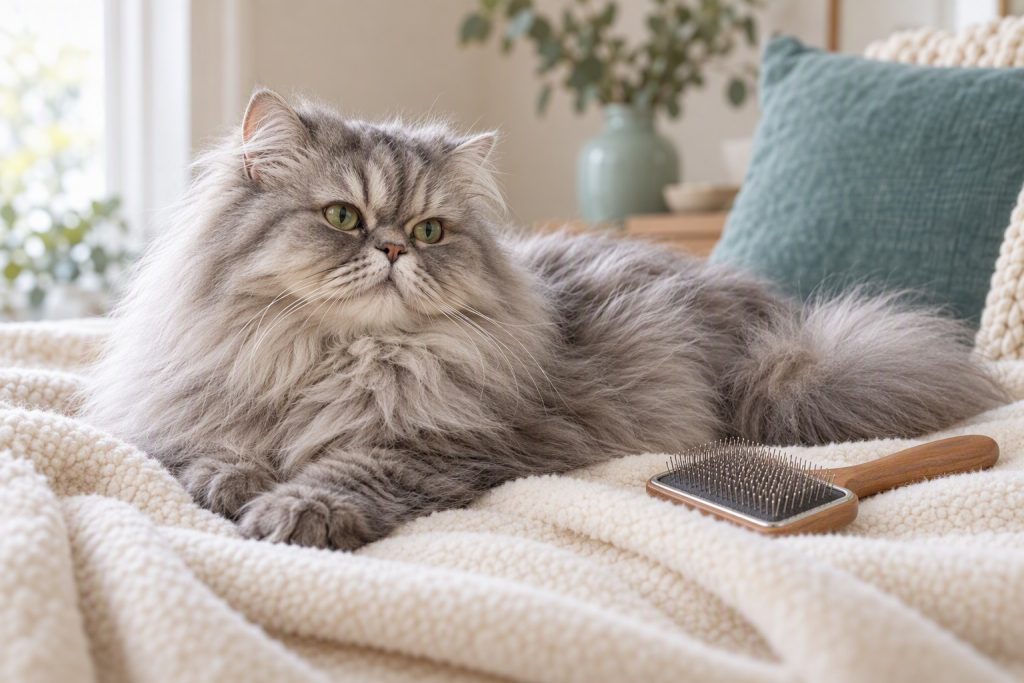
To stop matting in a long-haired cat, brush her daily with the right comb, focus on the high-risk zones behind the ears, armpits, and belly, and tackle tiny tangles the moment they appear before they tighten into painful clumps. Consistency and early intervention beat any after-the-fact clipping.
- Brush daily with a wide-tooth comb and a slicker brush to lift the undercoat.
- Prioritise the armpits, behind the ears, the belly, and the leg feathers where mats start.
- Break up tiny tangles immediately with your fingers or a comb before they tighten.
- Support brushing with regular coat-care sessions and calm handling.
Why do long-haired cats mat so easily?
A long, dense coat is a magnet for tangles because shed hair has nowhere to fall—it stays caught in the living coat and winds itself into knots, especially where the cat’s body bends and rubs. Friction zones behind the ears, in the armpits, across the belly, and along the backs of the legs are the usual starting points, because motion there continually rolls loose hair into clumps. Our brushing-frequency guide explains how coat type drives the risk. A proper comb reaches the undercoat where mats begin, which a brush alone cannot fully do. Left alone for even a few days, a small tangle tightens against the skin, pulling and hurting, and can eventually trap moisture and cause skin infection. Understanding that matting is a daily mechanical process—not a sign of a dirty cat—is the first step, because it tells you the fix is routine intervention, not occasional heroic detangling after the damage is already done and painful.
Which tools prevent mats best?
The most effective combination is a wide-tooth comb to open the coat and a slicker brush to lift the loose undercoat, used in that order. Start with the comb to find and loosen tangles, then the slicker to clear the dead hair that would otherwise knot. A calm handling routine makes the longer sessions tolerable for both of you. A dedicated dematting tool with blunt blades can safely cut through a forming clump without scalping, but use it sparingly and never on a mat tight to the skin. Avoid fine combs alone, which skim the surface and miss the undercoat where trouble starts. For many owners, a walk-through with the wide comb every single day, even for two minutes, prevents more suffering than a weekly hour-long struggle. Tools matter, but the daily habit of using them in the right order is what actually keeps a long-haired coat mat-free and comfortable through every season of the year.

Pet Spray Comb Pin Brush Cat Grooming Comb For Removing Fur And Detangling Knots. Part of the KiKi…
What is the daily anti-mat routine?
Make it short and consistent so it survives in real life. Each day, run the wide-tooth comb through the high-risk zones first—behind ears, armpits, belly, leg feathers—then brush the whole coat with the slicker to clear loose hair. Our grooming schedule suggests pairing this with a quick claw check. A positive session ending in treats trains your cat to cooperate, which is half the battle. If you find a tiny tangle, work it apart with your fingers or the comb immediately; do not schedule it for later, because later it is a hard mat. During seasonal sheds, add a second pass. The routine should take five to ten minutes, not an hour, precisely because you do it daily and never let buildup occur. Cats that receive this steady care keep glorious coats, while those groomed rarely need sedation and clipping, which is stressful, expensive, and entirely preventable with the small daily investment of attention and the right comb in your hand.
How do I safely remove a mat that formed?
If a mat has already tightened, never yank it or cut it with regular scissors near the skin, because you can easily slice the cat. Instead, hold the mat at its base to protect the skin, then tease it apart from the tip downward with a comb or a dematting tool, working patiently in small sections. A calm environment prevents struggles that turn a small job into a scratched owner. A mat splitter can help on larger clumps. For severe, close-to-skin mats, a professional groomer or vet should clip them under safe conditions, sometimes with sedation for a distressed cat. After removal, inspect the skin underneath for redness or infection, since trapped moisture breeds trouble. The lesson is prevention: a mat removed once should never be allowed to return, because each episode teaches the cat to fear grooming. Break the cycle with daily combing of the zones where that mat appeared, and the need for clipping disappears from your life almost entirely with consistent, gentle effort.
Does diet and health affect matting?
Yes, more than owners expect. A poor coat—dry, brittle, or excessively shedding—mats faster, so a diet with adequate omega fatty acids improves coat slip and reduces the dead hair that knots. Dehydrated cats shed more and groom less effectively, worsening tangles. A healthy coat care plan includes nutrition, not just tools. A vet check is wise if matting appears suddenly, because pain, arthritis, or obesity can stop a cat from grooming herself, letting the coat collapse into mats she cannot reach. Senior long-haired cats are especially vulnerable as flexibility fades, so increase your brushing as she ages. Weight management also helps, because an overweight cat cannot twist to maintain her own coat. Treat diet and health as the foundation beneath the comb: even perfect daily brushing struggles against a coat that is structurally poor, so support the hair from inside with good food and prompt veterinary care when shedding or matting changes abruptly.

Cat Brush Self Cleaning Kitten Brush For Short Long Haired Cat Grooming Brush To Remove Loose Fur And…
Can I prevent mats during shedding season?
Shedding season is when mats explode, so ramp up rather than relax. Increase combing to twice daily during the spring and autumn pushes, and consider a deshedding tool used gently to pull the loose undercoat before it can tangle. A regular handling routine keeps your cat compliant when sessions lengthen. A bath or wipe-down can help loosen dying coat, though many cats object, so brush-first is usually enough. Pay extra attention to the friction zones, which mat fastest when loose hair peaks. The cats that sail through shed are those whose owners anticipated it and treated the season as a temporary intensification of the daily habit, not a surprise requiring emergency clipping. If you travel or get busy, ask a pet sitter to comb daily rather than skip, because a single neglected week in peak shed can undo a month of careful prevention and leave you with clumps that need professional removal and a stressed, unhappy cat.
Frequently asked questions
- Is shaving a long-haired cat a good idea? Only as a last resort for severe matting; a lion cut by a pro beats DIY scissors near skin.
- Can I use human conditioner on mats? A pet-safe detangling spray helps, but human products can irritate cat skin; consult your vet.
- Why does my cat mat behind the ears? That zone bends constantly and is hard for her to groom, so it needs your daily comb attention.
- How long should a daily brush take? Five to ten minutes is enough if done every day; longer sessions signal you are falling behind.