

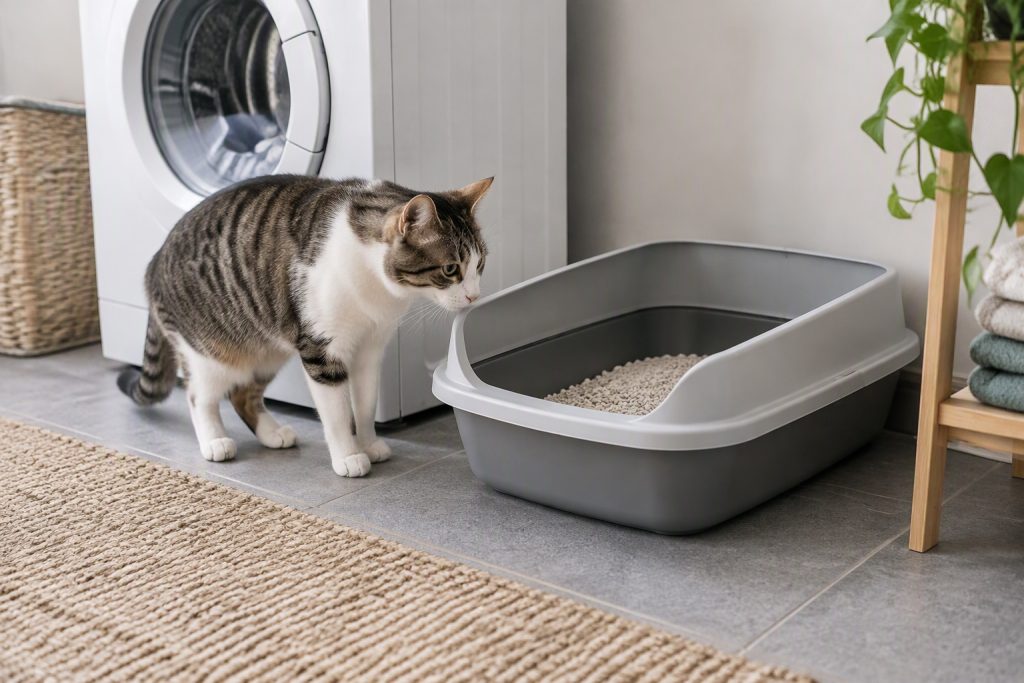
A cat that stops using the litter box is not being spiteful, and it is rarely a training failure. In cats, avoiding the box is usually a communication: something about the box, the litter, the location or the cat’s own body has made using it unpleasant or unsafe. Because urinary and digestive problems are among the most common causes, and because some of them become serious quickly, the first step with any new litter box avoidance is a vet visit rather than a behaviour plan. The second step is a careful audit of the box itself, and of everything that changed around the day the behaviour started.
- Litter box avoidance is often a health signal; urinary problems in cats can become serious fast, so see a vet.
- The most common environmental causes are a dirty box, the wrong litter, and a box in a busy or trapped-feeling spot.
- The working rule is one box per cat, plus one, in separate locations around the home.
- Never punish a cat for going outside the box; it increases stress and makes the problem harder to solve.
Why has my cat suddenly stopped using the litter box?
For most cats the change has a cause, and the cause is usually recent. A new brand of litter, a box that has not been scooped for a few days, a moved box, a new cat or a visiting animal, building work, a house move, or a box that has been shifted next to a noisy appliance can all trigger it. Stress is a genuine trigger too, and cats under pressure often show it first around the box. The useful approach is to work backwards from the day the behaviour changed and list everything that altered in the house. Owners often find a cause they had dismissed as unimportant. If nothing in the environment changed, the suspicion shifts to health, and that is when a vet visit comes first.
This rolling toy rolls and moves the way a cat's prey does — movement is the whole point.…
What health problems make a cat avoid the litter box?
Several, and some are urgent. Urinary tract problems, including cystitis and blockages, make urinating painful, and a cat that associates pain with the box will look for a softer surface. In male cats, a complete urinary blockage is a life-threatening emergency that can develop within a day, and it shows as repeated trips to the box with little or no urine, straining, crying out or licking at the rear. Constipation, arthritis that makes climbing into a high-sided box difficult, kidney disease, diabetes and digestive problems are other common causes. None of these can be identified at home, and none should be treated at home. If the cat is straining, vocalising or producing blood, contact a vet urgently rather than waiting to see.
Could the litter or the box itself be the problem?
Yes, and it is worth ruling out because it is easy to fix. Many cats prefer a fine, unscented, clumping litter, and a sudden change of brand or texture can put a cat off entirely. Scented litters, deodorising powders and strong cleaning products are common culprits. The box matters as well: covered boxes trap odour and offer only one exit, which many cats dislike, and a box that is too small or has high sides is awkward to use comfortably. Depth of litter is another factor, and most cats do better with two to three inches rather than a thin sprinkle. If you are changing litter, do it gradually by mixing the old and new over a week or more.
Where should the box go?
Away from food and water, in a quiet spot the cat can reach without passing a rival cat or a busy doorway. Cats prefer privacy but not isolation, and a box in a dark corner of a cold utility room is often ignored in favour of something more comfortable. The best position is somewhere the cat already goes, with an escape route and no chance of being cornered. In a multi-cat home, placement is as important as number, because a cat that has to walk past another cat to reach the box may simply stop using it. Provide more than one location, especially in a house with stairs, so the cat is never far from a box. The detail on placement is in litter box placement.

A teaser wand built to turn a few minutes into a full hunt — a cat needs to…
How do I clean up properly so the cat does not go back to the same spot?
Clean thoroughly with an enzymatic cleaner designed for pet mess, because ordinary detergent leaves scent markers that tell the cat this is a toilet. Do not use ammonia-based products, since ammonia smells like urine and attracts the cat back. Blot rather than rub on soft furnishings, and let the cleaner sit for the time the label specifies so it can actually break down the proteins. If the spot keeps being used, place a litter box there temporarily, then move it gradually towards where you want it. Restricting access to the spot for a while also helps. Punishment does not: a cat that is scolded for eliminating outside the box usually becomes more stressed and simply chooses a different hidden place.
When does litter box avoidance need a vet?
See a vet for any new litter box avoidance, and urgently if the cat is straining, crying out, passing blood, dribbling urine, or making repeated trips with little result. A male cat that cannot pass urine at all is an emergency that needs treatment the same day, not the next morning. Book an appointment also if the avoidance comes with weight loss, increased drinking, vomiting, diarrhoea or a change in appetite. Do not assume it is behavioural until a vet has examined the cat and, if appropriate, tested a urine sample. A vet can tell you whether there is a physical cause and what treatment is needed. If the cat is medically well, that is when an environmental and behavioural plan makes sense. Moving house with a cat covers the stress-driven versions.
Frequently asked questions
- Why is my cat peeing on the bed instead of the box? Soft, absorbent surfaces feel safer to a cat in pain or under stress. It is a strong signal to have the cat checked by a vet rather than a behaviour to punish.
- Should I change the litter brand? If you changed it recently, that may be the trigger. Go back to the old litter, and transition gradually over a week if you still want to switch.
- Does a covered litter box cause problems? It can. Covered boxes trap odour and give the cat only one exit, which many cats dislike. Try an open box and see whether the behaviour changes.
- How often should I scoop? Daily at minimum, and twice a day in a multi-cat home. Cats are fastidious, and a box that is unpleasant to use will simply be avoided.
- Can stress alone cause litter box avoidance? Yes. A move, a new pet or a change in routine can trigger it. A vet should still rule out medical causes first, because they are common.


