

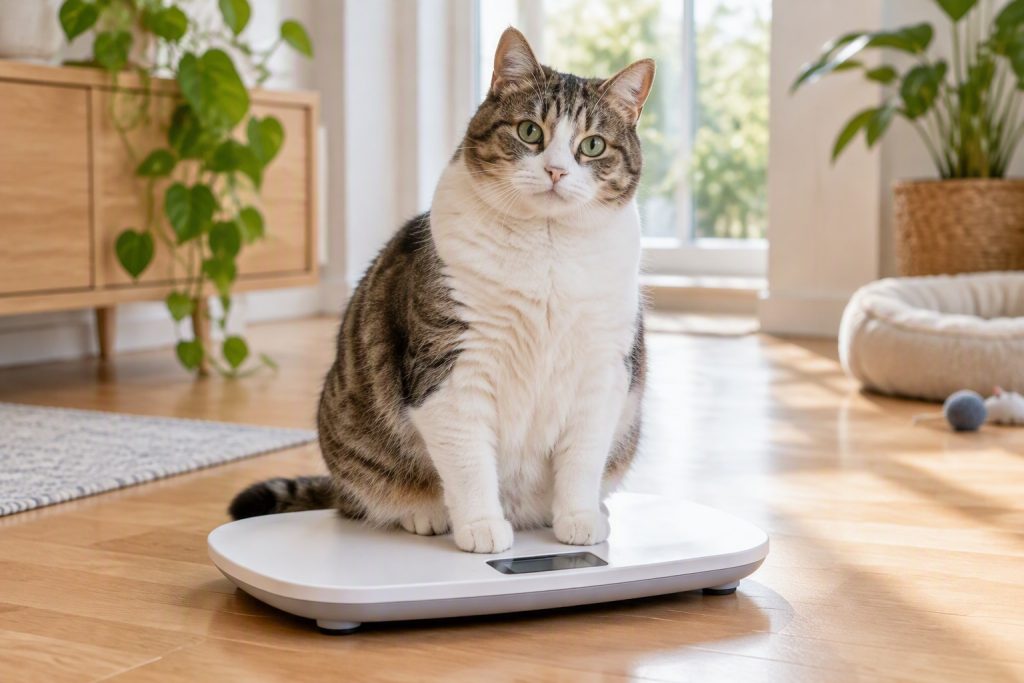
You can tell if a cat is overweight by feeling her ribs and looking at her shape: you should be able to feel the ribs easily under a thin layer of fat, see a waist behind the ribs from above, and see a slight belly tuck from the side. If the ribs are hard to find, the waist has disappeared, or the belly hangs, she is likely carrying extra weight. Your vet can confirm with a body condition score.
- Feel the ribs: they should be easy to find.
- Look for a waist from above and a belly tuck.
- Weigh her monthly to track changes.
- Ask your vet to confirm with a body condition score.
How can I tell if my cat is overweight?
Use your hands and eyes together. Run your fingers along her sides: in a healthy cat, you can feel the ribs under a thin layer of fat, like the bones on the back of your hand. If you have to press firmly to find them, or cannot feel them at all, she is carrying too much fat. Look at her from above and you should see a visible waist behind the ribcage, narrowing before the hips; an overweight cat looks straight or bulges outward. From the side, the belly should tuck up towards the hind legs rather than hanging down in a pouch. A swinging belly or a thick fat pad between the hind legs are further signs. Weigh her on a baby scale monthly and record it, because gradual gain is easy to miss. If you are unsure, your vet can assess her body condition score quickly and reliably.
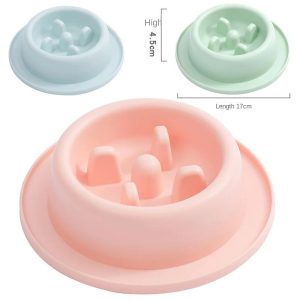
Round bowl with a removable flower insert. Made from PP. Made for daily feeding and fresh water. Keeps…
What is a healthy weight for a cat?
There is no single ideal number, because healthy weight depends on breed and frame. A typical domestic cat weighs around four to five kilograms, but a large breed may be healthy at six or more, and a small cat may be perfectly fine at three. This is why body condition matters more than the number on the scale. Vets use a body condition score, usually on a nine-point scale, where around four to five out of nine is ideal: ribs easily felt, a visible waist, and a slight belly tuck. A score above five suggests excess weight, and a score of eight or nine means obesity. Your cat’s individual ideal weight is the weight at which she scores well, not a fixed target from a chart. Track her weight over time, because a steady gain of even a few hundred grams matters in a small animal. Ask your vet what her target weight should be and how to get there safely.
What health problems does cat obesity cause?
Obesity is one of the most common and most serious health problems in cats, and it affects nearly every system. It raises the risk of diabetes, because excess fat makes the body less responsive to insulin. It puts extra strain on joints, worsening arthritis and making movement painful, which in turn reduces activity and deepens the problem. Overweight cats are more prone to urinary tract problems, skin issues, and certain cancers, and they face higher risks under anaesthesia if they need surgery. Obesity can also make grooming difficult, leading to matting and skin infections, and it can cause hepatic lipidosis, a dangerous liver condition, if a cat stops eating during weight loss that is managed badly. Because cats hide discomfort, the effects of excess weight often go unnoticed until a serious condition develops. Keeping her at a healthy weight is one of the most effective things you can do for her long-term health.
How do I help my cat lose weight safely?
Weight loss in cats must be gradual and supervised, because losing weight too quickly can cause a serious liver condition called hepatic lipidosis. Start by seeing your vet, who can rule out medical causes such as thyroid problems and set a safe target and rate of loss. Then reduce her calories carefully: weigh her food instead of guessing, cut treats sharply, and consider a vet-recommended weight-management diet that keeps her full while delivering fewer calories. Feeding several small meals and using puzzle or slow feeders helps her feel satisfied, and our guide to slow feeders for cats shows how to make a smaller portion last longer. Increase activity with short, frequent play sessions, and our guide to how much play an indoor cat needs explains how to build her up gently. Weigh her weekly and adjust with your vet’s guidance.

Gravity-fed dispenser with a rolling ball at the top. Made from plastic. Made for climbing and perching. Gives…
How much should I feed a cat on a diet?
Your vet should set the calorie target, because feeding too little is dangerous. As a general guide, weight loss plans usually aim for a reduction from her current intake rather than a drastic cut, and the amount is based on her target weight and body condition, not a fixed cup. Weigh the food in grams for accuracy, split it into two to four meals, and count every treat toward the total. If she begs, keep the portion the same but spread it across more meals, add water or a little wet food for volume, and use a slow feeder to extend mealtimes. Never put a cat on a crash diet or let her go without food for more than a day, since that risks hepatic lipidosis. If she is not losing weight after a few weeks on the plan, do not cut further on your own; go back to your vet, because the target may need adjusting or another factor may be at play.
How long does it take a cat to lose weight?
Weight loss in cats should be slow. A common target is around one to two percent of body weight per week, which for a five-kilogram cat is roughly 50 to 100 grams, so reaching a healthy weight can take several months. Slower is safer, because rapid loss risks liver problems and loss of muscle. Expect plateaus, since metabolism adjusts as weight drops, and expect her to ask for food more as her portions shrink. Consistency matters more than speed: keep the feeding plan steady, weigh her regularly, and adjust only with veterinary guidance. If she stops losing weight entirely for several weeks, or starts losing too fast, check in with your vet. The goal is steady, sustainable progress that she can maintain, not a quick fix. Once she reaches her target, you will need a maintenance plan, because weight regain is common if treats and portions creep back up.
Frequently asked questions
- Is my cat fat or just fluffy? Feel for her ribs. If you cannot find them easily, she is likely overweight, whatever her coat looks like. A vet can confirm.
- How much should a cat weigh? It depends on breed and frame. A body condition score of about four to five out of nine is ideal, so aim for that rather than a fixed number.
- Can I just feed less and skip the vet? No. Cats need supervised, gradual weight loss, because cutting food too fast can cause a dangerous liver condition.
- Will my cat get diabetes if she is overweight? Excess weight increases the risk of diabetes and other conditions, which is why reaching a healthy weight matters so much.
- How do I stop her begging while on a diet? Split her portion into more meals, use a slow feeder, add wet food or water for volume, and avoid rewarding begging with treats.





