

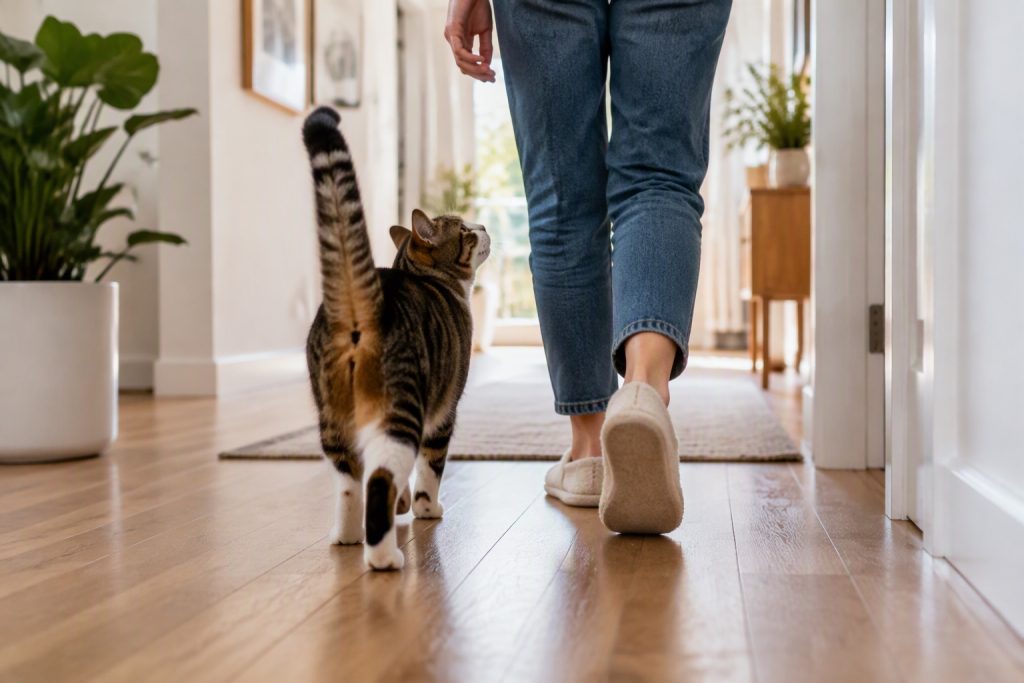
A cat who follows you everywhere is usually doing it for company, comfort, and routine, not because something is wrong. Cats bond closely with their people, and following is one of the clearest ways they show attachment. It can also mean she is hungry, bored, or hoping for play, so the context around the behaviour tells you which it is and whether anything needs to change.
- Following usually signals attachment and routine.
- Hunger and boredom are common everyday triggers.
- True separation anxiety looks more distressed.
- Sudden new following can signal discomfort.
Why does my cat follow me everywhere?
Cats are social animals who form secure attachments to their favourite people, and following is a low-key way of staying near a source of safety and comfort. For many cats, you are simply the most interesting and reliable thing in the house, and she wants to be where the action is. The behaviour is often tied to routine: if you usually feed her, play with her, or let her onto your lap at certain times, she learns to shadow you in anticipation of what comes next. Following can also be a request, because a cat who wants food, a door opened, or a play session will position herself right where you will notice her. In a single-person household, you may be her main companion, which makes the following more intense. Some cats also follow more when the weather keeps them indoors, or when a recent move has left them leaning on routine for reassurance. None of this is abnormal; it is the behaviour of a cat who feels connected to you and knows you are worth keeping track of.

Rainbow-striped plush cylinder. Keeps a bored indoor cat busy and burns off restless energy. Made from fleece and…
Is following me a sign of separation anxiety?
Sometimes, but not always, and the difference lies in how distressed she looks. A relaxed follower trails you with a soft body, upright tail, and calm face, and she settles happily when you stop moving. A cat with separation anxiety follows you with a tense body, cries, paces, over-grooms, or works herself up when you leave, or even when you simply shut a door between you. Real separation anxiety usually shows up as distress before, during, and after your absence, not just a mild wish to be nearby. If she cannot settle even when you are home but in another room, or if she toilets or destroys things only when she is alone, that pattern is worth addressing with your vet. For most cats, though, following is affection rather than anxiety.
How much attention does a following cat actually need?
Enough to meet her social needs without rewarding constant pestering, which is a balance you can shape over time. Cats who follow benefit from predictable, quality interaction: a couple of real play sessions a day, some grooming or lap time, and a warm place to rest near you. That often reduces the intensity of following, because she is not trying to extract attention she never gets and does not have to compete for it. Try to give attention on a steady rhythm rather than only when she demands it, so she learns that contact is reliable and does not need to chase it. If you work from home, a perch or bed near your desk lets her be close without being on you. Meeting the need directly usually calms the behaviour far more than ignoring it ever does.
Could following mean my cat is bored or under-stimulated?
Yes, and this is one of the most common everyday reasons. A cat with nothing to do will follow her human because the human is the only available source of interest, especially if she is indoors with limited outlets for natural behaviour. The fix is enrichment: vertical space to climb, window views, food puzzles, and active play that mimics hunting. Two or three short sessions a day, ending with a meal or a treat, can leave her satisfied and far less clingy. If she follows you and then nips at your legs, she may be asking to play rather than to be petted, and our guide to why cats bite ankles at night explains how to redirect that energy safely. Our piece on how much play an indoor cat needs can help you build a routine that genuinely tires her out.
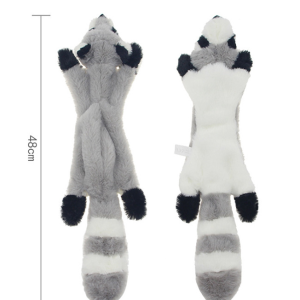
Made from cloth Key features 【Name】 : cat simulation animal sound shell toy[Fill]: No fill, 2 built-in BB…
When is following a sign of a health problem?
Pay attention when following is sudden and new, especially in an older cat who was previously independent. A cat who suddenly shadows you, vocalises more, and wants to be near you constantly may be feeling unwell, in pain, or disoriented, and she is seeking comfort rather than ordinary company. Watch for other changes alongside it: eating or drinking differently, hiding, restless nights, weight loss, or litter box changes. In older cats, increased following and night-time crying can accompany conditions that a vet can assess properly. If the behaviour appears alongside any of those signs, book an appointment rather than assuming it is affection. A change in a long-standing habit is always worth a second look, and you know your cat’s normal better than anyone else does, so trust that instinct if something feels off.
How do I get some space without upsetting her?
You can set gentle boundaries without rejecting her, and most cats adapt well to clear, kind limits. Give her a comfortable spot near you so she can be close while you work or rest, then reward her for settling there with a treat or quiet praise. If she follows you into every room, close one door at a time and keep the separation short at first, returning calmly so she learns you always come back. Avoid pushing her away roughly, which can make a sensitive cat more anxious and more clingy in the long run. Provide enrichment so she has her own things to do, and keep meals and play on a dependable schedule. Over time, a cat with a predictable routine and her own territory usually relaxes and gives you a little more room.
Frequently asked questions
- Does my cat following me mean she loves me? Usually, yes. Following is a common sign of attachment and comfort-seeking in cats who feel safe with their person.
- Why does my cat follow me but not my partner? She has probably chosen you as her primary person, often because you feed, play with, or comfort her most often.
- Why does my cat follow me to the bathroom? It is usually curiosity and a wish to stay near you in a small, enclosed space, not anything unusual.
- Should I ignore my cat when she follows me? No. Give her attention on a steady rhythm instead, so she is not constantly demanding it or feeling ignored.
- Can following be a sign of pain? A sudden change to constant following, especially with vocalising or appetite changes, can be, so have your vet check her rather than waiting to see if it settles on its own.





