

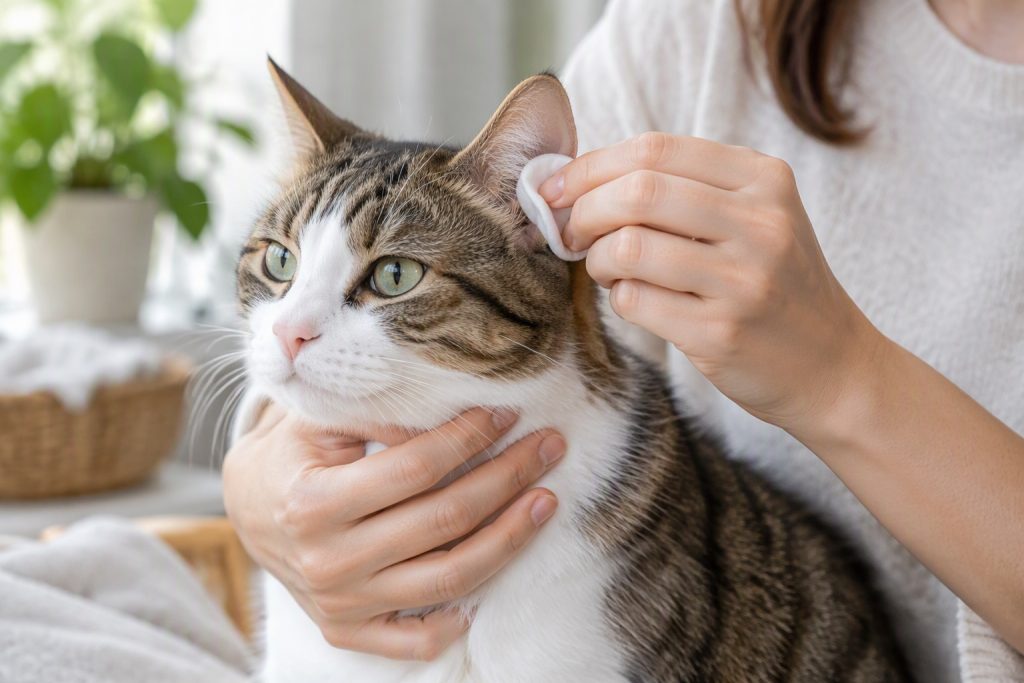
To clean a cat’s ears, use a vet-approved ear cleaner and cotton pads, never cotton buds pushed into the canal. Gently lift the flap, squeeze a little cleaner into the ear, massage the base, and let her shake, then wipe away the loosened wax. Healthy ears need cleaning only occasionally, not weekly.
- Use only a cat-safe ear cleaner and cotton pads.
- Never push cotton buds into the ear canal.
- Healthy ears need cleaning only now and then.
- Redness, odour, or pain means see a vet.
How do I clean my cat’s ears safely?
Start by having everything ready, since a cat will not wait while you search for supplies. Hold her gently but firmly, or wrap her loosely in a towel if she wriggles, and lift the ear flap so you can see the opening of the canal. Squeeze a small amount of vet-approved ear cleaner into the ear, then massage the base of the ear for a few seconds, which you will hear as a soft squelch. Let her shake her head, which brings loosened wax and debris up toward the surface. Finally, wipe the visible parts of the ear and the flap with a cotton pad or soft gauze, using a fresh one for each ear. Never push anything down into the canal, because you can damage the eardrum and pack debris deeper. If your cat struggles, it is better to stop and try again later than to force the process, which only teaches her to fear it.

A stainless ABS plastic and metal comb clears the loose hair before it lands on the furniture. Keep…
How often should I clean my cat’s ears?
Most healthy cats need their ears cleaned only occasionally, often once a month or even less, because cats keep their own ears reasonably tidy through grooming. Over-cleaning can actually irritate the ear canal and upset the natural balance, so more frequent cleaning is not better. The exception is a cat whose vet has recommended a specific schedule, perhaps during treatment for an infection or for a breed prone to waxy ears. Check the ears as part of your regular grooming routine, and clean when you see a little visible wax or dirt on the flap. If you find yourself needing to clean constantly to keep the ears clear, that is a sign something is wrong and worth investigating rather than a reason to clean more. Our guide to how to brush your cat’s teeth follows the same principle of routine, gentle care. Keeping the ears clean is only one part of grooming, and pairing it with a simple daily routine makes both easier to maintain.
What supplies do I need to clean cat ears?
You need very little, but the right items matter. Choose an ear cleaner formulated for cats, ideally one your vet recommends, because some human products and home remedies can irritate the canal or do nothing useful. Cotton pads or soft gauze are ideal for wiping, while cotton buds should be reserved only for the outermost folds and never inserted. A towel can help you wrap a wriggly cat safely, and a few treats keep the experience positive. Avoid alcohol, hydrogen peroxide, and vinegar solutions unless your vet specifically advises them, since these can sting and cause damage. Replace used pads rather than reusing them, and keep the cleaner bottle clean. A calm, unhurried approach with the right supplies makes the job quick and far less stressful for both of you. Warm the cleaner to room temperature first, since a cold liquid in the ear is startling, and have treats ready to reward her afterwards.
What does healthy ear wax look like?
Healthy ear wax is usually a light, thin, pale-brown or amber colour, present in small amounts, and easy to miss on a clean ear. A healthy ear canal should not smell strongly, and the skin inside should be a normal pale pink without redness or swelling. Dark, coffee-ground-like debris can suggest ear mites, while a thick, waxy discharge with a bad, yeasty or musty odour often points to an infection. Yellow or green discharge, or any pus, is a clear reason to see a vet. Some wax is normal, especially in cats with floppy or hairy ears, but the amount and appearance should be fairly consistent from week to week. Learning what is normal for your cat makes it easy to spot a change early.
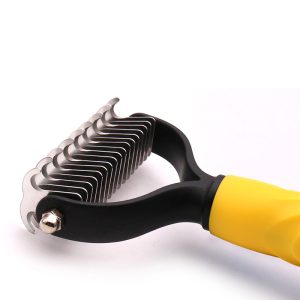
A plastic dematting comb clears the loose hair before it lands on the furniture. Use it before the…
When should I not clean my cat’s ears and see a vet instead?
See a vet rather than cleaning if the ear is red, swollen, hot, or painful, if there is a bad smell or discharge, or if your cat is head-shaking, scratching at the ear, or holding it tilted to one side. These signs point to an infection, mites, a foreign object, or a ruptured eardrum, and cleaning at home can make some of these worse or push debris deeper. Also stop and call your vet if your cat yelps when the ear is touched, since that suggests real pain. Never try to remove a foreign object yourself. If your cat has recurring ear problems, ask about the underlying cause rather than treating symptoms repeatedly, because allergies and other conditions often drive chronic ear trouble. Our article on how often to brush your cat is a useful companion for building an overall grooming routine.
How do I clean ears if my cat hates it?
Go slowly and build the habit in small steps rather than forcing a full clean on the first attempt. Start by simply touching and handling her ears for a few seconds, then reward her with a treat, so she learns that ear handling predicts something good. Progress to lifting the flap, then to wiping with a dry pad, and only later to using cleaner. Keep each session very short, and stop before she becomes upset so the experience never becomes a battle. A towel wrap can help a cat who wriggles, and a second pair of hands makes the job easier. If she becomes genuinely distressed despite your best efforts, ask your vet or a groomer to show you a technique, or to clean the ears for you when needed.
Frequently asked questions
- Can I use olive oil to clean my cat’s ears? No. Oils can trap debris and irritate the canal, so use a proper cat ear cleaner recommended by your vet.
- Can I use cotton buds in my cat’s ears? Only on the outermost folds. Never push a bud into the canal, as this can damage the eardrum.
- Why does my cat shake her head after cleaning? Shaking is normal and helps bring loosened wax and cleaner up toward the surface so you can wipe it away.
- How do I know if my cat has ear mites? Dark, crumbly debris that looks like coffee grounds is a common sign, but a vet should confirm and treat it.
- Should I clean my cat’s ears after a bath? A quick wipe of the outer ear to remove water is fine, but avoid deep cleaning unless your vet advises it.





