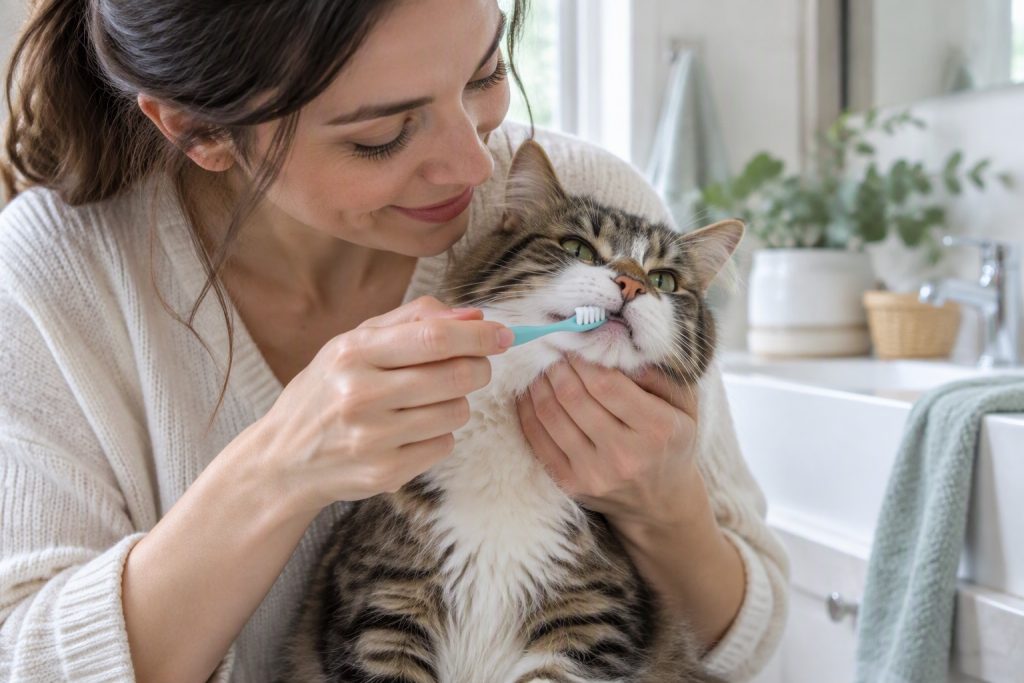
You brush a cat’s teeth with a soft pet toothbrush and cat-safe toothpaste, working along the outer surface of each tooth where plaque builds up, ideally every day. Start slowly by letting her lick the toothpaste, then touch her gums, and build up to a full brush over a few weeks. Most cats accept it once it becomes a calm, treat-rewarded routine rather than a wrestling match. The secret is patience in the first two weeks, because a cat who learns the brush is safe will tolerate it for years.
- Use a soft pet brush and cat-safe toothpaste.
- Never use human toothpaste; it is toxic to cats.
- Build up slowly, in short sessions.
- Daily brushing is the goal; a few times a week still helps.
Why should I brush my cat’s teeth at all?
Dental disease is one of the most common problems vets see in cats, and it is painful in a way owners rarely notice because cats keep eating. Food and bacteria form plaque on the teeth, which hardens into tartar within days, and tartar irritates the gums and leads to gingivitis and eventually periodontal disease. That can mean loose teeth, infection, and pain, and it may require a professional cleaning under anaesthetic or extractions. Brushing physically removes the plaque before it hardens, which is why it is the single most effective thing you can do at home. It also lets you check her mouth regularly, so you spot red gums, a broken tooth, or bad breath early. Given that cats hide mouth pain so well, a two-minute daily habit is a small investment for a big gain in comfort and vet bills saved.
Nail scissors, bath brush, de-shedding glove and a drying towel — the full groom in one box.
What do I need to brush a cat’s teeth?
You need three things: a toothbrush designed for cats, toothpaste made for pets, and treats for rewards. A small soft brush or a finger brush works well, and a dual-headed brush lets you reach the back teeth. Never use human toothpaste, because it often contains xylitol, fluoride, or detergents that are toxic or irritating to cats, and they cannot spit it out. Cat toothpaste comes in flavours like poultry or fish, which makes it a treat in itself. You may also want a small dish of water and a towel on your lap. Some owners add dental wipes or a soft gauze square for cats who will not tolerate a brush at first. Keep everything in one place so the routine is quick and you are not searching for supplies while your cat loses patience. A small basket with the brush, paste, and treats makes the whole session feel predictable, which cats appreciate.
How do I start brushing without a fight?
Go slowly and reward every step. Begin by letting her lick a little toothpaste off your finger, and do that for a few days so she associates the flavour with something good. Then gently lift her lip and rub a finger along her gums for a second or two, praising and treating her afterwards. Once she accepts that, introduce the brush with toothpaste on it and brush just one or two teeth. Build up over several weeks, keeping sessions short and ending on a positive note. Choose a time when she is relaxed, such as after a meal or a play session, and never force her if she struggles, because a bad experience sets you back. The same patient, treat-based approach works for coat care, as our guide to stopping matting in long-haired cats shows, and consistency beats intensity every time.
How do I actually brush each tooth?
Sit behind or beside your cat so she feels supported, and hold her head gently with one hand while you brush with the other. Focus on the outer surfaces of the teeth, against the cheek, because that is where plaque and tartar build up most and where the brush reaches easily. Use small circular motions, spending a few seconds on each tooth, and work from the back of the mouth forward. You do not need to open her mouth or brush the inner surfaces, since the tongue keeps those relatively clean. Aim for about thirty seconds to a minute for the whole mouth. Finish with praise and a treat, and let her go. Our guide to how often to brush a cat’s teeth explains why daily brushing gives the best results, while every other day still controls most plaque.

New Arrival Pet Hair Removal Comb Cat Brush Pet Hair Grooming Tool Hair Shedding Combs Pet Fur Trimming…
What if my cat hates it or has sore gums?
If she genuinely will not tolerate a brush, do not give up on dental care. Dental wipes, gauze wrapped around your finger, and dental gels or water additives can reduce plaque, though they are less effective than brushing. Dental treats and a vet-approved dental diet can help too. If her gums look red, bleed, or she flinches when you touch her mouth, stop and book a vet visit, because brushing over painful gums will only make her more resistant. A vet can assess whether she needs a professional clean, and many cats accept brushing far better once a sore tooth is treated. If she has never had her mouth examined, that check-up is the right first step, and it will tell you whether home brushing is realistic for her right now. Some cats need a professional clean before home care can be comfortable, and after that many become far more cooperative.
What else supports dental health?
Brushing does the heavy lifting, but a few habits help. Feed a complete diet, and ask your vet whether a dental-specific food suits her, since some kibbles are shaped to scrub the teeth. Offer safe dental chews or toys designed for cats, and avoid hard objects like bones, antlers, or hooves, which can fracture teeth. Keep up with professional check-ups so problems are caught early, and watch for signs such as bad breath, drooling, dropping food, or chewing on one side. Fresh water supports overall health but does not clean teeth. Finally, be realistic: perfect brushing every single day is a goal, not a requirement, and even three or four sessions a week makes a meaningful difference. Consistency over months matters far more than an intense burst of effort that leaves both of you frustrated. Set a realistic schedule you can keep, and treat every session as a small win rather than a test of wills.
Frequently asked questions
- Can I use human toothpaste on my cat? No. Human toothpaste often contains xylitol, fluoride, and detergents that are toxic or irritating to cats. Always use pet toothpaste.
- How often should I brush my cat’s teeth? Daily is ideal for controlling plaque. Every other day still helps a great deal, and even a few times a week is worthwhile.
- My cat is too old to start. Is it worth it? Yes. Older cats often benefit most, since dental disease becomes more common with age. Start gently and have her mouth checked first.
- Do dental treats replace brushing? No, but they help. Treats and dental diets reduce some plaque; brushing removes it far more thoroughly.
- What if her gums bleed when I brush? Stop and see your vet. Bleeding gums usually mean gingivitis or another problem that needs professional assessment.