A cat bites your hand usually because hands have become part of play, because she is overstimulated by petting, or because she is frightened or in pain. It is rarely true aggression for its own sake. The fix is to take hands out of the game, learn her warning signs, and give her energy a proper outlet.
- Hands should never be part of play.
- Overstimulation is a common trigger for bites.
- Freeze and withdraw rather than pulling away.
- Redirect biting onto toys, never punish.
Why does my cat bite my hand?
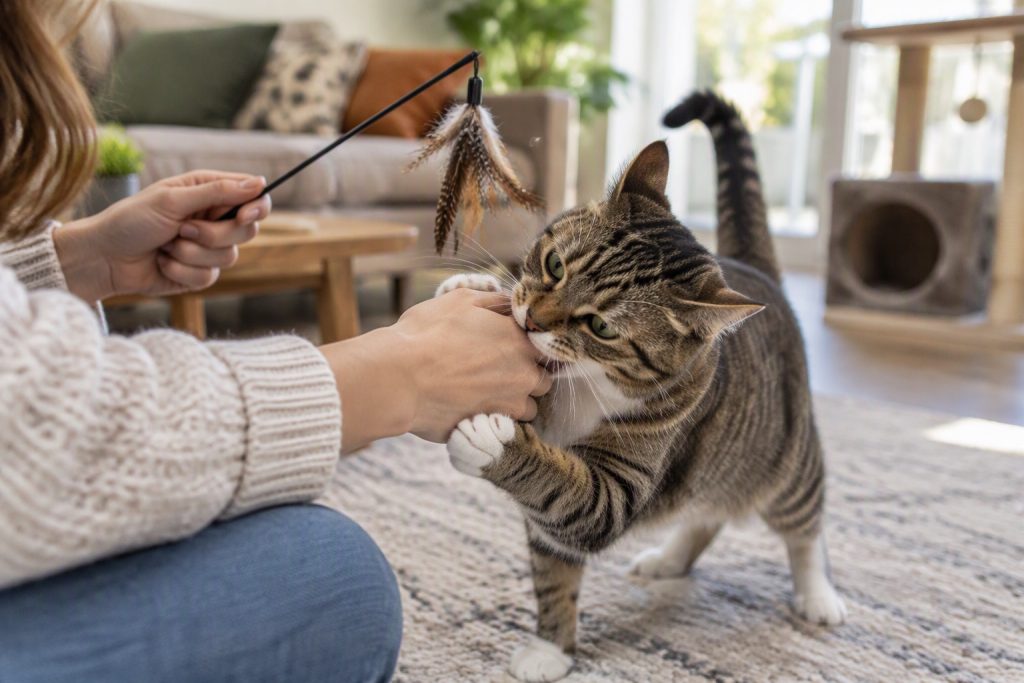
Hand biting almost always starts innocently. A kitten grabs a moving hand during play, someone laughs or pulls away, and the game continues, which teaches her that hands are thrilling toys. By adulthood, that habit is established, and she bites your hand during play because she has learned it works. A second common cause is overstimulation: petting feels good until it suddenly does not, and she bites to say stop, often after a twitching tail or flattened ears. Fear and pain are other reasons, particularly if she bites when you reach toward a sore spot or corner her. Some cats also bite to demand attention or food. Understanding which of these fits your cat tells you what to change, because a play bite, a stop bite, and a pain bite each need a different response.

A rotating ABS plastic and feather wand fits a cat that needs a target more than another thing…
Is hand biting ever affectionate?
A gentle mouthing without pressure can sometimes be affectionate or a form of social grooming, especially if it comes with purring, kneading, or a relaxed body. Some cats nibble softly on a hand the way they might groom a littermate, and that is quite different from a hard, sudden bite. The key is the pressure and the context: a soft, brief nibble during cuddling is usually harmless, while a hard bite that breaks skin or comes with a tense body is not. Even affectionate mouthing is worth discouraging gently, because a cat who nibbles softly now may bite harder when overstimulated later, and it is hard to explain the difference to a cat or to a visiting child. If the mouthing is gentle and rare, you can simply redirect her to a toy. If it is frequent or firm, treat it as a behaviour to change rather than affection to enjoy. A soft nibble can also be a way of asking you to keep still, so watch whether she relaxes or tenses right after.
Why does my cat bite when I pet her?
A bite during petting is usually overstimulation, and it is one of the most common forms of hand biting. Many cats enjoy contact for a while but reach a threshold where the same touch becomes irritating, and they bite to end it. The warning signs come before the bite: a twitching or lashing tail, flattened ears, dilated pupils, skin rippling along the back, a sudden freeze, or a head turn toward your hand. Cats often give these signals for a while before resorting to teeth, so learning them lets you stop early. Some areas are more sensitive than others, and many cats dislike having their belly, tail base, or paws touched. Keep petting sessions short, stick to the areas she enjoys, such as the head and cheeks, and stop before she reaches her limit. Respecting her signals prevents most petting bites.
How do I stop my cat biting my hand during play?
The most effective step is to remove hands from play entirely and replace them with toys. Use a wand toy, a ball, or a kicker toy so your cat can grab and bite something appropriate, and keep your hands out of reach. If she bites your hand, freeze and stop the game immediately rather than pulling away, because pulling mimics struggling prey and intensifies the bite. Wait a moment, then offer a toy and resume play so she learns that teeth end the fun while toys keep it going. Never use your hands to tease or wrestle, even gently, because it teaches exactly the behaviour you are trying to stop. Two or three proper play sessions a day, ending with a treat or a meal, drain the hunting drive that fuels most hand biting. Our guide to how to stop a cat from biting covers the full approach.
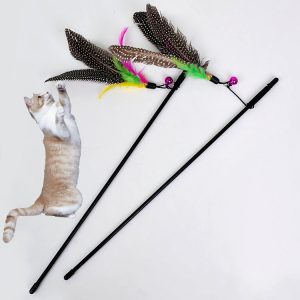
A teaser wand built to turn a few minutes into a full hunt — a cat needs to…
Should I ever let my cat bite my hand?
It is best not to, even in play, because a cat cannot distinguish between a hand that is acceptable to bite during a game and a hand that should never be bitten. Allowing it as a kitten sets a habit that becomes harder to undo as an adult, and the bites get stronger as she grows. It also makes your cat more likely to bite guests or children, who will not understand the game or tolerate it. If you want to wrestle and let her use her teeth, use a stuffed kicker toy or a thick glove designated for play, so the boundary stays clear. Some owners enjoy rough play, but the cost is usually more bites and less predictable behaviour. Keeping hands as hands, and toys as toys, is the simplest way to keep biting under control and your relationship relaxed.
When does hand biting need a vet or behaviourist?
Seek professional help if the biting is new, sudden, or severe, because pain and illness are common hidden causes of irritability in cats. A cat with dental disease, arthritis, or another painful condition may bite when handled, even if she was always gentle before. A veterinary check should come first whenever biting changes without a clear playful trigger or comes with other signs such as hiding, appetite loss, or flinching. If a vet finds no medical cause and the biting is frequent, hard, or directed at people unpredictably, a qualified cat behaviourist can help identify triggers and build a plan. A behaviourist can also help if the biting is directed at one person or happens in specific situations you cannot identify alone. Also take seriously any bite that breaks the skin, for the person bitten, since cat bites can become infected and may need medical attention. Night-time ankle biting has its own drivers, and our guide to why cats bite ankles at night explains how to handle it.
Frequently asked questions
- Why does my cat bite my hand gently? A soft, brief nibble during cuddling is often affectionate or grooming, but redirect it to a toy if it becomes frequent or firm.
- Should I pull my hand away when my cat bites? No. Pulling mimics prey and intensifies the bite. Freeze, let go, and stop the interaction instead.
- Does my cat bite because she hates me? Almost never. Hand biting usually comes from play, overstimulation, fear, or pain rather than dislike.
- Will my cat grow out of hand biting? Kittens often do if redirected, but adults usually need a change in how play and petting are handled.
- Can I use a glove to play roughly with my cat? Only a designated thick play glove or kicker toy. Bare hands should never be part of the game.