

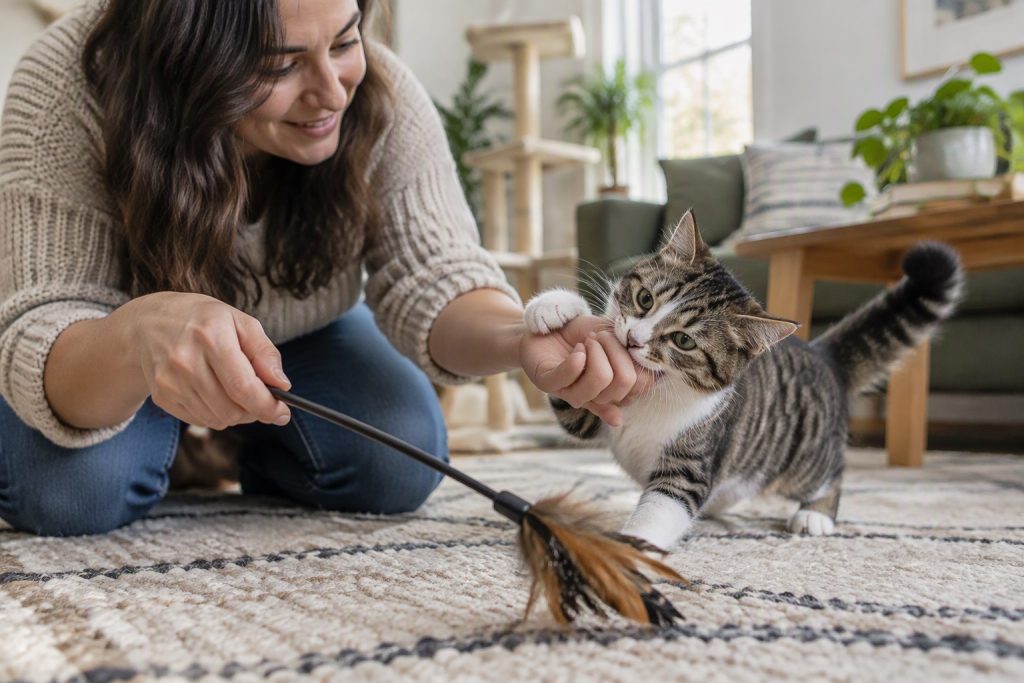
Stopping a cat from biting comes down to reading why she is biting and changing what happens next. Most bites are play, overstimulation, or fear rather than aggression, and each needs a different response. The reliable fix is to redirect the energy, remove the reward, and never use your hands as toys.
- Never use hands or feet as toys.
- Stop play the moment teeth touch skin.
- Redirect biting onto toys, not punishment.
- Watch for overstimulation and pause early.
Why does my cat bite?
Cats bite for a handful of clear reasons, and identifying the trigger is most of the solution. Kittens bite during play because they are practising hunting skills and have not yet learned bite inhibition. Adult cats bite when play escalates and they become overstimulated, when they are frightened and feel cornered, or when they are in pain and want to be left alone. Some cats bite to end petting that has gone on too long, which is why a nip often follows a twitching tail or flattened ears. Biting can also be a request, such as a cat who nips your ankles to demand food or play. Once you know which category your cat falls into, you can respond in a way that actually reduces the behaviour instead of accidentally rewarding it. A cat who bites during play is not being aggressive, and treating it as aggression usually makes things worse.

A rotating ABS plastic and feather wand fits a cat that needs a target more than another thing…
How do I stop a cat from biting my hands during play?
The single most effective step is to never let hands or feet become part of the game, because a cat cannot tell the difference between a hand that is fun to grab and a hand that should be off limits. Use wand toys, balls, and kicker toys instead, and keep your hands out of the action. If she grabs your hand, go still and stop the game immediately rather than pulling away, since pulling mimics prey and increases the chase. Wait a beat, then offer a toy and resume play so she learns that teeth end the fun but toys keep it going. Two or three real play sessions a day, ideally ending with a treat or a meal, give her an outlet for the hunting drive that fuels most play biting. Wand toys that mimic the dart and pause of real prey are the single best outlet, because they let her complete the full stalk, chase, and pounce sequence.
What should I do the moment my cat bites?
React calmly and consistently, because your response teaches her what biting achieves. Say nothing loud, do not yank your hand away, and do not scold; simply freeze, then withdraw attention entirely for a short pause. This removes the reward, which for a playful cat is the excitement of the chase, and for an overstimulated cat is the end of the contact she wanted to stop. If she is wound up, give her space to settle before you interact again. Then, when she is calm, restart with a toy so the message is clear: teeth stop the fun, appropriate play keeps it going. Consistency matters more than any single technique, so make sure everyone in the household responds the same way every time. If one person allows hand play and another does not, the cat learns the habit is sometimes rewarded, which keeps it alive.
Does punishment stop a cat from biting?
Punishment rarely works and usually makes biting worse. Hitting, shouting, or spraying water may stop the behaviour in the moment, but a cat does not connect the punishment to the bite the way a person would. Instead, she learns that hands are unpredictable and frightening, which can turn play biting into defensive biting and damage the trust between you. Punishment also teaches her to bite and then flee, or to suppress warning signs, so you lose the very signals that tell you to back off. The behaviour you want is a cat who feels safe enough not to need her teeth. Reward the behaviour you want with toys, treats, and calm attention, and ignore or interrupt the behaviour you do not, and you will get further than any correction. Time-outs should be brief and calm, lasting only a minute or two, so she connects the pause with the bite rather than learning to fear you.
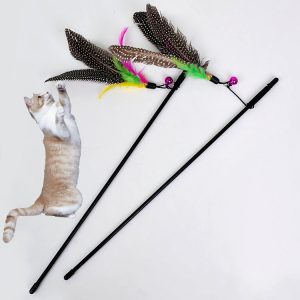
A teaser wand built to turn a few minutes into a full hunt — a cat needs to…
How do I stop a cat from biting ankles and feet?
Ankle biting is usually a request for play or attention, and it tends to happen when a cat has stored energy and no outlet. The best fix is to pre-empt it with a proper play session before the behaviour starts, especially in the evening when cats are naturally most active. If she ambushes your feet, stop moving and go quiet, then offer a toy on a wand so she can redirect the drive onto something appropriate. Never run, because that turns your feet into fleeing prey and rewards the behaviour. Our guide to why cats bite ankles at night covers the night-time version in detail, and pairing play with a scheduled meal helps her settle instead of hunting your legs. An evening play session followed by a meal taps into her natural hunt-eat-groom-sleep rhythm and reduces night-time ambushes.
When is biting a sign my cat needs a vet?
See a vet when biting is new, sudden, or out of character, because pain and illness are common hidden causes of irritability in cats. A cat with dental disease, arthritis, an ear infection, or an upset stomach may bite when handled in a way that hurts, even if she was always gentle before. Watch for other clues: hiding, appetite changes, over-grooming, or flinching when touched in a specific spot. Also take seriously any bite that breaks the skin, since cat bites can become infected and need prompt medical attention for the person bitten. If your cat’s biting has no clear playful trigger, or comes with any sign of discomfort, a veterinary check is the right first step before behaviour work. Increased vocalising can also accompany discomfort, and our article on why cats meow so much explains when noise points to a problem. Sudden, unprovoked biting in a cat who was always gentle is a change worth taking seriously rather than dismissing as a mood.
Frequently asked questions
- Why does my cat bite me gently then lick me? This is often affection mixed with overstimulation, so watch her body language and pause the petting before she escalates.
- Should I hiss at my cat when she bites? Some owners find a short, sharp sound interrupts play, but never use punishment. Redirection to a toy works better.
- Is my cat being aggressive or just playing? Play biting comes with a loose body and no real force, while aggression comes with flattened ears, hissing, and a tense posture.
- Will my cat grow out of biting? Kittens often do as they learn bite inhibition, but without redirection the habit can persist into adulthood.
- Can I stop biting by ignoring my cat? Ignoring ends the reward for attention-seeking bites, but you still need daily play so her energy has a proper outlet.





