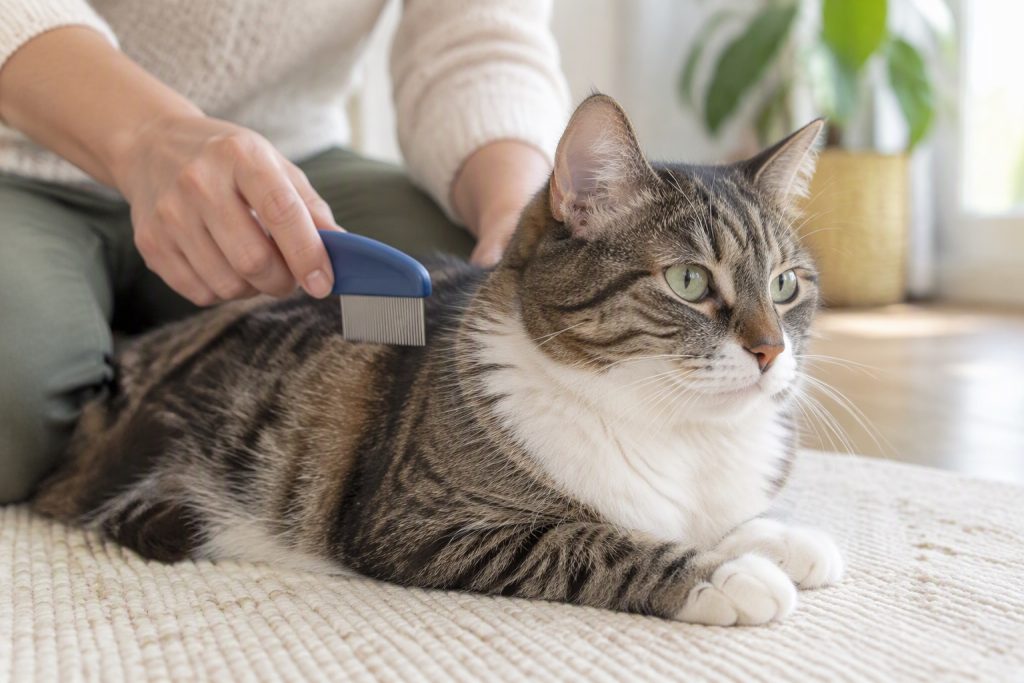
Cat fleas are small, fast, dark-brown insects that live in the fur, feed on blood, and multiply quickly. Signs include intense scratching, tiny black specks in the coat, and live fleas or flea dirt near the tail base and neck. Treating the cat alone is not enough, because most of the flea population lives in the environment.
- Scratching and black specks are key signs.
- Treat the cat and the home together.
- Use only cat-safe flea products.
- Fleas can cause anaemia and skin problems.
How do I know if my cat has fleas?
The clearest sign is intense scratching, biting, and grooming, especially around the tail base, neck, and belly, which is where fleas tend to gather. You may also see small, fast-moving dark insects in the coat, or tiny black specks that look like pepper. Those specks are flea dirt, which is digested blood, and you can confirm it by placing some on a damp white tissue: if it dissolves into a reddish-brown stain, it is flea dirt. Other signs include hair loss, red or scabbed skin, and small crusty bumps. Some cats are allergic to flea saliva, so a single bite can trigger severe itching and skin damage even when few fleas are present. If you are unsure, comb your cat over a white surface, focusing on the back and tail base, and look at what falls out. Run the comb through the coat and tap it onto the white surface, then watch for the specks to dissolve into a reddish stain, which confirms blood-fed fleas. Our guide to how often to brush your cat explains how routine grooming helps you spot problems early.
Nail scissors, bath brush, de-shedding glove and a drying towel — the full groom in one box. Cuts…
How do I get rid of fleas on my cat?
To clear fleas from your cat, use a flea treatment that is specifically licensed for cats and follow the instructions exactly, including the correct dose for her weight and the right interval between applications. Never use a dog product on a cat, because some canine flea treatments contain ingredients that are highly toxic, even fatal, to cats. Treat every pet in the household at the same time, because fleas move between animals and untreated pets will reinfest the treated ones. Flea combs help remove adults and dirt, and a bath may be needed for a heavily infested cat, but check with your vet first. Because fleas in the environment are the real reservoir, treating the cat alone will not solve the problem. If your cat is young, pregnant, unwell, or on other medication, ask your vet which product is safe before you start.
How do I treat my home for fleas?
Treating the home is essential, because the adult fleas on your cat are only a small fraction of the population; the rest are eggs, larvae, and pupae in carpets, bedding, and cracks. Wash all pet bedding and your own bedding in hot water, and vacuum thoroughly, including carpets, furniture, skirting boards, and under furniture, then dispose of the vacuum bag or empty the canister outside. Repeat vacuuming frequently, because the vibration encourages pupae to emerge so they can be killed. Use a household flea treatment that also breaks the flea life cycle, and pay attention to the areas your cat frequents. You may need to repeat treatment after a couple of weeks to catch newly emerged fleas. Persistent infestations can be stubborn, so consistency over several weeks matters more than a single deep clean.
Are flea treatments safe for cats?
Flea treatments are safe when they are the right product, used correctly, but the wrong product can be dangerous. Only ever use flea treatments specifically labelled for cats, and never apply a dog product, even a small amount, because certain ingredients that are safe for dogs are toxic to cats. Follow the dosing instructions precisely, do not combine multiple products unless your vet advises it, and do not treat kittens without veterinary guidance, since some products are not suitable for young or underweight cats. Watch for reactions such as excessive drooling, trembling, lethargy, or skin irritation after application, and contact your vet if you see them. If your cat has a health condition or is on medication, check before treating. When used properly, modern flea products are safe and effective, but reading the label and matching the product to your cat is essential. When in doubt, your vet is the best source of advice.
Brush designed to lift loose hair out of a cat's coat — the hair has to go somewhere…
Can fleas make my cat sick?
Fleas can cause real health problems, not just itching. Because they feed on blood, a heavy infestation can cause anaemia, which is especially dangerous for kittens and small or elderly cats, and can be life-threatening if untreated. Fleas also transmit other parasites, including tapeworms, which cats get by swallowing an infected flea while grooming. Many cats develop flea allergy dermatitis, an intense reaction to flea saliva that causes severe itching, hair loss, and skin infections from scratching. Fleas can also carry bacteria that cause illness in cats and, in rare cases, in people. If your cat seems lethargic, has pale gums, is losing weight, or has significant skin damage, see your vet promptly, because these signs suggest the infestation is affecting her health rather than just her comfort. Our article on managing cat shedding can help you keep her coat healthy while you deal with the fleas.
How do I prevent fleas coming back?
Prevention is far easier than treatment, so keep every pet in the home on a regular flea prevention programme recommended by your vet, and stick to the schedule rather than treating only when you see fleas. Because fleas can survive in the environment and can be brought indoors on clothing, shoes, or other animals, ongoing prevention protects your cat even when she never goes outside. Keep bedding washed regularly, vacuum frequently, and check your cat’s coat during grooming so you catch any problem early. If you have outdoor cats or dogs, be especially consistent, since they can carry fleas in. Treating the whole household on a steady schedule is the most reliable way to keep fleas from returning. If infestations keep recurring despite treatment, talk to your vet, because there may be a gap in the plan or a product that is not working as expected. A consistent schedule is the key, since skipping doses gives fleas a window to breed and re-establish themselves.
Frequently asked questions
- Can indoor cats get fleas? Yes. Fleas can come in on clothing, shoes, or other pets, so even indoor cats need flea prevention.
- What does flea dirt look like? It looks like tiny black specks of pepper in the coat, and it turns reddish-brown when placed on a damp tissue.
- Can I use dog flea treatment on my cat? No. Some dog flea products are highly toxic to cats, so use only products labelled for cats.
- How long does it take to get rid of fleas? It can take several weeks to break the life cycle, so treat the cat and the home consistently and repeat as directed.
- Do fleas live on humans? Fleas prefer pets but will bite people, so you may notice bites on your ankles while the infestation is being cleared.