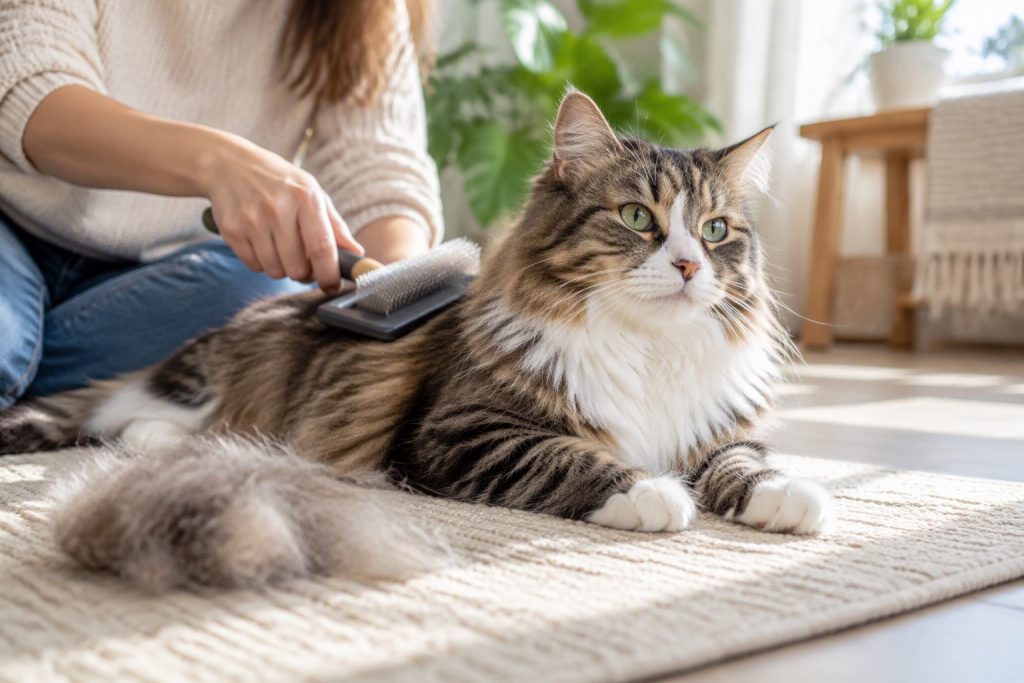
Cat shedding is normal and largely driven by daylight, temperature, and coat type, but you can manage it with regular brushing, good nutrition, and a little housekeeping. You cannot stop a healthy cat from shedding, and you should not try to. The realistic goal is to reduce loose hair, protect the coat, and keep it off your furniture.
- Shedding is normal and tied to seasons and light.
- Brush several times a week, daily in heavy sheds.
- Good food and hydration support a healthy coat.
- Sudden bald patches or itch need a vet.
Why does my cat shed so much?
Shedding is how a cat replaces old or damaged hair with new growth, and the amount varies widely by breed, coat type, and environment. Cats shed more in spring and autumn as daylight and temperature shift, and indoor cats under artificial light may shed steadily all year instead of in two big bursts. Long-haired and double-coated cats drop far more visible hair than short, single-coated cats, even when both are perfectly healthy. Stress, poor nutrition, and dry indoor air can also increase shedding. The key distinction is between normal shedding, which is even across the coat and leaves no bare patches, and abnormal hair loss, which is patchy, itchy, or accompanied by irritated skin. If the coat looks thin or the skin is red and flaky, that is a medical question rather than a grooming one. Sudden, patchy loss is the clue that separates a normal shed from a problem, so learn what your cat’s coat looks like at its best.
Nail scissors, bath brush, de-shedding glove and a drying towel — the full groom in one box. Cuts…
How often should I brush my cat to control shedding?
For most cats, brushing two to three times a week keeps loose hair under control and keeps the coat healthy, while during a heavy seasonal shed you may need to brush daily. Short-haired cats often manage with a couple of sessions a week, but long-haired cats need more frequent grooming to prevent tangles as well as to remove dead hair. The trick is to make it brief and pleasant rather than a long ordeal, so she learns to tolerate and even enjoy it. Our guide to how often to brush a cat breaks the schedule down by coat type. Brushing removes hair before it lands on your sofa and, just as importantly, reduces the amount your cat swallows while grooming, which lowers the risk of hairballs. Swallowed hair that does not pass can form a hairball, and in rare cases it can cause a blockage, so reducing intake matters for her health as well as your furniture.
Which grooming tools actually reduce shedding?
The right tool depends on the coat. A fine-toothed metal comb works well for long-haired cats because it reaches the undercoat and catches tangles before they tighten. A slicker brush is excellent for removing loose surface hair and smoothing the topcoat on most cats. For double-coated breeds during a heavy shed, a deshedding tool or an undercoat rake removes a surprising amount of loose fur, but use it gently and sparingly to avoid irritating the skin. Rubber curry brushes are a good option for cats who dislike metal, and they double as a massage. Whatever you choose, keep sessions short and stop before your cat gets restless, because a bad grooming experience sets you back. Clean the tool between uses so you are not spreading dander and hair back onto the coat. A clogged brush pulls at the coat and spreads loose hair rather than removing it, so a quick clean after each session keeps the tool working as it should.
Does diet affect how much my cat sheds?
Diet plays a real role in coat condition, even though it cannot stop normal shedding. Cats need good-quality animal protein and an appropriate balance of fats, including omega fatty acids, to grow a strong, flexible coat and healthy skin. A poor diet often shows up first as a dull, brittle coat that sheds and breaks more easily. Fresh water matters too, since dehydration contributes to dry skin and flaking. If your cat eats a complete, balanced diet, extra supplements are usually unnecessary, and some can do harm if given without advice. If the coat looks poor despite good food, that is a reason to see your vet rather than to keep adding products, because underlying illness can affect the coat as well. A dull, greasy, or brittle coat that does not improve with good nutrition is a signal worth investigating, since the skin and coat often reflect what is happening inside.
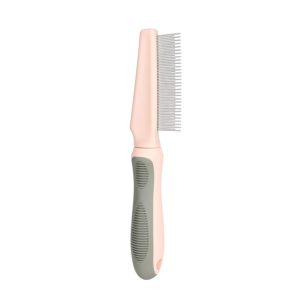
Brush designed to lift loose hair out of a cat's coat — the hair has to go somewhere…
Can I reduce shedding around the house?
You cannot stop the hair, but you can stop it from taking over. Brush your cat in one spot, ideally outdoors or over an easy-to-clean surface, so the loosened hair is captured before it spreads. Lint rollers, rubber squeegees, and a good vacuum with a pet attachment handle furniture and carpets well, and washing bedding regularly removes the dander that clings to fabric. Air filters can help reduce airborne hair and dander in a closed home. If matting is part of the problem, our guide to stopping matting in long-haired cats explains how to keep the coat from tangling in the first place. A consistent routine of brushing plus cleaning is far easier than trying to catch up after the hair has settled everywhere. Vacuuming regularly, washing bedding in hot water, and using a lint roller on soft furnishings all help, but brushing remains the first line of defence.
When is heavy shedding a sign of a problem?
See your vet if the shedding is patchy rather than even, if your cat has bald spots, or if the skin is red, scabby, or itchy. These can point to parasites such as fleas or mites, a skin infection, allergies, or a hormonal or nutritional problem. Excessive shedding with a dull coat, weight loss, or changes in appetite or thirst can also signal an underlying illness. A cat who suddenly sheds far more than usual, or who grooms to the point of baldness, needs a proper examination rather than more brushing. Stress and anxiety can also drive over-grooming and hair loss. When shedding changes alongside any other symptom, treat it as a health question and get it checked. A vet can rule out parasites, allergies, and hormonal or nutritional causes, and treat the problem at its source rather than only the symptom.
Frequently asked questions
- Is it normal for my cat to shed all year? Yes, especially for indoor cats under artificial light, who often shed steadily rather than in two seasonal bursts.
- Does shaving my cat reduce shedding? Shaving is not recommended. It can disrupt temperature regulation and coat regrowth, so brushing is the better approach.
- Can hairballs be caused by shedding? Yes. More loose hair means more swallowed hair, which can form hairballs, so regular brushing helps reduce them.
- Do certain breeds shed less? Some single-coated breeds shed less visibly, but no healthy cat is truly hypoallergenic or shed-free.
- How do I stop my cat hating brushing? Keep sessions very short, use a gentle tool, and pair brushing with treats so she builds a positive association.