Cat bad breath, or halitosis, is most often caused by dental disease, including plaque, tartar, and gum inflammation. It can also come from diet, an upset stomach, or an underlying illness. Persistent bad breath is not something to accept as normal. A vet check is the best way to find the cause and protect your cat’s teeth and health.
- Dental disease is the most common cause.
- Persistent bad breath needs a vet check.
- Brushing teeth is the best prevention.
- Sweet or fruity breath can signal illness.
Why does my cat have bad breath?
The most common reason for bad breath in cats is dental disease. Food particles and bacteria build up as plaque, which hardens into tartar, and the resulting gum inflammation produces a strong odour. Many cats over the age of three have some degree of dental disease, and it often goes unnoticed because cats hide discomfort well. Bad breath can also come from what she eats, especially if she eats strong-smelling food or scavenges, and it may reflect an upset stomach or a digestive issue. Certain medical conditions produce characteristic odours, such as kidney disease or diabetes, and a foreign object stuck in the mouth or throat can also cause halitosis. A cat’s breath should not smell offensive, so if it does, that is a signal to look for a cause rather than to accept it as normal. Our article on how to brush your cat’s teeth explains how to check and care for her mouth.
Nail scissors, bath brush, de-shedding glove and a drying towel — the full groom in one box. Cuts…
Is cat bad breath a sign of dental disease?
Very often, yes. Dental disease is the leading cause of bad breath in cats, and it usually starts with plaque and tartar accumulating along the gumline. As the gums become inflamed, the bacteria involved produce a strong smell, and the problem worsens as the disease progresses. Signs beyond odour include red or bleeding gums, yellow-brown buildup on the teeth, drooling, dropping food while eating, chewing on one side, and pawing at the mouth. Cats in pain may also eat less, lose weight, or become irritable when their heads are touched. Because dental disease is painful and can affect the heart, kidneys, and other organs if it progresses, it should not be dismissed as cosmetic. A veterinary dental examination can assess how much disease is present and whether a professional cleaning is needed. Treating it improves both her breath and her comfort, and it may prevent more serious problems later.
Can I fix my cat’s bad breath at home?
You can improve mild bad breath at home through dental care, but you cannot cure established dental disease without veterinary treatment. Daily brushing is the most effective home measure, and cat-specific toothpaste and a small brush make it possible for many cats to tolerate the routine. Dental treats, dental diets, and water additives can help reduce plaque, but they are supplements to brushing rather than replacements. If the odour is strong, or if you can see brown buildup or red gums, home care alone will not fix it, because tartar that has already formed needs professional removal. Do not try to scrape tartar off yourself, which can damage the teeth and gums. If your cat resists brushing entirely, ask your vet about other options. Our guide to cat vaccinations and routine care explains how dental checks fit into her overall health plan.
How do I brush my cat’s teeth?
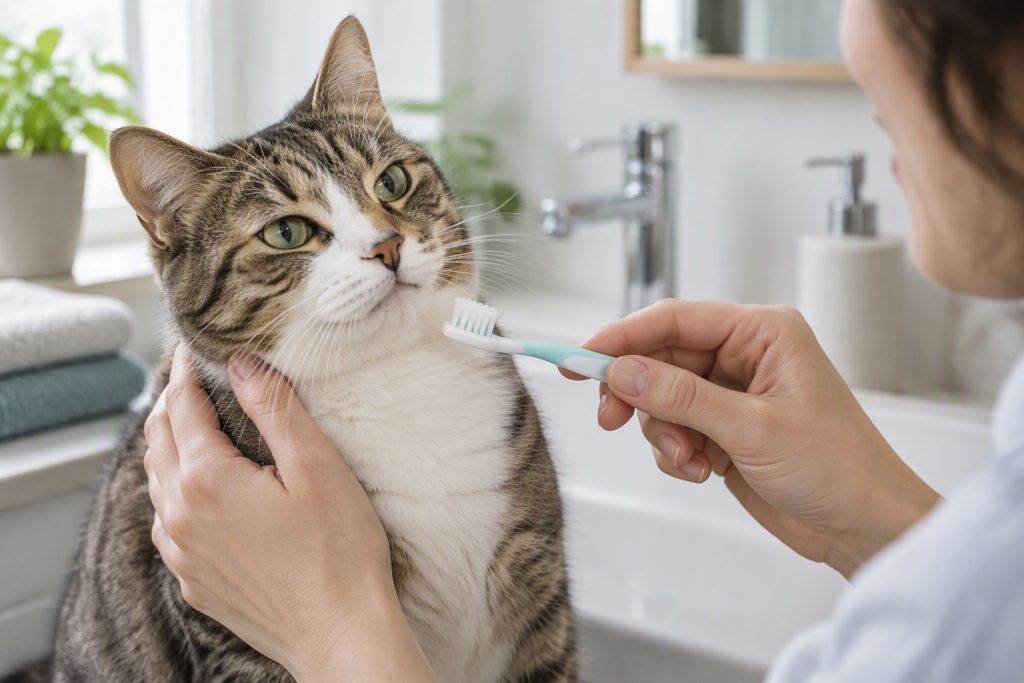
Start slowly and build the habit in small steps, because most cats need time to accept having their mouth handled. Begin by touching her lips and gently lifting them for a second, then reward her, and progress over days to rubbing a little cat toothpaste on her gums with your finger. Once she tolerates that, use a small cat toothbrush or a finger brush, focusing on the outer surfaces of the teeth where plaque builds up most. Use only toothpaste made for cats, never human toothpaste, which can be toxic. Aim for daily brushing, but even a few times a week is far better than nothing, and consistency matters more than a perfect technique. Keep sessions short and positive, and stop before she becomes annoyed. If brushing is not possible, a vet can advise on alternatives such as dental diets or professional cleaning. Brushing well takes practice, but consistency matters far more than perfect technique, and your vet can show you the best method for your cat.

A plastic dematting comb clears the loose hair before it lands on the furniture. Use it before the…
When should I see a vet about bad breath?
See a vet if the bad breath is persistent, strong, or worsening, and especially if it comes with other signs such as red or bleeding gums, drooling, difficulty eating, dropping food, weight loss, or pawing at the mouth. These suggest dental disease or another problem that needs treatment. Also see a vet if the odour is unusual, such as sweet, fruity, or ammonia-like, because these can indicate conditions such as diabetes or kidney disease rather than a dental issue. A cat who has bad breath and is also eating less, vomiting, or behaving differently should be examined promptly. Routine dental checks are valuable even without obvious problems, since cats often hide dental pain until it is advanced. Treating dental disease early is easier, less expensive, and much kinder to your cat than waiting until it is severe. When in doubt, a check-up is the safest choice.
Can diet cause bad breath in cats?
Diet can play a part in bad breath, though it is rarely the main cause. Strong-smelling foods, such as fish-based diets, can leave a noticeable odour on the breath, and a cat who eats something unusual or scavenges may have temporary bad breath. Some cats also have bad breath when they have an upset stomach or digestive issue. A dry diet that helps scrape the teeth may reduce plaque compared with a soft diet, but diet alone does not prevent dental disease, and many dental products marketed for breath only mask the problem. The most reliable approach is to combine a good diet with daily brushing and regular veterinary dental care. If your cat’s bad breath persists despite good food and dental hygiene, that points to a cause beyond diet, and a vet should investigate rather than you trying to solve it with food changes alone.
Frequently asked questions
- Why does my cat’s breath smell like fish? A fish-based diet can leave that odour, but persistent strong breath may also indicate dental disease, so have it checked.
- Can bad breath be normal in cats? No. A healthy cat’s breath should not be offensive. Persistent odour usually signals a problem worth investigating.
- Do dental treats fix bad breath? They can help reduce plaque, but they do not replace brushing or professional cleaning for existing dental disease.
- Is it too late to start brushing my cat’s teeth? No. Even if some disease is present, brushing slows it down, and your vet can treat what has already developed.
- My cat has sweet-smelling breath. Should I worry? Yes. Sweet or fruity breath can signal a medical condition such as diabetes, so see your vet promptly.