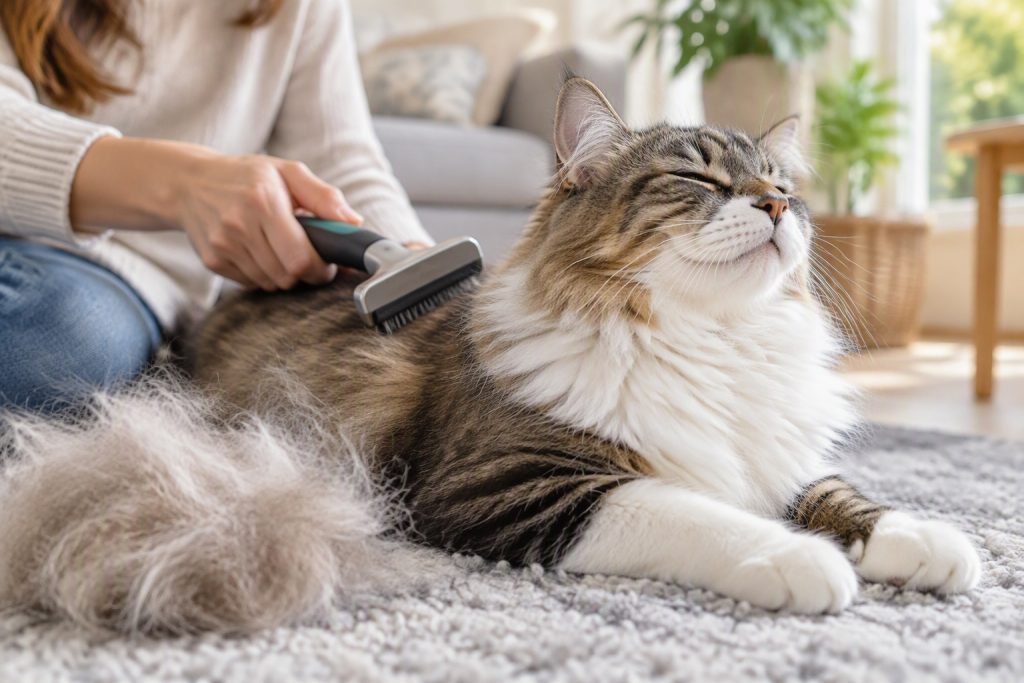
The best grooming brush for a shedding cat depends on her coat: a slicker brush for most short and medium coats, a metal comb for long-haired cats, and an undercoat rake or deshedding tool for double-coated breeds in heavy shed. The right tool removes loose hair gently without scratching the skin, and using it consistently matters more than the brand.
- Slicker brushes suit most short and medium coats.
- Use a metal comb for long-haired cats.
- Undercoat rakes help double-coated breeds.
- Gentle, regular brushing beats force.
What is the best grooming brush for a shedding cat?
The best brush is the one that matches your cat’s coat type and that she will actually tolerate. For most short and medium-haired cats, a slicker brush with fine, angled wire bristles removes loose hair and surface debris effectively while being gentle on the skin. For long-haired cats, a metal comb with wide and narrow teeth is essential, because it reaches through the coat to the undercoat and catches tangles before they tighten into mats. For double-coated breeds, such as many long-haired and some short-haired cats, an undercoat rake or deshedding tool removes the dense undercoat that sheds most heavily. Rubber curry brushes are a good option for cats who dislike metal, and they double as a massage. The ideal setup often includes two tools, one for the topcoat and one for the undercoat. Whatever you choose, make sure the bristles or teeth are smooth, not sharp, so they glide rather than scratch.
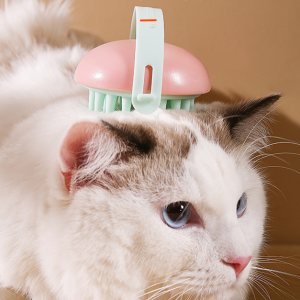
Nail scissors, bath brush, de-shedding glove and a drying towel — the full groom in one box. Cuts…
Slicker, bristle, or deshedding tool: which should I choose?
Each tool does a different job, so the choice depends on your cat’s coat and what you are trying to achieve. A slicker brush is the most versatile, good for removing loose hair and smoothing the coat on most cats. A bristle brush is gentler and works well for finishing and distributing natural oils, but it does not reach the undercoat, so it is less useful for heavy shedding. A deshedding tool or undercoat rake is designed specifically to remove the dense, loose undercoat, and it can pull out a surprising amount of fur during a seasonal shed, but it should be used gently and sparingly to avoid irritating the skin or damaging the coat. For a long-haired cat, a metal comb is essential for preventing mats, often alongside a slicker. Many owners find that combining a slicker for the surface and a rake for the undercoat covers most needs. Start with one good tool and add another only if you need it.
How do I brush a cat that hates being brushed?
Build the habit slowly and keep sessions short, because a cat who hates brushing usually has had a bad experience or finds the tool uncomfortable. Start by letting her sniff the brush, then stroke her with your hand and the brush together for a few seconds, and reward her with a treat. Gradually increase the time, always stopping before she becomes annoyed, and never force a full grooming session on a resistant cat. Use a gentle tool, because sharp or tugging bristles cause discomfort that teaches her to avoid the brush. Work on the areas she tolerates first, such as the back and shoulders, and leave sensitive spots like the belly and tail for later. If she is truly intolerant, a grooming glove or a soft rubber brush may be more acceptable, and some cats do better with a groomer’s help. Patience and treats turn brushing into a positive routine over time.
How often should I brush to control shedding?
For most cats, brushing two to three times a week keeps loose hair under control and the coat healthy, while during a heavy seasonal shed you may need to brush daily. Long-haired cats generally need more frequent grooming, both to remove dead hair and to prevent tangles from forming, while short-haired cats often manage with a couple of sessions a week. The frequency matters because shedding is continuous, and brushing regularly removes hair before it ends up on your furniture or in your cat’s stomach. Our guide to how often to brush a cat breaks the schedule down by coat type. Short, frequent sessions are better than long, occasional ones, since they are easier on your cat and more effective at keeping the coat clear. During the spring and autumn shedding peaks, increase the frequency and consider adding an undercoat tool. Consistent grooming is the single most effective way to manage shedding at home.
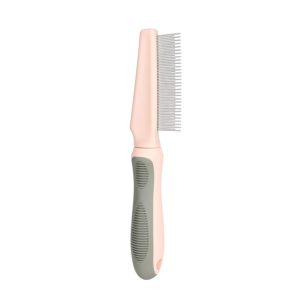
Brush designed to lift loose hair out of a cat's coat — the hair has to go somewhere…
Can the wrong brush hurt my cat?
Yes, the wrong tool or technique can cause real harm. Brushes with sharp or harsh bristles can scratch the skin, and deshedding tools used with too much pressure or too often can irritate the skin, cause bald patches, or damage the coat. Brushing a matted coat with a fine brush pulls at the skin and is painful, and it can worsen the matting rather than fix it. If your cat has mats, do not try to cut them out with scissors, because cat skin is thin and easy to cut, and you may not realise how close the skin is beneath the mat. Instead, work through tangles gently with your fingers and a wide-toothed comb, and seek a vet or groomer for severe mats. Always use tools designed for cats, keep the pressure light, and stop if your cat shows discomfort. Gentle, appropriate grooming protects the skin and keeps the experience positive.
How do I keep the brush clean?
Keeping your grooming tools clean protects your cat’s coat and skin and keeps the brush working effectively. After each session, remove the trapped hair from the bristles or teeth, because a clogged brush pulls rather than glides and spreads loose hair back onto the coat. Most slicker brushes and combs can be cleaned by running them under warm water with a little mild soap, then left to dry fully before the next use. Do not soak wooden handles, which can warp or crack. If your cat has had fleas or a skin condition, clean the brush thoroughly after every use and consider replacing inexpensive tools. A clean brush also lets you see what you are removing, so you can monitor shedding, dander, and any skin problems. Our guide to managing cat shedding explains how grooming fits into a broader coat-care routine.
Frequently asked questions
- What is the best brush for a short-haired cat? A slicker brush works well for most short coats, and a rubber curry brush is a good gentle alternative.
- Do I need a special brush for a long-haired cat? Yes. A metal comb is essential for long coats, often alongside a slicker to remove loose surface hair.
- How do I stop my cat hating the brush? Keep sessions very short, use a gentle tool, and pair brushing with treats so she builds a positive association.
- Can I over-brush my cat? Yes. Too much pressure or overuse of deshedding tools can irritate the skin, so brush gently and stop if she objects.
- Should I brush my cat when she is shedding heavily? Yes, daily during heavy sheds, because regular brushing removes loose hair before it lands on furniture or is swallowed.