

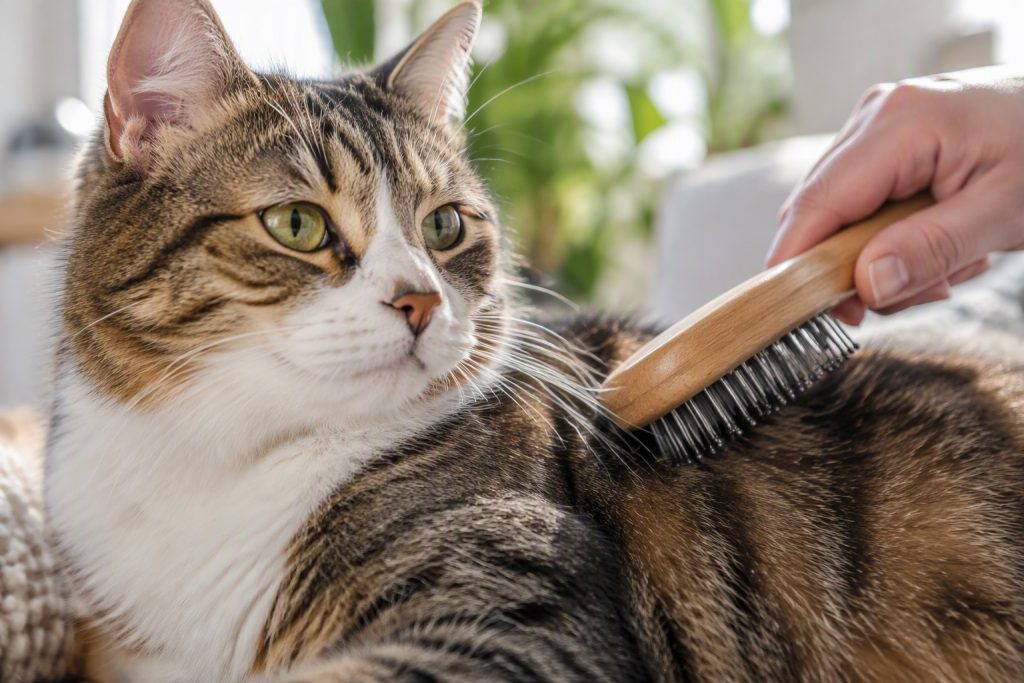
Cat dandruff, or flaky white skin, is usually caused by dry skin, poor grooming, or a poor coat condition, but it can also signal parasites, allergies, or an underlying illness. Mild flakes are common and often improve with better hydration, diet, and grooming. Persistent or severe dandruff should be checked by a vet.
- Dry skin and poor grooming are common causes.
- Parasites and allergies can also cause flakes.
- Hydration, diet, and brushing often help.
- Persistent or itchy dandruff needs a vet.
What causes dandruff in cats?
Dandruff has several possible causes, and the most common is simply dry skin. Low humidity, especially in winter or in air-conditioned homes, strips moisture from the skin and produces visible flakes. Poor grooming is another frequent cause, because a cat who cannot groom properly, whether due to obesity, arthritis, dental pain, or illness, accumulates dead skin and oil that flakes off. A poor-quality diet lacking essential fatty acids can leave the skin dry and the coat dull. Parasites such as fleas and mites cause itching and flaking, and allergies to food or the environment can do the same. Some cats develop dandruff secondary to a medical condition, including kidney disease, diabetes, or thyroid problems. Because the causes range from harmless to serious, the pattern of the dandruff and any accompanying signs help point to the reason. Age, weight, and grooming habits all influence how the skin looks, so compare her coat now with how it looked a few months ago.
Nail scissors, bath brush, de-shedding glove and a drying towel — the full groom in one box. Cuts…
Is cat dandruff a sign of a health problem?
Sometimes. Mild dandruff in an otherwise healthy cat is usually a cosmetic issue linked to dry skin or grooming, but dandruff can also be a sign of something more significant. Flaking that comes with intense itching, redness, hair loss, scabs, or a greasy, smelly coat may point to parasites, a skin infection, or allergies. Dandruff in an overweight or older cat who has stopped grooming well can signal that she is uncomfortable or unwell, since cats who feel pain often groom less. Dandruff can also accompany conditions such as kidney disease or an overactive thyroid. If the flakes are new, persistent, or accompanied by any other change in your cat’s health or behaviour, a veterinary examination is worthwhile. Even when the cause is benign, a vet can confirm it and recommend the right treatment rather than leaving you to guess. Our guide to managing cat shedding covers related coat-care topics, and a cat who suddenly develops flakes alongside a dull coat may be signalling a nutritional or medical issue rather than simple dryness.
How do I treat cat dandruff at home?
For mild dandruff, home care often makes a real difference. Increase your cat’s water intake by offering fresh water in several places, using a fountain, and adding wet food to her diet, since hydration supports healthy skin. Brush her regularly to distribute natural oils and remove dead skin, which improves the coat’s condition. Raising the humidity in dry rooms with a humidifier can help, especially in winter. Avoid over-bathing, which strips oils and can make dryness worse, and if you do bathe her, use a gentle cat-specific shampoo and ask your vet first. Do not apply human lotions or oils to your cat’s skin, as many are unsafe if she grooms them off. If the dandruff does not improve with these steps, or if the skin looks red, greasy, or irritated, stop home treatment and see your vet for a proper diagnosis. If the skin is broken or infected from scratching, treating that infection is as important as addressing the underlying cause.
Does diet help cat dandruff?
Diet plays a meaningful role in skin and coat health. Cats need good-quality animal protein and an appropriate balance of fats, including omega fatty acids, to maintain a healthy skin barrier and a glossy coat. A diet lacking these can leave the skin dry and flaky. If your cat eats a complete, balanced cat food, she is likely getting what she needs, but if her coat is persistently poor, it is worth reviewing the diet with your vet. In some cases, a vet may recommend a specific supplement or a change in food, but supplements should not be given blindly, since the wrong balance can cause problems. Some cats with food allergies develop skin and coat issues, and identifying the trigger through a proper elimination diet is a job for your vet. Improving hydration through wet food also supports skin health. Diet is part of the picture, but it is rarely the whole answer on its own.
Brush designed to lift loose hair out of a cat's coat — the hair has to go somewhere…
When should I see a vet about dandruff?
See a vet if the dandruff is severe, persistent, or comes with itching, redness, hair loss, scabs, or a greasy or foul-smelling coat. These signs suggest parasites, infection, allergies, or another condition that needs treatment. Also see a vet if your cat is over-grooming or has stopped grooming, if she seems uncomfortable when touched, or if the dandruff appeared alongside weight loss, appetite changes, or lethargy. In older cats, a sudden decline in coat condition can be an early sign of an underlying illness. A vet can examine the skin, check for parasites, and run tests if needed, which is far better than guessing at treatments. Mild dandruff that responds to better hydration and grooming is not urgent, but anything persistent deserves a professional look. Our article on how often to brush your cat explains how grooming supports skin health.
Can dandruff be prevented?
You can reduce the likelihood of dandruff by supporting your cat’s overall skin and coat health. Keep her well hydrated with fresh water and wet food, feed a complete and balanced diet, and brush her regularly to distribute oils and remove dead skin. Maintain reasonable humidity in your home, particularly in winter, since dry air is a common trigger. Keep up with flea prevention, because parasites cause itching and flaking, and manage your cat’s weight, since obesity makes grooming difficult and leads to poor coat condition. Regular vet check-ups help catch underlying conditions before they show up as skin problems. If your cat is older or has a chronic condition, ask your vet whether her coat needs extra support. Prevention is largely about consistent, basic care rather than special products, and small habits maintained over time keep the skin and coat healthy.
Frequently asked questions
- Why does my cat have dandruff all of a sudden? A sudden change can follow dry air, a diet change, parasites, or an underlying illness, so have it checked if it persists.
- Can I use human dandruff shampoo on my cat? No. Human shampoos can be harmful to cats, so use only products made for cats and only as your vet advises.
- Does dandruff mean my cat is unhealthy? Not always. Mild flakes are often just dry skin, but persistent or itchy dandruff can signal a problem.
- Will brushing help my cat’s dandruff? Yes. Regular brushing distributes natural oils and removes dead skin, which improves the coat and reduces flakes.
- Can fleas cause dandruff in cats? Yes. Fleas and other parasites cause itching and skin irritation that can appear as dandruff or flaking.



