

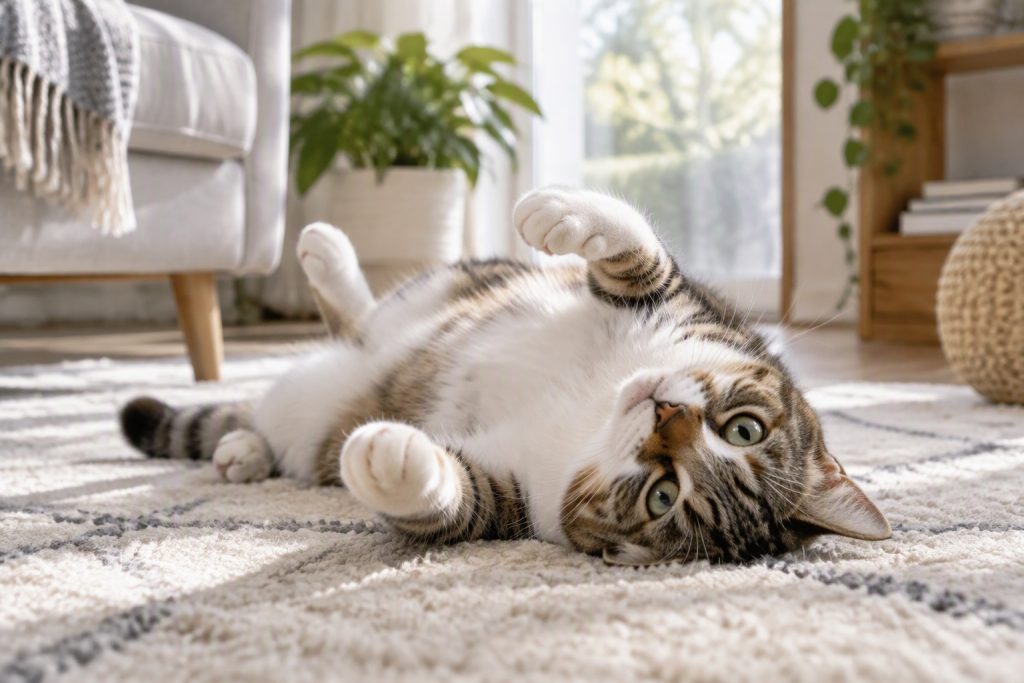
Cats roll on the floor to stretch, scratch their backs, scent-mark, play, and show contentment. It is often a relaxed, happy behaviour, especially when it comes with a loose body and a stretch. A cat who rolls and then bares her belly is usually inviting play or simply enjoying a good stretch, not asking for a belly rub.
- Rolling usually means comfort, play, or stretching.
- It can also spread scent onto the floor.
- A bared belly is not an invitation to rub.
- Sudden frantic rolling can signal irritation or pain.
Why does my cat roll on the floor?
Rolling serves several purposes for a cat, and most of them are pleasant. It is a way to stretch the back and shoulders, which feels good after a nap or a long sit. It is also a scent-marking behaviour, because rolling spreads the scent from glands along the back and tail onto the surface, claiming it as familiar. Rolling often signals a relaxed, playful mood, and many cats roll when they are happy to see you or when they want attention. Some cats roll as part of play, twisting and turning to grab a toy, and others roll after eating or grooming as a sign of contentment. In warm weather, rolling on a cool floor can also help a cat cool down. So the behaviour usually reflects comfort, playfulness, or a simple physical pleasure, rather than anything concerning. Reading the rest of her body language tells you which one it is.
Rainbow-striped plush cylinder. Keeps a bored indoor cat busy and burns off restless energy. Made from fleece and…
Is rolling a sign of happiness?
Often, yes. A cat who rolls onto her side or back with a relaxed, loose body and soft eyes is usually comfortable and content. The behaviour is common in cats who feel safe in their environment, and it often appears when they are greeting a trusted person or settling down happily. Rolling can also be an invitation to play, especially if she follows it with a stretch or a paw reaching toward you. That said, a bared belly is not the same as a request for a belly rub, and many cats who roll will grab and bite if you take it as an invitation to touch their stomach. If you want to interact, offer a toy or stroke her head and cheeks instead. When the rolling comes with a relaxed body, you can safely read it as a sign that your cat is happy and at ease.
Why does my cat roll on the floor and meow?
When rolling comes with meowing, your cat is usually trying to get your attention for something specific. She may be asking for food, play, or a door opened, having learned that rolling and vocalising together reliably draws a reaction. Some cats roll and meow as a greeting when you come home, and others do it when they are excited or anticipating something pleasant. In an unspayed female, rolling and loud calling can be a sign of being in heat. If the rolling and meowing are new, intense, or seem distressed rather than playful, they can also indicate discomfort or pain, especially in an older cat. The key is the overall picture: a relaxed, playful cat who rolls and chirps is likely seeking interaction, while a tense cat who rolls and cries may need a vet check. Our article on why cats purr covers another vocal and physical signal that can be easy to misread.
Why does my cat roll when I pet her?
Rolling when you pet her is usually a sign of enjoyment and trust, a way of exposing her belly and inviting more contact. Cats who feel safe with a person often roll over during petting, stretching and twisting in pleasure. However, it can also be a trap: many cats roll onto their back and then grab and bite the hand that reaches for their belly, because the movement triggers a play or defensive response. To avoid this, keep petting her head, cheeks, and chin, and avoid the belly unless you know she genuinely enjoys it. If she rolls and then grabs, stop and offer a toy instead, which redirects the energy safely. Watch her tail and ears for signs of overstimulation, and end the session before she reaches her limit. Rolling during petting is usually affectionate, but respecting her boundaries keeps it that way.
Made from cloth Key features 【Name】 : cat simulation animal sound shell toy[Fill]: No fill, 2 built-in BB…
Why does my cat roll after catnip?
Rolling is one of the classic reactions to catnip, and it is a normal response to the scent. When a cat sniffs nepetalactone, the active compound in catnip, it triggers receptors in her nose that respond to certain pheromones, producing a range of behaviours that often include rolling, rubbing, and stretching. Cats may also lick, chew, or become playful or relaxed. The reaction typically lasts five to fifteen minutes before she loses interest and returns to normal. Not every cat reacts, since the sensitivity is inherited and roughly a third of cats are unaffected. Rolling after catnip is harmless and temporary, and it is a sign that she is enjoying the experience. Our article on what catnip is and how it works explains the science behind the reaction in more detail. If she becomes aggressive instead of playful, simply give her space and avoid catnip in future.
When is rolling a sign of a problem?
Rolling is usually harmless, but a few patterns deserve attention. Frantic, continuous rolling, especially with crying, restlessness, or an inability to settle, can indicate pain, itching, or irritation, particularly if it involves the back or hindquarters. A cat with fleas, mites, or a skin allergy may roll and scratch excessively. Rolling that comes with head pressing, disorientation, or a change in behaviour can point to a neurological issue and needs prompt veterinary care. In an unspayed female, rolling and persistent calling may indicate being in heat, which is normal but worth discussing with your vet if you plan to breed or spay. If the behaviour is sudden and new, or comes with any other sign of illness or discomfort, have your cat examined. When rolling is occasional and relaxed, it is simply a cat enjoying herself.
Frequently asked questions
- Why does my cat roll on the floor and show her belly? It usually means she is relaxed and content, or inviting play. It is often not an invitation for a belly rub.
- Is it safe to rub my cat’s belly when she rolls over? Some cats enjoy it, but many will grab and bite, so offer a toy unless you know she likes it.
- Why does my cat roll on the floor after eating? Rolling after a meal is often a sign of contentment and a good stretch, and it is usually nothing to worry about.
- Does rolling mean my cat is in heat? In an unspayed female, rolling with loud calling and restlessness can indicate being in heat, so consult your vet.
- Why does my cat roll in the dirt outside? Rolling outdoors spreads scent and can feel good, but keep her safe and supervised if she goes outside.





