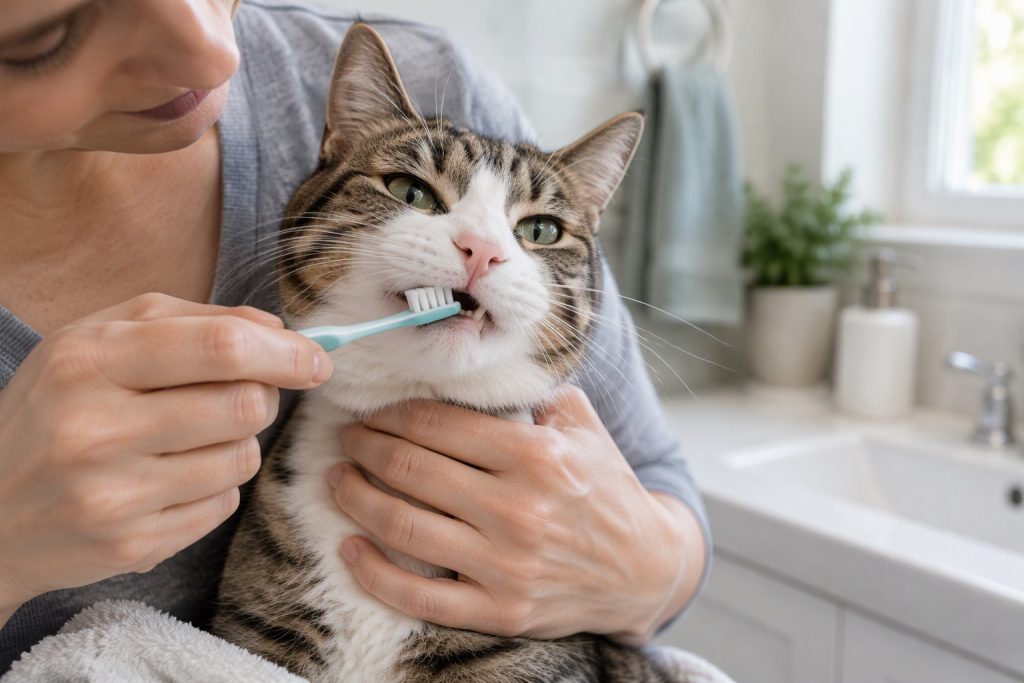
To clean your cat’s teeth, use a soft cat toothbrush or a finger brush with enzymatic cat toothpaste, and gently brush along the gum line, starting with just a few teeth and building up over several weeks. Daily brushing is ideal, but two or three times a week still makes a real difference. Never use human toothpaste, because the fluoride and other ingredients are toxic to cats, and never force the brush on a frightened cat.
- Use cat toothpaste, never human toothpaste.
- Brush gently along the gum line.
- Start with a few teeth and build up slowly.
- Daily is best; a few times a week still helps.
How do I clean my cat’s teeth?
Start by getting your cat used to having her mouth touched. For the first few days, simply lift her lip for a second and reward her, without any brushing. Once she accepts that, put a little cat toothpaste on your finger and let her lick it, so she learns the taste is pleasant. Then use a finger brush or a small cat toothbrush and gently rub the outer surfaces of the teeth, where plaque builds up fastest, working along the gum line in small circles. You do not need to clean the inner surfaces, since the tongue keeps those fairly clean. Begin with just a few teeth and end on a positive note, then gradually extend the session over a few weeks until you can brush the whole mouth. Aim for daily brushing, but be honest: even two or three times a week meaningfully reduces plaque. Our step-by-step guide on how to brush a cat’s teeth breaks this into a daily plan.

A plastic dematting comb clears the loose hair before it lands on the furniture. Use it before the…
Do I really need to brush my cat’s teeth?
Yes, if you can. Dental disease is one of the most common problems vets see in cats, and by the age of three, a large proportion already have some degree of gum disease. Plaque hardens into tartar within a couple of days, and tartar traps bacteria that irritate the gums, causing gingivitis and, over time, periodontitis that damages the tissues and bone holding the teeth. This is not just a mouth problem. Chronic dental infection is painful, makes eating difficult, and can affect the heart, kidneys, and other organs as bacteria spread. Cats are stoic and often hide dental pain until it is severe, so prevention is far kinder than treatment. Brushing removes plaque before it hardens, which is why vets recommend it. If daily brushing is not realistic, do it as often as you can, and pair it with professional dental checks. Even partial brushing is better than none, and it helps you notice problems early.
What toothpaste and brush should I use?
Use toothpaste made specifically for cats, which comes in flavours like poultry or malt that cats tend to accept, and which is formulated to be swallowed safely. Human toothpaste contains fluoride, detergents, and often xylitol, all of which can harm a cat, so it must never be used. For the brush, a small cat toothbrush with soft bristles works well for most cats, while a finger brush is gentler and easier to control when you are starting out. A soft gauze pad wrapped around your finger is a good first step for a cat who will not tolerate a brush. Avoid hard bristles and anything that feels rough on the gums. Replace the brush when the bristles fray, and store it clean and dry. Some cats also accept an enzymatic gel applied with a finger, which helps even without brushing, though it is less effective than brushing itself.
How do I brush a cat who hates it?
Patience and tiny steps work far better than persistence. If your cat bolts at the sight of a toothbrush, back up and rebuild the association. Let her sniff the brush and the toothpaste, then reward her with a treat or a stroke without doing anything. Next, touch the brush to her cheek for a second, reward, and stop. Build up to lifting her lip, then to touching a tooth, then to brushing one tooth, always ending before she becomes upset. Keep sessions to a few seconds at first, and always finish with something pleasant, so the brush predicts good things rather than a struggle. If she becomes distressed, stop and try again another day rather than forcing it. Some cats never accept a full brush, and for those, a finger brush, a gauze wipe, or an enzymatic gel is a reasonable compromise. Our article on cat bad breath explains what persistent odour may mean.
Nail scissors, bath brush, de-shedding glove and a drying towel — the full groom in one box. Cuts…
What are the signs of dental disease in cats?
Cats hide mouth pain well, so the signs are often subtle until the problem is advanced. Bad breath is the most common early clue, along with yellow or brown tartar on the teeth and red, swollen, or bleeding gums. You may notice your cat chewing on one side, dropping food, eating more slowly, or preferring soft food to dry. Drooling, pawing at the mouth, and flinching when you touch her face are stronger signs of pain. Some cats simply become quieter, eat less, and lose weight, which owners often put down to fussiness or old age. Weight loss in a cat with dental disease is common, so any unexplained drop deserves a look in the mouth. If you see any of these signs, book a vet visit, because dental disease needs professional treatment. Brushing prevents a great deal, but existing tartar and gum disease need a vet’s care.
Can I clean my cat’s teeth without brushing?
Brushing is the gold standard, but there are useful alternatives when a cat will not tolerate it. Dental treats and dental diets are designed with textures and shapes that scrub the teeth as the cat chews, and they can reduce plaque on the surfaces they contact. Enzymatic gels and sprays applied to the teeth or added to the mouth help control bacteria, though they are less effective than brushing. Water additives are another option, and while their benefit is modest, they can help alongside other measures. Dental chews should be soft enough not to break teeth and suitable for your cat’s size, and you should avoid hard objects like bones, antlers, or ice, which can fracture teeth. None of these replace professional cleaning when tartar and gum disease are already present. Use them as support for brushing, and ask your vet which products actually have evidence behind them, since many dental products make claims that are not well supported.
Frequently asked questions
- Can I use human toothpaste on my cat? No. It is toxic to cats. Always use toothpaste made for pets.
- How often should I brush my cat’s teeth? Daily is ideal, but two or three times a week still helps significantly.
- Do dental treats really work? Some do, if they are designed to reduce plaque. They support brushing but do not replace it.
- Why does my cat’s breath smell bad? Bad breath usually signals dental disease or tartar. Have her mouth checked by a vet.
- Can I clean my cat’s teeth with gauze? Yes, gauze wrapped around a finger is a gentle starting method, though a brush is more effective.