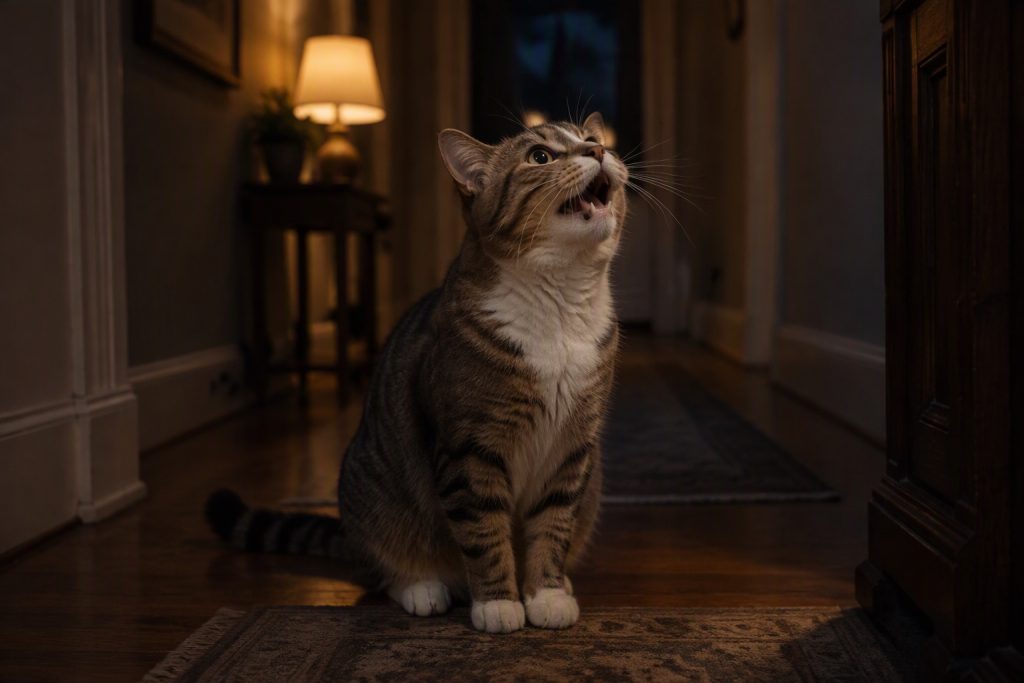
Cats meow at night for many reasons, including hunger, boredom, a desire for company, and their natural instinct to be active at dawn and dusk. A healthy adult cat who yowls all night often simply has a body clock out of step with yours. Meeting her needs during the day and setting a calm, consistent night routine usually reduces the noise, but a sudden change in night-time vocalising in an older cat deserves a vet check.
- Hunger and boredom are common causes.
- Cats are naturally active at dawn and dusk.
- A consistent bedtime routine helps.
- New night yowling in an older cat needs a vet.
Why does my cat meow at night?
Cats are crepuscular, which means they are naturally most active around dawn and dusk, and the middle of the night can fall right in the middle of their waking hours. If your cat has slept all day while you were out, she wakes up full of energy just as you are trying to sleep. Hunger is another common driver, especially if her last meal was early in the evening. Boredom and loneliness matter too, because a cat who is alone all day may want attention at night, and meowing is the most effective way to get it. Some cats meow because a door is closed, because they want to be near you, or because they are simply following their routine. There is also a social element: adult cats rarely meow at each other, but they meow at people, so night-time meowing is often a direct request aimed at you. Our article on why cats meow so much looks at the daytime version of this behaviour.

A teaser wand built to turn a few minutes into a full hunt — a cat needs to…
Is night-time meowing normal in cats?
Occasional night-time meowing is completely normal, especially in a cat who is young, active, or new to the home. Kittens and young cats often have surplus energy, and a cat whose routine differs from yours will naturally be awake when you are asleep. What matters is the pattern and whether anything else has changed. A cat who has always been a little vocal at night and is otherwise healthy is showing normal behaviour. A cat who has suddenly started yowling through the night, particularly if she is older, may be showing something more. Older cats can develop cognitive changes, high blood pressure, thyroid problems, or hearing loss, all of which can lead to loud night vocalising. Pain, hunger from an illness, or disorientation can also cause it. If the meowing is new, intense, or comes with other changes, it is worth a vet visit rather than an assumption that she is simply being demanding.
Why does my cat wake me up at 4am?
Four in the morning is a classic time for cat activity, because it is close to dawn, when cats would naturally be hunting. Your cat’s internal clock, or circadian rhythm, is set to wake her around this time, and if she is hungry or bored, she will come to you. There is also a learned pattern at play. If she meowed at 4am once and you got up, fed her, or even just spoke to her, she learned that the behaviour works. Cats repeat what gets results, so a single response can lock the habit in. Other factors include a bedroom door she wants opened, a window with interesting activity outside, or a litter box she would rather not use. The fix is rarely quick, but it is reliable: adjust her daytime routine so she is tired and fed by night, and make sure that waking you produces no reward at all. Consistency is what breaks the cycle.
How do I stop my cat meowing at night?
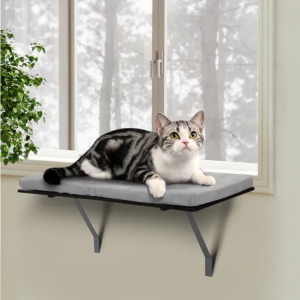
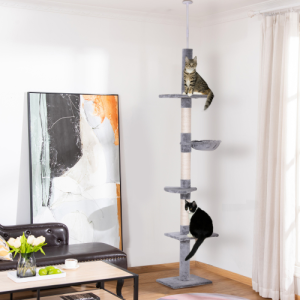
The most effective approach combines daytime changes with an unbreakable night-time routine. During the day, make sure she gets real interaction: play sessions that let her stalk and chase, puzzle feeders that make her work for food, and a window perch or cat tree to keep her busy. In the evening, play with her actively, then feed her a satisfying meal, which mimics the natural hunt-eat-groom-sleep cycle and helps her settle. Set a consistent bedtime, and at night, do not respond to meowing at all, because any reaction, even a sleepy “shush”, counts as attention and rewards the behaviour. That can mean ignoring her for several nights, which is hard, but it works if you hold firm. Make sure she has water, a clean litter box, and a comfortable bed before you go to sleep, so you know her needs are met. Our article on why cats bite ankles at night covers related night-time behaviour.

Rainbow-striped plush cylinder. Keeps a bored indoor cat busy and burns off restless energy. Made from fleece and…
Should I feed my cat at night to stop the meowing?
Feeding her when she wakes you is usually the wrong move, even though it stops the noise for that night. It teaches her that meowing gets food, which guarantees she will do it again tomorrow, and often earlier. A better approach is to feed her a proper meal shortly before your own bedtime, so she is not hungry in the small hours, and to use an automatic feeder if you want food available later without it being linked to your response. An automatic feeder set for the early morning can break the association between meowing and being fed, because the food appears whether or not she calls for you. If your cat is on a fixed diet, split her daily ration so that a portion is available late. The goal is to meet her genuine hunger without turning your waking into the trigger. If she is losing weight or seems constantly hungry despite eating well, that is a medical sign, not a feeding-schedule problem, and it needs a vet.
When does night meowing signal a health problem?
See your vet if night-time meowing is new, is getting worse, or comes with other changes. In older cats, loud night vocalising is a common sign of hyperthyroidism, high blood pressure, or cognitive dysfunction, and it is often one of the first things owners notice. A cat who is disoriented, restless, or pacing at night, or who seems to forget where she is, may have a medical issue rather than a behavioural one. Other warning signs include weight loss, increased appetite or thirst, vomiting, and changes in litter box habits. Pain can also cause night restlessness, and a cat who cannot get comfortable may cry out. Because these conditions are treatable, especially when caught early, do not assume a sudden change in night-time behaviour is just your cat being difficult. Book a check-up, describe the pattern, and let your vet investigate. Many cats become much quieter, and much more comfortable, once the underlying cause is addressed.
Frequently asked questions
- Why does my cat meow all night? Usually hunger, boredom, or a natural dawn-and-dusk rhythm. A consistent routine helps.
- Should I ignore my cat meowing at night? Yes, if her needs are met. Responding rewards the behaviour and makes it worse.
- Will an automatic feeder stop night meowing? It can help, by removing the link between meowing and being fed.
- Why has my older cat started yowling at night? New night vocalising in a senior cat can signal thyroid, blood pressure, or cognitive issues. See your vet.
- Is it cruel to ignore my cat at night? No, if she has food, water, a clean box, and a bed. You are teaching a calm night routine.