

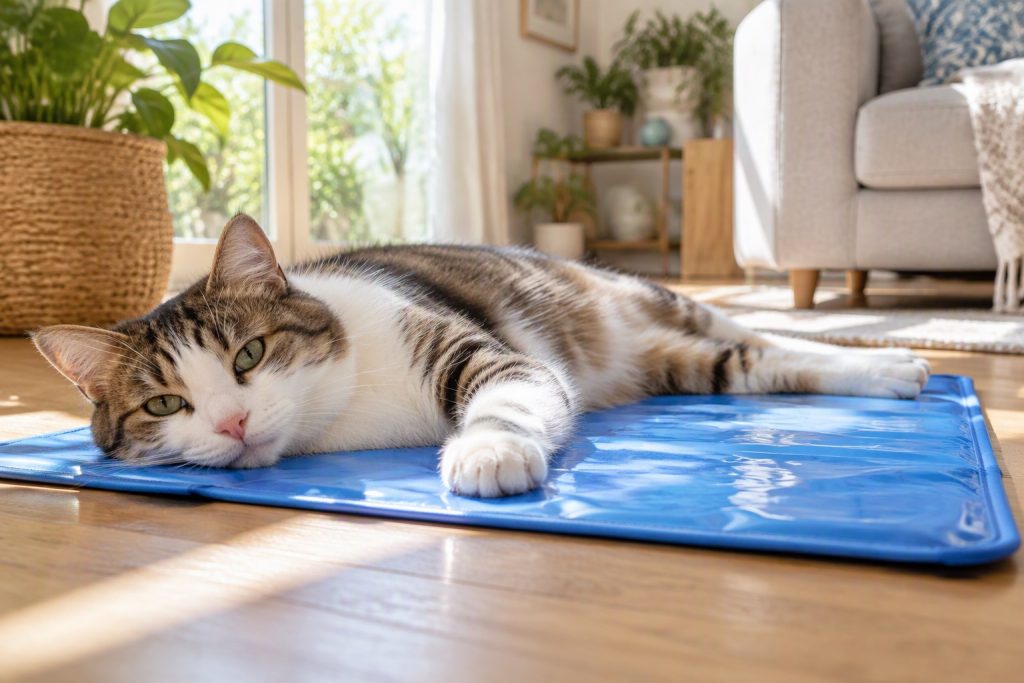
The best cooling products for cats are a pressure-activated cooling mat that needs no electricity, a raised bed that lets air circulate underneath, and simple cool surfaces such as a damp towel or a tiled floor. A fan to move air and several bowls of fresh water complete a safe cooling setup. Cooling products help a cat regulate her temperature, but no product replaces shade, ventilation, and watching closely for signs of heatstroke.
- A pressure-activated cooling mat needs no power.
- Raised beds let air circulate underneath.
- Offer damp towels and cool, shaded floors.
- Always pair products with shade and water.
What cooling products actually help cats?
A few products genuinely help, and they share a simple principle: they give a cat a cooler surface or better airflow. A cooling mat, filled with a pressure-activated gel, draws heat away from the body when the cat lies on it, and it needs no electricity, so it works anywhere. A raised bed or hammock lifts the cat off the floor so air moves underneath her, which helps with heat loss. A cooling collar or a bandana you can dampen offers local relief around the neck. A simple fan that keeps air moving in a room makes a real difference, as does a shallow tray of cool water or a damp towel for her to lie on. None of these are gimmicks if they give her a cooler place to rest and let her choose her own temperature. The best setup combines a few options in different rooms, so she can move to whichever feels best. Our guide to cooling mats for cats compares the main types.

A thickened cloth bed is stepped into rather than climbed over. Try it near the window first, then…
Are cooling mats safe for cats?
Cooling mats are generally safe, and many cats enjoy them once they understand what they are. The key safety rule is that the mat must cool gently, never freeze. A mat that gets ice-cold can constrict blood vessels and trap heat, and it can be uncomfortable against the skin. Choose a mat designed for pets, and let it reach room temperature before use rather than putting it in the freezer. Check it for leaks, since some gel mats can be punctured by claws, and replace any damaged mat so your cat cannot ingest the contents. Let your cat come and go freely, so she can move off the mat whenever she wants; never confine her to it or wrap her in it. If she avoids it, that is fine, because she may prefer a tiled floor instead. For a cat showing signs of heatstroke, a cooling mat is not enough on its own, and you should get her to a vet. Our article on keeping cats safe in a heatwave covers the wider picture.
Do cats need fans or air conditioning?
Cats benefit from moving air, and a fan can help a lot in a hot room, but it should be used carefully. Point a fan so it circulates air in the room rather than blasting directly at your cat, and let her choose whether to sit in the breeze. Never leave a fan pointed at a cat for hours, and never use it as the only cooling measure in extreme heat. Air conditioning is effective if you have it, but many cats dislike the cold draught and will simply move to a warmer spot, so keep the temperature moderate rather than very cold, and make sure she has a warm place to retreat to if she wants it. The most important point is that fans and air conditioning only help if the cat is in the airflow and if the room itself is not heating up. Close curtains on sun-facing windows during the day, open windows at night, and combine airflow with cool surfaces and water for the best result. In a genuine heatwave, keeping her in the coolest room in the house matters more than any single device.
What should I avoid when cooling a cat?
Several common cooling methods are unsafe. Never use ice packs or frozen gel packs directly against your cat’s skin, because the intense cold can damage tissue and cause the blood vessels to constrict, which traps heat in the core. Do not immerse a cat in cold water or give her an ice bath, which can shock her system, especially if she is already overheating. Avoid leaving a fan blasting directly at her for long periods, and never soak her fur completely if she dislikes water, because the stress does more harm than good. Do not clip her coat short without veterinary advice, since the coat insulates against heat and protects against sunburn. Never leave her in a car, a conservatory, or an unventilated room in hot weather. Do not rely on cooling products alone if she shows signs of heatstroke. In that case, cool her gently and get her to a vet immediately, because heatstroke is a medical emergency.

Cervical pillow, plush hammock, floor mat and paw cushion — four places to nap. Gives a cat a…
How do I cool a cat without electricity?
If the power is out or you want a low-tech approach, plenty of options work. A damp towel laid on a tiled floor gives your cat a cool surface to lie on, and refreshing it as it dries keeps it effective. A shallow tray of cool water, placed where she can step into it, offers relief through her paws, which is one of the areas where cats lose heat. Fill a bowl with cool, not ice-cold, water and keep it topped up. Let her access the coolest parts of the home, such as a tiled bathroom or a shaded hallway, and keep curtains closed on the sunny side during the day. A damp cloth wiped gently over her coat, especially the ears and paws, helps without soaking her. You can also freeze a water bottle, wrap it in a towel, and place it near her bed so she can lie close to it, but never directly against her skin. Combined with shade, ventilation, and fresh water, these simple methods keep a cat comfortable through a hot day.
When is a cooling product not enough?
Cooling products are prevention, not treatment. If your cat is showing signs of heatstroke, such as heavy panting, drooling, fast breathing, bright red gums, weakness, wobbliness, vomiting, or confusion, a cooling mat will not fix it. Heatstroke means her body temperature has risen dangerously and her organs are at risk, and she needs veterinary care immediately. Move her to a cool, shaded place, wet her coat with cool water, especially the paws, ears, and belly, place her in front of a fan, and call your vet or an emergency clinic while you do it. Do not wait to see if she improves, because heatstroke can worsen very quickly. Flat-faced breeds, older cats, overweight cats, and those with heart or breathing conditions are at much higher risk and can deteriorate within minutes. Once she has been treated, prevention becomes the priority, so use cooling products, shade, ventilation, and water consistently during hot weather, and never leave her in a hot space again.
Frequently asked questions
- Do cooling mats work for cats? Yes, if used gently. They draw heat away and need no power, but they should never be frozen.
- Can I put my cat in front of a fan? Yes, but let her choose. Circulate air rather than blasting her directly for hours.
- Is it safe to wet my cat to cool her down? A gentle wipe with cool water is fine. Never use ice water or immerse her.
- Should I shave my cat in summer? Usually no. The coat insulates against heat. Ask your vet or groomer first.
- Are cooling collars safe for cats? Yes, if they fit comfortably and can be removed easily. Dampen them rather than freezing them.



