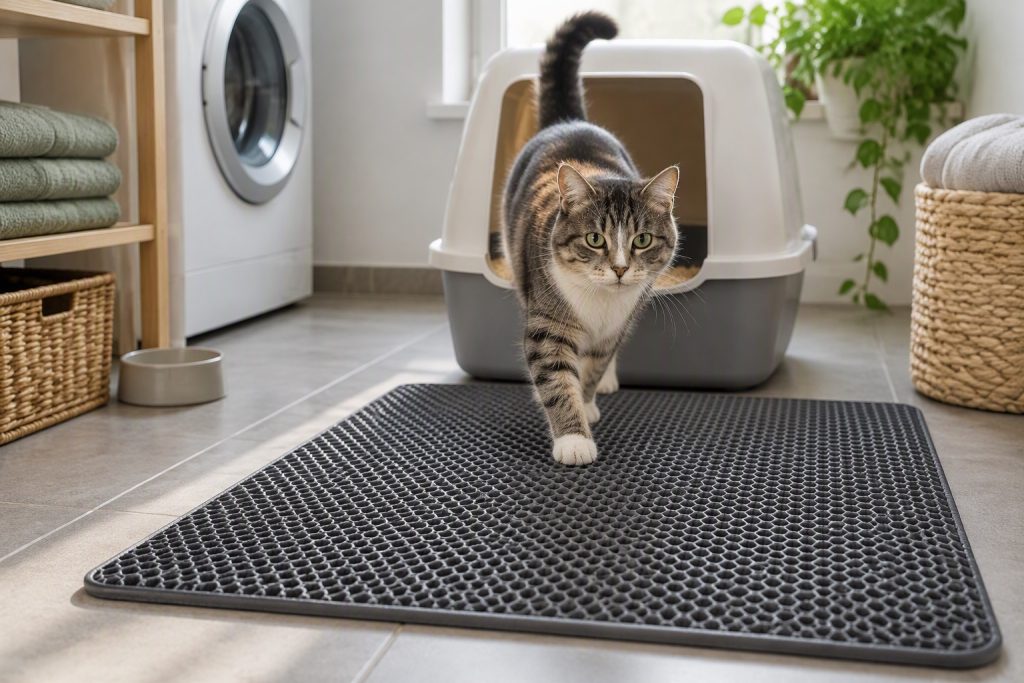
A good cat litter mat is one that traps litter instead of scattering it, lies flat without curling, and is easy to shake out and wash. Look for a generous size that extends past the box entrance, a texture that grips granules, and a waterproof or quick-drying backing. The mat only works if your cat will actually walk across it, so place it where she exits the box and keep it clean, since a grimy mat gets avoided.
- Choose a mat larger than the box opening.
- Prefer a non-slip, waterproof backing.
- Textured or two-layer mats trap more litter.
- Shake and wash it regularly, or cats avoid it.
What should I look for in a litter mat?
Start with function rather than looks. The mat should catch granules as your cat steps out, so the surface needs enough texture to trap them rather than letting them roll away. A non-slip base matters too, because a mat that slides or bunches up becomes a trip hazard and an annoyance your cat may simply walk around. Waterproof or quick-drying material is worth having, since litter trays are spattered and damp, and a mat that stays soggy smells. Size is the most overlooked factor: the mat must be wide enough that your cat cannot leap over it, ideally extending a good distance from the opening. Edges that stay flat rather than curling prevent litter from rolling underneath and make vacuuming easier. Finally, think about cleaning. If the mat is awkward to shake out or cannot be washed, it will be abandoned. Our guide on litter box placement explains why the mat’s position matters as much as its design.
Tray, scoop, anti-splash mat and clumping litter. The whole litter corner, one box. Keeps the litter area contained,…
Which litter mat material works best?
There is no single best material, because each trades off comfort, durability, and cleaning effort. Soft fabric mats, often made from microfibre, feel gentle under paw and trap fine litter well, and they can be machine washed, but they need frequent laundering and can stay damp. Rubber or PVC mats are durable, waterproof, and easy to hose down, but some cats dislike the firm feel and the ridges can be uncomfortable. Two-layer mats, with a textured top and a solid base, tend to be the best all-rounders, trapping litter in the upper layer while keeping the floor beneath dry. Mesh mats allow litter to fall through into a tray, which is convenient but less comfortable underfoot. Whichever you choose, the material must suit your cat: a mat she refuses to step on defeats its purpose. Consider how much litter your cat kicks and how often you are willing to clean before deciding.
How big should a litter mat be?
Bigger is generally better, within reason. A mat should extend well beyond the litter box entrance, ideally covering the area where your cat lands and takes her first few steps, because that is where most granules fall. As a rough guide, aim for a mat at least as long as the box is wide, and deeper if your cat is a vigorous digger or a kitten who bounds out. If you have a large cat, a covered box with a high entrance, or a tray in a corner, a larger mat makes more difference. The shape matters too: an L-shaped or extended mat can wrap around a corner exit, catching litter on both sides. Just make sure the mat does not block the doorway or create a step your cat must climb. If space is tight, choose a mat that fits snugly in front of the box rather than skipping the mat entirely.
Are honeycomb or textured mats better?
Both designs aim at the same goal, trapping granules, but they do it differently. Honeycomb mats have a grid of deep cells that litter drops into, so granules stay hidden until you tip the mat out or vacuum it. They tend to hold a lot of litter and keep the surface looking tidy, and many have a two-layer design so you can lift the top and pour the trapped litter back into the box. Textured mats use ridges, loops, or a nubby surface to wipe granules off paws, which works well for fine clay litters. The trade-off is cleaning: honeycomb cells can be fiddly to rinse, and textured mats may need more frequent shaking. Some cats find deep honeycomb uncomfortable underfoot, especially older cats with sore joints. If you can, choose a mat with a low, gentle profile for a senior cat, and a deeper trap for a healthy, messy digger.
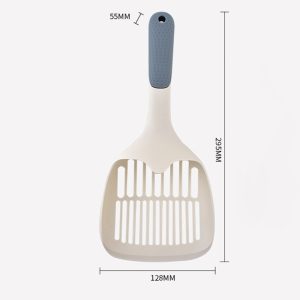
A large plastic scoop takes the daily pass, which is the one that keeps the smell down. Keep…
How do I clean a litter mat?
Regular cleaning keeps the mat working and keeps your cat willing to use it. Shake the mat out into the bin daily or every couple of days, tipping trapped litter back into the box if you like, then vacuum or sweep the surface. For a deeper clean, check the care instructions: machine-washable fabric mats usually tolerate a gentle cycle without fabric softener, which can leave a residue cats dislike. Rubber and PVC mats can be hosed down or wiped with a pet-safe cleaner and left to dry fully before going back under the box. Avoid harsh bleach or strongly scented products, since lingering smells may put your cat off the area entirely. If the mat is frayed, curling, or permanently stained, replace it, because a damaged mat no longer traps litter and may harbour odour. The right cleaning routine is the one you will genuinely keep up with.
Do litter mats really reduce tracking?
Yes, they help, though they are not magic. A well-placed mat catches a meaningful share of the granules that would otherwise be walked through your home, especially fine clay litter that clings to paws. The amount they catch depends on the litter type, the mat design, and how far your cat travels before stepping off. Some cats walk a few steps and stop, which is ideal, while others bolt out and scatter litter before the mat has a chance. Pairing a mat with a lower-tracking litter and a high-sided or top-entry box reduces mess further. Our comparison of cat litter types explains which litters track most. A mat is one part of a system: the right box, the right litter, the right placement, and a mat that suits your cat. No single product removes every grain, but together they make a visible difference to how much ends up on your floors.
Frequently asked questions
- Do I really need a litter mat? Not strictly, but it noticeably reduces how much litter ends up around your home.
- Can I use a bath mat instead? You can, but purpose-made mats trap more litter and stay in place better.
- How often should I wash a litter mat? Shake it out daily and wash it weekly, or more often if it smells.
- My cat avoids the mat. Why? It may be uncomfortable, too small, or dirty; try a flatter mat and keep it clean.
- Will a mat stop all litter tracking? No, but combined with the right litter and box it makes a real difference.