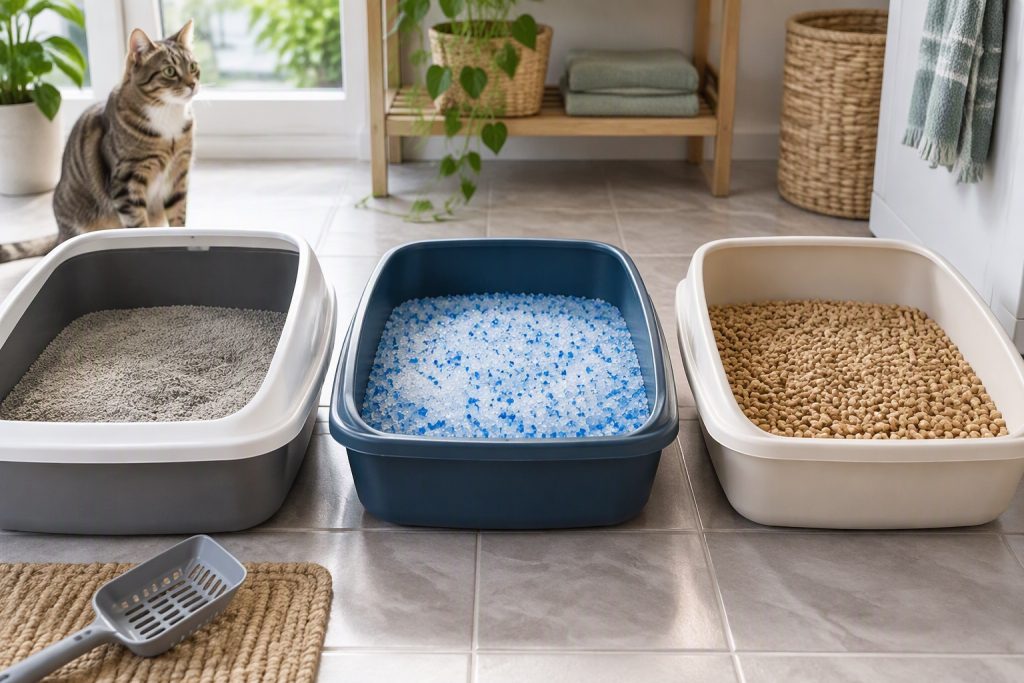
Clumping litter forms solid balls you scoop out daily, crystal litter absorbs urine and dries waste while controlling odour, and pine litter breaks down into sawdust when wet. Clumping is the closest to what most cats instinctively dig in, crystals last longest between full changes, and pine is a natural, low-dust option. The best choice is usually the one your cat will actually use and you can keep clean. Texture, odour control, and daily effort all matter, but your cat’s preference comes first.
- Clumping: best digging feel, needs daily scooping.
- Crystal: longest lasting, less scooping, higher cost.
- Pine: natural and low dust, turns to sawdust.
- Most cats prefer unscented, fine-grained litter.
What is the difference between clumping, crystal, and pine litter?
Clumping litter is usually made of bentonite clay, sometimes with plant fibres, and it binds liquid into firm clumps that you remove with a scoop. That keeps urine out of the tray, so the box stays fresher and you can see exactly how much your cat is producing, which is useful health information. Crystal litter is made of silica gel beads that absorb urine and dehydrate solid waste, so you stir it rather than scoop it, and it lasts longer before a full change. Pine litter is compressed sawdust pellets that expand and crumble into powder when they get wet, and you sift the solid waste out and remove the soiled sawdust. Each material behaves very differently in the box, and that difference affects both how your cat feels about it and how much work it is for you.
Tray, scoop, anti-splash mat and clumping litter. The whole litter corner, one box.
Which litter do most cats prefer?
Given a choice, most cats gravitate toward a fine, sandy, unscented litter they can dig and cover in easily, which is why clumping clay is the most popular option. Cats have sensitive paws and a powerful sense of smell, so large, sharp pellets and heavily perfumed litters are common reasons a cat avoids the box. Fine texture matters because digging is an instinct, and a litter that feels unpleasant underfoot can push a cat to toilet on a soft rug instead. Unscented is usually better than scented, since the litter’s job is to control odour, not add fragrance. That said, individual cats differ, and a cat raised on pine may prefer pine for life. If you are unsure, offer two boxes side by side with different litters for a week and let her show you. Pair that with a sensible box style, as our guide to covered versus open litter boxes explains, and you have covered the two biggest factors in box acceptance.
Which litter controls odour best?
Crystal litter tends to win on odour control per volume because silica gel absorbs urine and dries solid waste, slowing the bacteria that cause smell. Clumping litter controls odour well too, but only if you scoop daily, because urine left in the tray quickly turns the whole box sour. Pine has a natural, pleasant scent and good absorption, though it needs regular sifting and the sawdust can hold odour if you do not remove it often. Whichever you choose, the honest truth is that cleanliness controls odour more than the material does. A box scooped every day and fully changed on schedule will beat a neglected box of any type. Add good ventilation and enough boxes for the number of cats in the home, and odour stops being a problem regardless of which litter you pick.
Which litter is safest and healthiest?
All three types are widely used and generally safe, but there are practical differences. Clumping litter can be ingested in small amounts when a cat grooms her paws, and while most cats pass it without trouble, it is a concern for kittens who eat litter and for cats with digestive issues, so some owners avoid clumping for very young cats. Crystal litter should not be eaten, and the dust is minimal, which suits cats with sensitive lungs. Pine is often chosen by owners who want a natural, low-dust product, and its sawdust is biodegradable, though some cats dislike the texture. Scented litters and heavy dust are the two things most likely to cause irritation or avoidance, so unscented and low-dust options are the safer default. If your cat has asthma or a sensitive respiratory system, discuss litter choice with your vet.
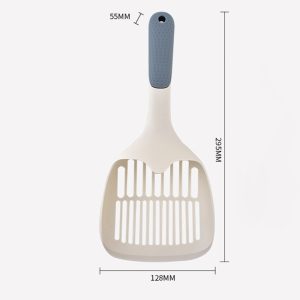
Cat Litter Shovel Shit Shovel Artifact Wholesale Pet Cleaning Supplies Large Cat Litter Shovel Tofu Cat Litter Cat…
How do cost and mess compare?
On raw cost per bag, clumping clay is usually the cheapest, but you replace it continuously as you scoop, so the monthly cost adds up. Crystal litter costs more per bag but lasts longer between full changes, which can make it competitive over a month, though many cats dislike the texture and you cannot see urine clumps for health monitoring. Pine is mid-priced and economical if you buy in bulk, but the sawdust tracks and needs regular sifting, and a sifting box helps a lot. Tracking is a shared complaint: fine clumping litter sticks to paws and spreads, crystals scatter, and pine sawdust drifts. A litter mat at the box entrance catches most of it. None of these differences is decisive on its own, so weigh them against what your cat will accept and how much daily upkeep you will genuinely do. If cost is tight, a cheaper litter scooped faithfully beats an expensive one left too long, because cats care far more about cleanliness than about brand.
How do I switch my cat to a new litter?
Switch gradually, because cats are sensitive to change and a sudden swap can trigger box avoidance. Mix a small amount of the new litter into the old, then increase the ratio over about a week to ten days, letting her get used to the texture and smell. Keep at least one box with the old litter available during the transition, so she always has a familiar option. Do not switch at the same time as moving the box, changing the box type, or bringing home a new pet, since stacking changes makes it harder to tell what she objected to. If she starts going outside the box, slow down or revert. And if you have more than one cat, remember that box count matters as much as litter, which is why one box per cat plus one extra is the rule to follow.
Frequently asked questions
- Is clumping litter dangerous for cats? Not for most adult cats. The risk is mainly for kittens or cats who eat litter, so some owners choose non-clumping for those cases.
- Does crystal litter need scooping? You stir it daily to distribute the beads and remove solids, then replace the whole tray when it stops absorbing. It needs less daily scooping than clay.
- Is pine litter safe for kittens? Generally yes, and it is often chosen for kittens because it does not clump. Watch that they do not eat the pellets.
- Why does my cat avoid scented litter? Cats have a far sharper sense of smell than we do, and perfume in litter can be overpowering. Try unscented instead.
- Which litter is cheapest overall? Clumping clay is usually cheapest per bag, but crystal can last longer between changes. Your cat’s preference should decide it.