Change your cat’s food gradually, over about seven to ten days, mixing a little of the new food into the old and increasing the ratio step by step. A slow transition lets the gut adjust and prevents the vomiting and diarrhoea that a sudden switch often causes. If your cat has a medical reason for the change, follow your vet’s plan, which may be faster or slower depending on the condition.
- Transition over seven to ten days.
- Increase the new food in small steps.
- Never starve a cat to force a switch.
- Stop and call your vet if she becomes unwell.
How long should a food change take?
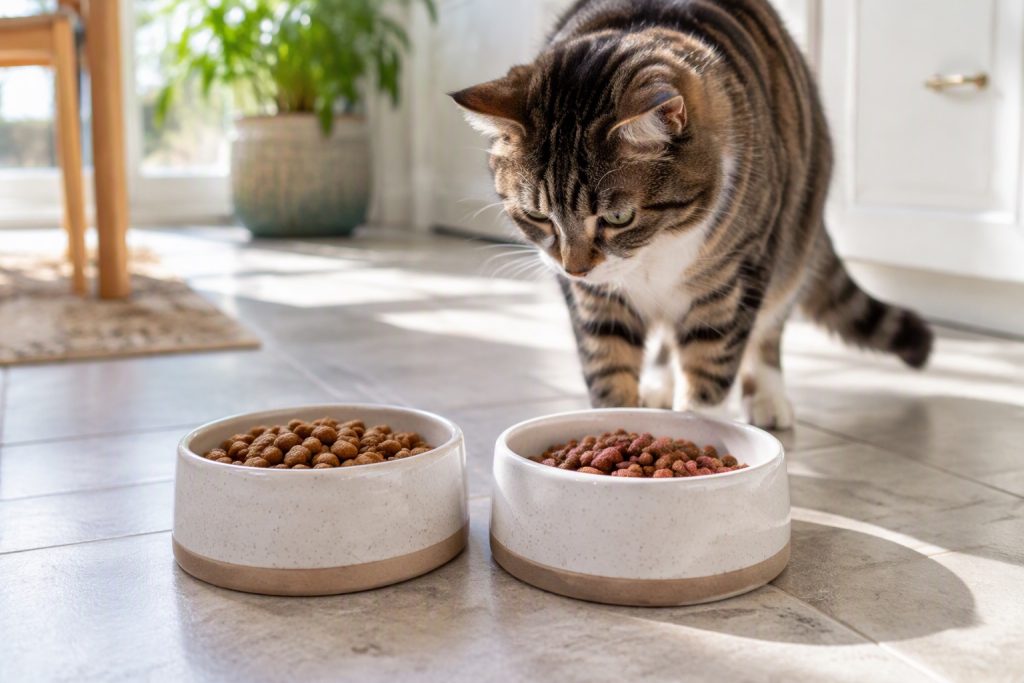
For most healthy cats, a seven to ten day transition is ideal, though sensitive cats may need two to three weeks. The principle is to change the ratio slowly enough that the digestive system, and the gut bacteria that help it, have time to adapt. Start with roughly a quarter of the new food mixed into three quarters of the old, and hold that for two or three days if all is well. Then move to half and half, then three quarters new, then all new, spending a few days at each stage. A cat with a delicate stomach may need longer at each step, and a cat who has eaten the same food for years may be slower to accept change at all. If your vet has prescribed a therapeutic diet, they may advise a specific schedule, sometimes quicker for a medical reason. Follow their guidance over any general rule.
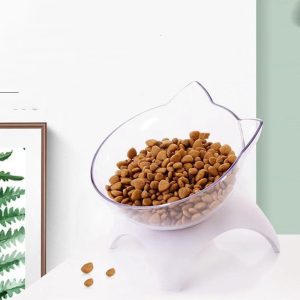
Clear glass bowl holding dry food. Made from plastic. Made for daily feeding and fresh water. Keeps food…
Why can’t I just switch foods overnight?
A sudden switch disrupts the gut, which is home to a delicate balance of bacteria that help digest food. When the diet changes all at once, that balance shifts faster than the gut can adapt, and the result is often loose stools, vomiting, gas, or a cat who simply refuses to eat. Cats are also creatures of habit, and many are neophobic, meaning they are wary of unfamiliar food. A new texture or smell can put them off entirely, and a cat who refuses food for more than a day or two is at risk of a serious liver problem called hepatic lipidosis. That is why a gradual mix works on two fronts: it protects digestion and it lets a cautious cat get used to the new taste and smell. Patience is far easier than managing a hunger strike or a bout of diarrhoea, so resist the temptation to rush.
How do I mix old and new food?
Mix the two foods thoroughly in the bowl rather than putting them side by side, so your cat cannot simply eat around the new food. Warm the mixture slightly if the food is wet, since warmth releases aroma and makes it more appealing, but never serve it hot. If your cat is fussy, you can also offer the new food in a separate small dish alongside her usual meal, letting her investigate at her own pace. Keep mealtimes calm and consistent, and avoid free-feeding during a transition if you can, so you can see what she is actually eating. For wet food, use a clean bowl each time and discard leftovers after about twenty minutes. Track how much she eats and how her litter tray looks, since stools are the clearest sign of whether the transition is going well. Our guide on how much to feed a cat helps you set sensible portions at each stage.
What if my cat refuses the new food?
Refusal is common and does not mean the food is wrong, only that you moved too fast. Back up to the last ratio she accepted and hold it longer before increasing again. Try warming the food, adding a little of the old food’s liquid, or offering the new food when she is hungriest, such as before her main meal. Some cats respond to a gradual increase in a very small step, from a tenth of the bowl to a fifth, rather than quarters. Never withhold food to force acceptance, because a cat who goes without eating for even a couple of days can become seriously ill. If she refuses the new food entirely for more than a day, or loses weight, speak to your vet. They may suggest a different formula, a slower plan, or a check for an underlying problem. If your cat will not eat anything at all, treat that as urgent.
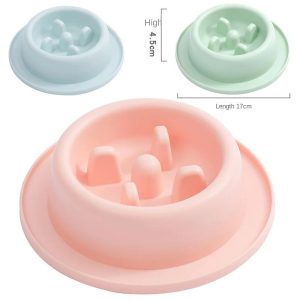
Round bowl with a removable flower insert. Made from PP. Made for daily feeding and fresh water. Keeps…
When should I change my cat’s diet?
Change the diet when there is a clear reason, not for novelty. Common triggers include moving from kitten food to adult food as she grows, switching to a senior formula in later years, and managing a diagnosed condition such as kidney disease, urinary problems, allergies, or obesity on veterinary advice. Sometimes a change is needed because a food is discontinued or your cat has developed an intolerance. If you simply want to try something new, there is no harm, but weigh the benefit against the disruption, since a stable, complete diet suits most cats well. Whatever the reason, choose a food that meets recognised nutritional standards and is appropriate for your cat’s life stage. Your vet is the best guide if you are unsure, especially for a cat with any health condition, as the wrong diet can do real harm.
What if my cat gets sick during the switch?
Mild soft stools can happen as the gut adjusts, but persistent diarrhoea, repeated vomiting, or a cat who goes off food entirely is a sign to stop. Pause the transition, return to the food she tolerated, and let her settle. If she is bright and eating, you can try again more slowly after a few days. If she is vomiting repeatedly, lethargic, or refusing food, call your vet rather than pushing on. Cats hide illness well, and a food change can sometimes unmask a problem that was already there. Our article on cat vomiting and when to worry explains the signs that need prompt attention. A cat who cannot keep food down, or who has bloody diarrhoea, needs to be seen. When in doubt, the safest path is to pause the change and get advice.
Frequently asked questions
- How long can a food transition take? Seven to ten days for most cats, but up to three weeks for sensitive ones.
- Can I switch foods cold turkey? It is not advised, as it often causes vomiting or diarrhoea and food refusal.
- Should I mix wet and dry food during the change? Yes, if your cat eats both, mix within each type rather than switching forms at once.
- Is it dangerous if my cat skips a meal? A day of refusing food is a concern; more than a day or two is urgent.
- Do I need a vet to change my cat’s diet? For a healthy cat, no; for a medical condition, always follow veterinary advice.