Most adult cats need roughly 20 to 30 calories per pound of healthy body weight per day, but the real answer is that you should feed to your cat’s body condition, not to a fixed cup. Start with the packet guide, then adjust up or down based on whether she is gaining or losing weight. Weigh her food, watch her waistline, and review the portion every few weeks rather than setting it once and forgetting it. Getting the amount right is one of the most effective things you can do for her long-term health.
- Feed by body condition, not by a fixed scoop.
- Weigh portions; cups are too imprecise.
- Split the daily amount into two to four meals.
- Adjust for age, activity, and neutering.
How much should a cat eat each day?
A useful starting point is about 20 to 30 calories per pound of ideal body weight, which for an average ten-pound cat works out at roughly 200 to 250 calories a day. The exact figure depends on age, activity, whether she is neutered, and whether she lives indoors, so treat it as a range to fine-tune rather than a rule. Kittens need more energy per pound and often eat several small meals a day, while seniors usually need fewer calories and more protein quality. The most reliable method is to pick a starting amount, feed it consistently for a couple of weeks, and then check her weight and shape. If her ribs become hard to feel or her waist disappears, reduce slightly. If she looks bony, increase. Measuring by weight in grams is far more accurate than guessing with a cup, and it takes only seconds.
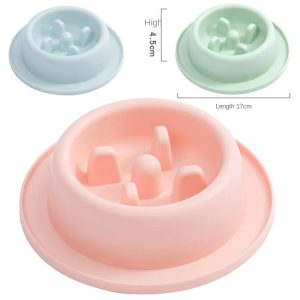
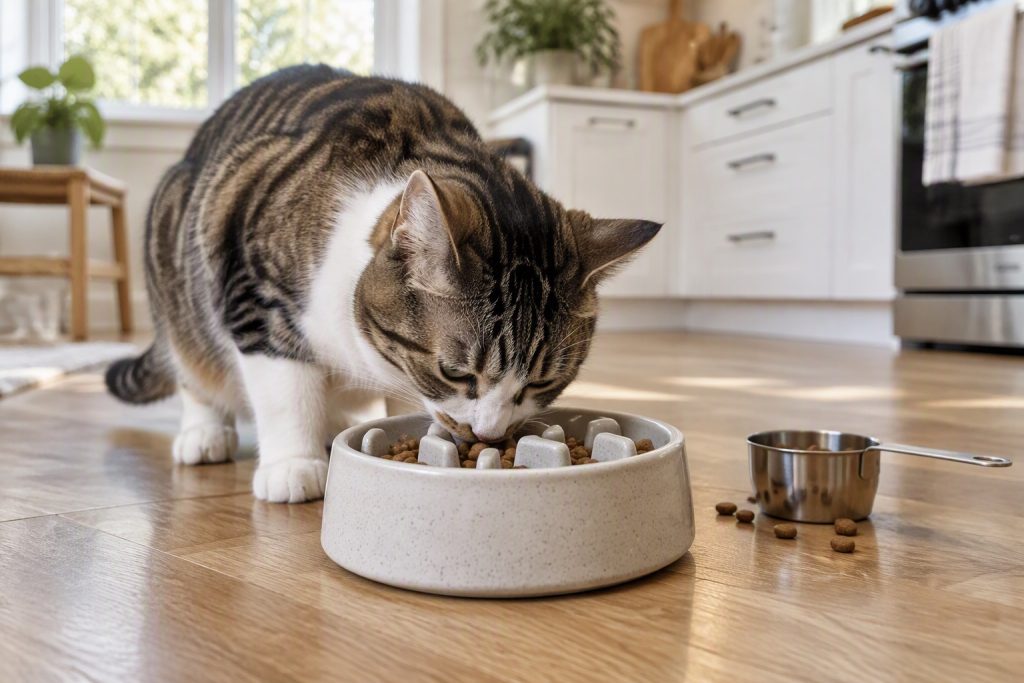
Pet Cat Slow Food Bowl Fat Help Healthy Round Anti-choking Thickened And Non-slip Multiple Colors Shapes. Part of…
How do I read the feeding guide on the packet?
Feeding guides are a starting point, not a prescription, and they are often generous because they assume a more active cat than the average indoor one. Look at the guide for your cat’s current weight, then treat that number as the upper end of your range. Note that the guide is usually for the total daily amount, not per meal, which is a common source of accidental overfeeding. Check the calorie content too, because two foods can look identical on the label yet differ widely in energy density. If you mix wet and dry food, you must count both toward the daily total rather than treating wet food as a bonus. Measure with a kitchen scale if you can, or use the same measuring cup every time so your portion stays consistent from one day to the next. Consistency matters more than perfection, because small daily overshoots add up quietly over months.
How does wet food compare with dry food in portions?
Wet food is roughly 70 to 80 percent water, so a can weighs far more than the dry food needed to deliver the same calories. That means you cannot swap a pouch for a scoop by volume. Most pouches and small cans hold around 70 to 90 calories, while a typical dry food has roughly 300 to 400 calories per 100 grams. If you feed a mix, add up the calories from each source and keep the total within your daily target. Many owners find wet food helps with hydration and portion control, while dry food is convenient and can be left out briefly. Our guide to wet versus dry cat food breaks down the trade-offs so you can choose a combination that suits your cat and your routine.
How do I know if I am overfeeding or underfeeding?
Use your hands and eyes rather than the scale alone. Run your fingers along her ribs: you should feel them easily under a thin layer of fat, like the back of your hand. Look at her from above — there should be a visible waist behind the ribs — and from the side, where the belly should tuck up rather than hang level or bulge. A cat who begs constantly, gulps food, or gains weight steadily is likely getting too much. A cat who loses weight, has a dull coat, or seems hungry all the time may be getting too little or may have a medical issue. Weigh her monthly on a baby scale if you can, because small changes are easy to miss. If she eats well but still loses weight, see your vet rather than simply feeding more.

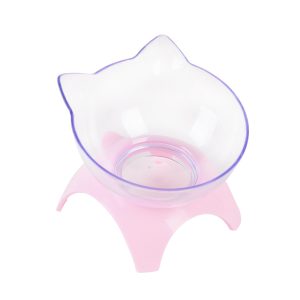
Removable And Washable Multi-purpose Cat Bowl. Part of the KiKi Meow Cat Feeding and Water collection for cats.
How often should I feed her, and can I free-feed?
Adult cats do well on two to four measured meals a day, which suits their natural pattern of eating several small prey-sized portions. Scheduled meals let you monitor appetite, which is one of the earliest signs of illness, and they prevent the constant grazing that leads to weight gain. Free-feeding dry food works for some cats but makes it hard to track how much she actually eats and is a common cause of obesity, especially in neutered indoor cats. If she bolts her food and then vomits or begs, smaller, more frequent meals help, and a puzzle feeder slows her down. Our guide to slow feeders for cats explains how to stretch a meal out so she eats more calmly and stays satisfied for longer. If you have more than one cat, feed them in separate spots so you can be sure each one gets her share.
How do I adjust portions as she ages or changes?
Reassess her portion whenever her life changes. A kitten’s needs drop as she reaches adult size, a neutered cat often needs around 20 to 30 percent fewer calories than before surgery, and a senior cat may need fewer calories but more digestible protein. Indoor cats who slow down with age need less food, while a cat who becomes more active may need more. Illness, medication, and pregnancy all change requirements too, so ask your vet for guidance during those periods. Change portions gradually rather than cutting sharply, and recheck her body condition every month or two. If you switch foods, transition over about a week, mixing increasing amounts of the new food into the old, to avoid stomach upset. A portion that suited her a year ago may not suit her now. If you are unsure at any point, bring her current food and portion details to a vet visit, because a professional can calculate a target based on her actual body condition.
Frequently asked questions
- How many calories does my cat need? Roughly 20 to 30 calories per pound of ideal weight, adjusted for age, activity, and whether she is neutered. Confirm the target with your vet.
- Is one cup of dry food a day too much? For many indoor cats, yes. A cup can exceed 300 calories, so weigh the food and feed to her body condition instead.
- Should I feed wet or dry food? Either can work. Wet food aids hydration and portion control, while dry food is convenient. Many owners feed a measured mix of both.
- My cat always seems hungry. Am I underfeeding her? Not necessarily. Begging can be habit or boredom. Check her weight and body condition, and if she is losing weight despite eating, see your vet.
- Can I leave dry food out all day? You can, but free-feeding makes portions hard to track and often leads to weight gain. Measured meals are easier to manage, and they let you spot a lost appetite early.