

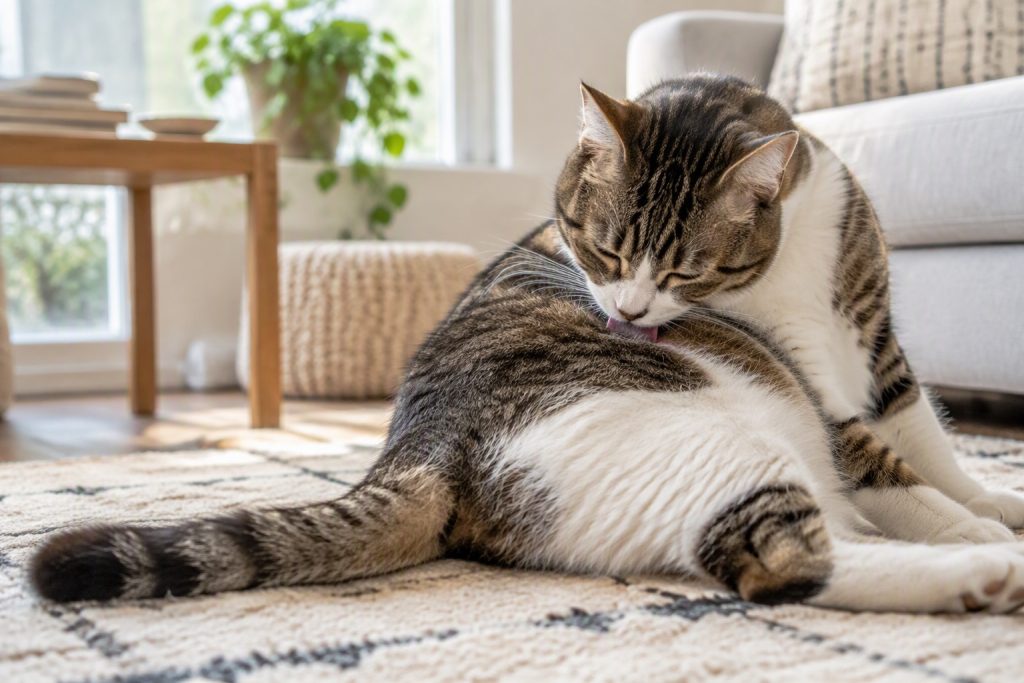
Cats groom a lot by nature, so some daily licking is completely normal. Grooming becomes excessive when your cat licks one area until the fur thins or disappears, creates bald patches or sores, or grooms so much that it interrupts eating, playing, and resting. Over-grooming is usually a sign of stress, allergies, skin parasites, or pain, so it needs investigation rather than simply being discouraged.
- Some grooming is normal; bald patches are not.
- Stress and allergies are common causes.
- Pain can trigger licking of one spot.
- Persistent over-grooming needs a vet.
Why does my cat groom so much?
Grooming serves many purposes for a cat: it keeps the coat clean, regulates temperature, distributes natural oils, and removes loose fur and parasites. It is also a comfort behaviour, so cats groom when they are relaxed and when they are anxious, much as people fidget or bite their nails. Over-grooming, sometimes called psychogenic alopecia when stress is the cause, happens when the behaviour becomes compulsive or when an underlying irritation makes the skin feel unbearable. The most common physical triggers are fleas, mites, and other parasites, food or environmental allergies, and skin infections. Pain is another frequent cause: a cat with arthritis, a sore back, or bladder discomfort may lick the painful area repeatedly. Some cats over-groom after a change such as a move, a new pet, or a new baby. Rarely, a neurological or hormonal condition is involved. Our article on how often to brush a cat covers routine coat care that supports skin health.
Nail scissors, bath brush, de-shedding glove and a drying towel — the full groom in one box. Cuts…
How much grooming is normal?
Normal grooming occupies a substantial part of a cat’s day, often several hours spread across waking periods, usually after meals and before and after sleep. A healthy cat’s coat looks smooth and even, with no bald patches, red skin, scabs, or broken hairs. The line between normal and excessive is not about the number of minutes but about the result: if the coat and skin remain healthy, the grooming is likely fine, but if you see thinning fur, bare patches, sores, or a cat who seems unable to stop, that is over-grooming. Pay attention to the pattern. Licking focused on one area, such as the belly, inner thighs, or lower back, suggests a local problem like pain or an itch, while all-over licking often points to a generalised issue such as allergies or stress. Comparing your cat with how she looked a few weeks ago is the simplest way to notice a change.
What medical causes make cats over-groom?
Medical causes are common and should be ruled out first. Parasites top the list: fleas, even a single one, can drive intense licking, as can mites such as those that cause mange, and lice. Allergies are the next major category, whether to flea saliva, food proteins, pollen, dust, or household products, and they often cause itching along with grooming. Skin infections, both bacterial and fungal, make the skin uncomfortable and provoke licking. Pain from arthritis, dental disease, an anal gland problem, or a urinary issue can cause a cat to lick a specific area repeatedly. Endocrine conditions such as hyperthyroidism and some neurological problems are less common but possible. Because the treatments differ so much, a proper diagnosis matters, and treating the wrong cause wastes time and leaves your cat uncomfortable. A vet can examine the skin, test for parasites, and discuss allergy investigation if needed. Never assume over-grooming is purely behavioural before a health check.
How do I stop my cat over-grooming?
The right approach depends on the cause, so the first step is a vet visit to rule out medical triggers. If parasites are found, treating them thoroughly, including the environment, usually resolves the licking. Allergies need identification and management, which may mean a change of diet, flea control, or reducing exposure to the allergen. If pain is the cause, addressing it often stops the behaviour. Once medical causes are excluded, focus on stress and enrichment. Provide predictable routines, quiet hiding places, and plenty of play, and identify any recent changes that may have unsettled her. Pheromone diffusers can help some cats, and a vet may discuss behaviour support for compulsive cases. Do not punish the behaviour or use physical deterrents, which add stress and make things worse. Our article on managing cat shedding covers coat and skin care that can support a healthy coat. In some cases, medication prescribed by your vet is part of the plan.
Brush designed to lift loose hair out of a cat's coat — the hair has to go somewhere…
Could my cat be stressed?
Stress is one of the most common causes of over-grooming, and cats are more sensitive to change than many owners realise. Even a small disruption, such as rearranging furniture, a new work schedule, a visitor, or a new smell, can unsettle a cat and trigger compulsive grooming. Multi-cat households are a frequent source, since tension between cats can be subtle and ongoing, and a cat who feels she cannot access resources may groom to cope. Boredom and lack of control over her environment also play a role. Signs of stress include hiding more, eating changes, avoiding certain areas, and increased grooming, especially on the belly and inner thighs. To help, restore predictability, add resources such as extra litter trays, food and water stations, and resting spots, and give her safe places to withdraw. Increase interactive play and consider a pheromone diffuser. If the behaviour persists despite these changes, ask your vet for advice.
When should I see a vet about over-grooming?
See your vet as soon as you notice bald patches, red or broken skin, sores, or grooming that seems compulsive, rather than waiting for it to worsen. Early assessment matters because the longer a cat over-grooms, the more the behaviour can become habit even after the original trigger is removed. Seek prompt care if the skin looks infected, if there are open sores, if your cat is losing weight, or if she seems unwell in other ways. If the grooming comes with vomiting, diarrhoea, appetite changes, or lethargy, that suggests a systemic problem. If you suspect parasites, your vet can confirm and treat them properly. If the cause turns out to be behavioural, they can guide you on stress reduction and, if needed, referral to a behaviourist. Because cats are skilled at hiding discomfort, any persistent change in grooming deserves professional attention rather than home remedies.
Frequently asked questions
- How much grooming is too much for a cat? When fur thins, bald patches or sores appear, or grooming disrupts normal life.
- Can stress cause over-grooming? Yes, it is one of the most common causes, especially in multi-cat homes.
- Why does my cat lick one spot bald? Localised licking often points to pain or a skin problem in that area.
- Are fleas really enough to cause over-grooming? Yes, even a few fleas can trigger intense licking in a sensitive cat.
- Should I stop my cat grooming? No. Find and treat the cause rather than interrupting the behaviour.



