

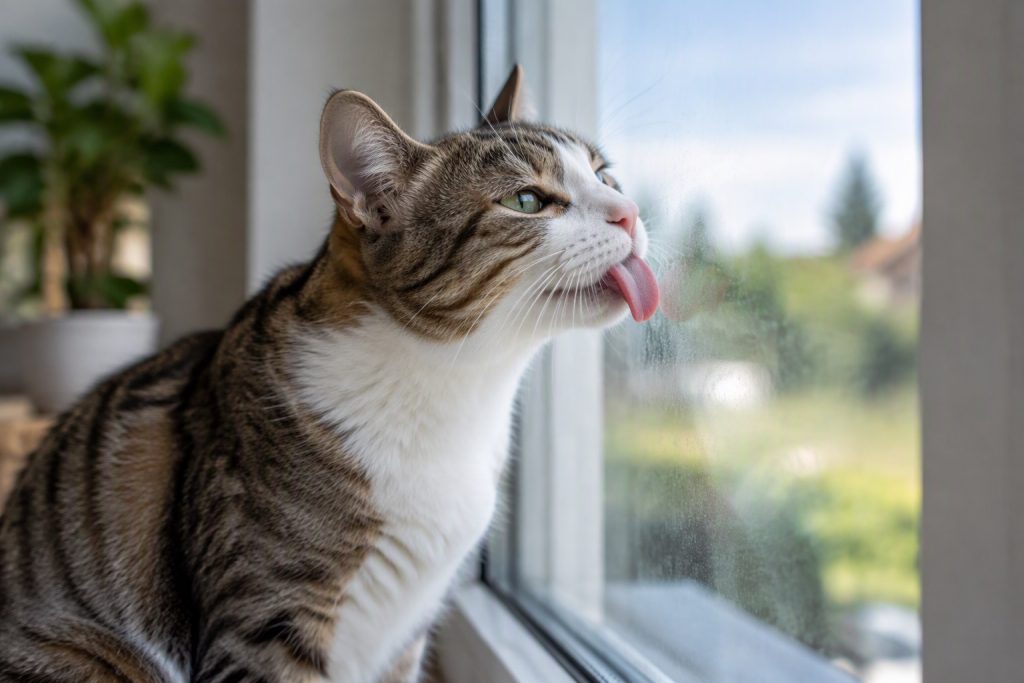
Cats lick windows mostly because the glass feels cool and smooth, because condensation carries interesting scents and minerals, or because the habit has become a soothing ritual. It is usually harmless, but it can become a concern if your cat licks compulsively, swallows glass cleaner residue, or does it alongside other signs of stress or illness. Cleaning with pet-safe products and adding enrichment usually resolves it.
- Cool glass and condensation are the usual draw.
- It is mostly harmless in moderation.
- Clean windows with pet-safe products only.
- Compulsive licking can signal stress or illness.
Why does my cat lick windows?
There are several ordinary explanations. Glass feels cool, and a cat who is warm may enjoy the sensation on her tongue, much as she enjoys a cool sink or tile. Windows collect condensation, and that moisture carries dust, pollen, and trace minerals that can be mildly interesting to taste. Glass also holds scent: a window is where the outside world presses against her territory, and licking is a way of investigating and re-marking it. Some cats lick windows because they have watched birds or insects on the other side and the behaviour has become a leftover habit. Others do it when they are bored or waiting for something, since it fills time. If your cat also licks plastic or other smooth surfaces, the drive may be sensory rather than specific to glass. Our article on why cats lick plastic covers the same sensory pattern.

Made from cloth Key features 【Name】 : cat simulation animal sound shell toy[Fill]: No fill, 2 built-in BB…
Is licking windows bad for my cat?
Licking glass itself is not harmful. The risk comes from what is on the glass. Household glass cleaners often contain ammonia, alcohols, surfactants, and fragrances that are not meant to be ingested, and a cat who licks a freshly cleaned window can pick up residue. Lead-based paint on old window frames is a genuine hazard if a cat chews or licks flaking surfaces, and window putty or sealant can also be a concern. In winter, condensation may carry grit and pollution from the outside. Repeated licking can also irritate the tongue over time, though this is uncommon. The practical answer is to switch to a pet-safe cleaner, rinse thoroughly, and discourage licking of any surface you have just treated. If you notice drooling, vomiting, or mouth irritation after cleaning, contact your vet. It is also worth remembering that cats groom their paws after walking on a freshly cleaned floor, so residue picked up elsewhere can end up in her mouth just as easily as something on the glass. Wiping surfaces with plain water after cleaning removes most of what is left behind.
Could licking windows be a sign of a medical problem?
Occasionally, yes. Licking that becomes intense, frequent, or obsessive can be a form of pica, the chewing or eating of non-food items, which is sometimes linked to stress, anxiety, or an underlying illness. Dental pain, gum disease, nausea, or gastrointestinal discomfort can make a cat lick surfaces oddly, and some cats with anaemia or other systemic conditions show changed oral behaviour. A cat who licks windows alongside excessive grooming, vomiting, weight loss, or a change in appetite needs a vet check. In older cats, a new repetitive habit can be an early sign of a medical or cognitive change. It is easy to assume a quirk is behavioural, but a health check is the sensible first step when a habit is new, sudden, or escalating, because the earlier a physical cause is ruled out or found, the better.
How do I stop my cat licking windows?
Start by removing the reward. Clean windows with a pet-safe product and rinse well, and if condensation is the draw, improve ventilation or use a dehumidifier in that room. If she is licking a specific pane, a light application of a cat-safe deterrent, or simply a temporary window film, can break the habit at that spot. Then address the underlying drive: add play sessions that mimic hunting, rotate toys, provide food puzzles, and give her vertical space such as a perch, since a window is more interesting to sit behind than to lick. If stress seems to be involved, look at recent changes and add predictable routines, quiet hiding places, and a pheromone diffuser. Never punish the behaviour, which adds stress. Redirect calmly to a toy or a treat instead. Our article on why cats purr looks at another self-soothing behaviour.

Rainbow-striped plush cylinder. Keeps a bored indoor cat busy and burns off restless energy. Made from fleece and…
When should I worry about window licking?
Worry when the behaviour changes in character. A cat who licks a window occasionally and is otherwise well needs no intervention. A cat who licks for long stretches, who cannot be interrupted, or who has started licking walls, floors, or fabric as well may be developing a compulsive pattern that deserves professional input. Watch for accompanying signs: vomiting, diarrhoea, weight loss, poor appetite, lethargy, drooling, or excessive grooming all shift the picture from quirk to possible illness. Sudden onset in an older cat is another reason to book a check-up. If you suspect your cat has ingested cleaner residue, sealant, or paint, contact your vet or a pet poison service straight away. For a habit that persists without an obvious cause, a veterinary behaviourist can help identify triggers and build a plan. Health topics that persist are best discussed with your vet rather than managed indefinitely at home. Keep a simple record of how often it happens and whether anything changed around the same time, such as a new cleaning product, a new piece of furniture, or a shift in routine, since those details are exactly what a vet or behaviourist will ask for first.
Is licking windows ever normal cat behaviour?
Yes, and it is worth saying plainly that most window licking is harmless. Cats explore the world with their mouths as well as their noses, and a cool, faintly scented pane is a reasonable thing to investigate. Many cats lick windows a handful of times and lose interest, especially once the novelty fades or the condensation is gone. The behaviour becomes noteworthy only when it is frequent, hard to interrupt, or paired with other changes. If you are unsure, keep a short note of when it happens and for how long, and mention it at your next routine vet visit. In the meantime, remove chemical residue, offer better things to do, and give her a comfortable perch so she can watch the world instead of licking it. Simple management resolves most cases. If it does not, that is useful information in itself, and it is worth raising at your next check-up rather than waiting for something else to go wrong.
Frequently asked questions
- Why does my cat lick the window in winter? Cold glass and heavy condensation make the surface especially appealing when indoor air is dry.
- Is window cleaner dangerous to cats? Many cleaners contain ammonia and other irritants, so use a pet-safe product and rinse well.
- Does licking windows mean my cat is deficient? Rarely, if the diet is complete. Boredom, habit, and sensory interest are far more common.
- Can licking glass hurt my cat’s tongue? Occasionally with very frequent licking, but most cats show no irritation at all.
- Should I stop my cat licking windows? Not necessarily. Remove chemical residue and add enrichment, and see a vet if the habit becomes compulsive.





