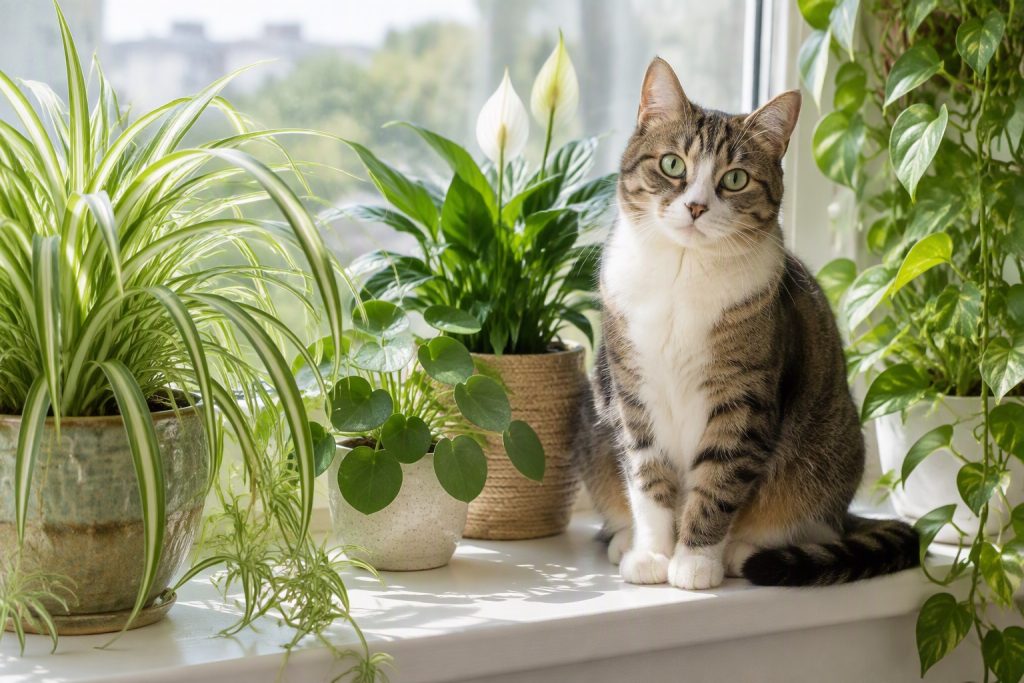
Cat-safe houseplants include spider plants, Boston ferns, areca and bamboo palms, calatheas, African violets, Christmas cacti, and ponytail palms. Many popular houseplants, however, are toxic to cats, including lilies, sago palms, pothos, philodendrons, peace lilies, and aloe vera. The safest approach is to check every plant against a reliable toxic-plant list before it enters your home, and to treat any plant you are unsure about as off-limits.
- Spider plants, ferns, and palms are generally safe.
- Lilies and sago palms are highly toxic.
- Pothos, aloe, and peace lilies are risky too.
- Check every plant before bringing it home.
Which houseplants are safe for cats?
Several popular houseplants are considered non-toxic to cats, which means they are unlikely to cause serious harm if nibbled. Spider plants, Boston ferns, areca palms, bamboo palms, ponytail palms, calatheas, prayer plants, African violets, Christmas cacti, and most true ferns are commonly listed as safe. That said, safe does not mean edible in quantity: a cat who eats a lot of any plant can still vomit or have diarrhoea, and some cats react to the fibre. Non-toxic also refers to the plant itself, not the soil, the pot, or any fertiliser or pesticide used on it, which can be far more dangerous than the leaves. Our article on cat-proofing a home for a new cat covers the wider checklist. Always verify a specific plant against a reputable toxic-plant database rather than relying on a shop label, since common names vary and mislabelling is common.
Nail scissors, bath brush, de-shedding glove and a drying towel — the full groom in one box. Cuts…
Which common houseplants are toxic to cats?
Some of the most popular houseplants are genuinely dangerous. Lilies are the standout risk: true lilies such as Easter, tiger, Asiatic, and day lilies can cause fatal kidney failure in cats, and even pollen or vase water can be harmful. Sago palms cause severe liver damage. Other common toxic plants include pothos and philodendrons, which contain insoluble calcium oxalate crystals that burn the mouth and throat; peace lilies, which cause intense oral irritation; aloe vera and snake plants, which can cause vomiting and diarrhoea; and ZZ plants, rubber plants, English ivy, kalanchoe, cyclamen, amaryllis, and dieffenbachia. Oleander and foxglove are highly toxic. This is not an exhaustive list, and reactions vary from mild to fatal, so treat any unverified plant as a risk and keep it out of reach. Your vet or a poison control service can advise on a specific plant.
Why do cats chew houseplants?
Cats chew plants for several reasons, most of them ordinary. Leaves move and rustle, which attracts a cat’s hunting attention, and the texture is satisfying to bite. Some cats chew to help clear hair from the digestive tract, and others simply enjoy the taste or the moisture. Boredom is a major driver, especially in indoor cats with limited outlets, and a plant offers something to do. Stress can also play a role, since repetitive chewing is self-soothing. Occasionally, chewing non-food items points to pica, which can be linked to an underlying condition or anxiety. Understanding the reason helps you respond: a bored cat needs more play and enrichment, while a stressed cat needs a calmer environment. Our article on why cats lick plastic explores a similar sensory habit. In all cases, removing toxic plants comes first, before any behavioural work.
How do I cat-proof my plants?
Start by removing or rehoming anything toxic, and never rely on your cat learning to avoid it. For safe plants you want to keep, put them somewhere a cat cannot reach: high shelves with no launch point nearby, hanging baskets, a closed room, or a glass cabinet. Remember that cats can jump and climb far better than most owners expect, so “out of reach” needs to be genuinely out of reach. Cover the soil with large stones or a mesh guard, because digging and soil-eating are common. Use pet-safe fertilisers and avoid systemic pesticides that make the whole plant toxic. Offer cat grass or a catnip plant as a legal alternative, so she has something green to chew. If she keeps targeting a specific plant, a light deterrent or a physical barrier such as a cloche can help. Redirecting an oral habit takes patience, and offering a legal chew target is usually far more effective than trying to make the plant itself unappealing. Keep the alternative fresh and available, and replace it when it gets tatty, since a tired patch of cat grass will not compete with a lush new fern.
Brush designed to lift loose hair out of a cat's coat — the hair has to go somewhere…
What do I do if my cat eats a toxic plant?
Act quickly and do not wait for symptoms. Move your cat away from the plant, remove any plant material from her mouth if you can do so safely, and identify exactly which plant was eaten, since treatment depends on the species. Keep a sample or take a photo of the plant and its label. Then contact your vet or an animal poison control service immediately and follow their instructions. Do not induce vomiting or give milk, oil, or home remedies unless a vet tells you to, because some can make things worse. Signs of poisoning include drooling, vomiting, diarrhoea, mouth irritation, pawing at the mouth, tremors, lethargy, difficulty breathing, and collapse, but some toxins, such as those in lilies, can cause organ damage before obvious signs appear. Time matters enormously, so treat any suspected ingestion as an emergency and get professional advice at once.
Can I train my cat to leave plants alone?
You can reduce the behaviour, though cats are not easily trained to ignore something interesting. Deterrence works best as a combination of access control and alternatives. Make the plant physically hard to reach, use a scent or texture deterrent that is safe for cats, and provide a better option such as cat grass, a catnip plant, or a toy. Reward her when she chooses the alternative. If the chewing is driven by boredom, increase play and puzzle feeding, which addresses the root cause rather than just the symptom. Never punish a cat for chewing a plant, since punishment adds stress and does not teach the right behaviour. Some cats respond well to a simple “no” followed by redirection to a toy, but consistency matters. If your cat chews plants obsessively or eats non-food items generally, speak to your vet, because that can be a medical or behavioural issue.
Frequently asked questions
- Are spider plants safe for cats? Yes, they are commonly listed as non-toxic, though eating a lot can still cause an upset stomach.
- Are lilies really dangerous to cats? Yes. Many true lilies can cause fatal kidney failure, even from pollen or vase water.
- Is aloe vera safe for cats? No. It is considered toxic and can cause vomiting, diarrhoea, and lethargy.
- What should I do if my cat eats a toxic plant? Contact your vet or a poison control service immediately and bring the plant’s identity with you.
- Can I use insecticide on plants with cats around? Only pet-safe products, and keep your cat away until any treatment is fully dry.