Dry skin in cats usually shows up as flaking, dandruff, a dull coat, and sometimes itching, and it is most often caused by low humidity, poor diet, over-grooming, or parasites rather than anything serious. Treatment starts with better hydration, a good diet with adequate omega fatty acids, gentle grooming, and a humidifier in dry months. If the skin is red, scabby, or itchy, or if your cat is losing hair, a vet should check for an underlying cause.
- Low humidity and poor diet are common causes.
- Omega fatty acids and hydration help the coat.
- Gentle brushing removes flakes and spreads oils.
- Red, itchy, or scabby skin needs a vet.
What causes dry skin in cats?
Environmental and nutritional causes are the most common. Indoor heating and air conditioning strip moisture from the air, and winter is peak season for dry, flaky coats. A diet that is deficient in essential fatty acids, or one that has recently changed, can leave skin dry and dull. Over-grooming removes natural oils and damages the coat, and it is often driven by stress, allergies, or pain. Parasites such as fleas and mites cause itching and skin damage that can look like dryness. Medical conditions including allergies, hormonal problems such as hyperthyroidism, kidney disease, and skin infections can all affect coat condition. Older cats often have drier, thinner coats. Our article on cat dandruff treatment looks at the flaky-skin picture in more depth. Because the causes range from trivial to significant, the pattern and any accompanying signs are what tell you which way to look.
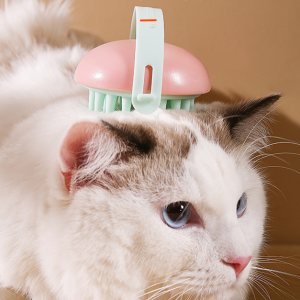
Nail scissors, bath brush, de-shedding glove and a drying towel — the full groom in one box. Cuts…
What does dry skin look like on a cat?
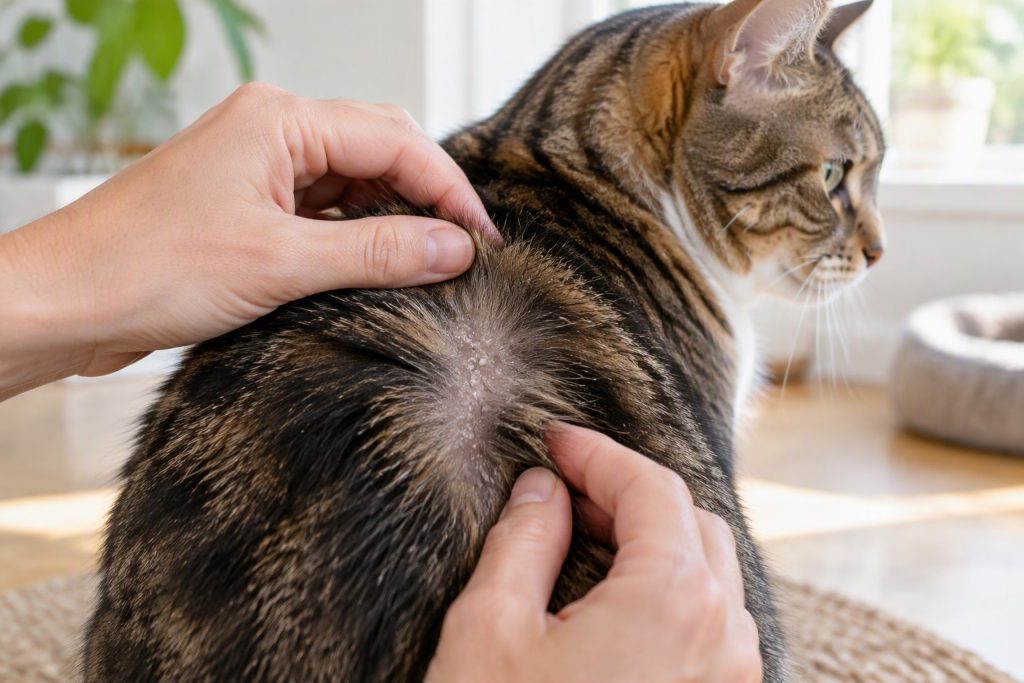
Classic signs include white or grey flakes in the coat, especially along the back near the tail base, a dull or rough coat texture, and visible dandruff when you brush or stroke her. You may notice more shedding than usual, or hair that feels brittle. Some cats with dry skin scratch, bite, or over-groom, which can create bald patches or reddened skin. Others show no itching at all and simply have a flaky coat. Look closely at the skin itself: dry skin tends to look thin and slightly scaly, while a skin infection or allergy often brings redness, crusting, small scabs, or a rash. Flea dirt looks like dark specks that turn reddish when wet, and mites often cause crusting around the ears or face. A phone photo taken in good light can help your vet assess what you are seeing, especially if the appearance changes between visits.
How do I treat dry skin at home?
Start with the basics that support skin health. Increase moisture in the air with a humidifier, particularly in winter or in air-conditioned rooms. Encourage your cat to drink by offering fresh water in several places or a fountain, and consider adding wet food to raise her water intake. Brush her gently with a soft brush a few times a week, which removes flakes and distributes natural oils through the coat, and avoid over-bathing, which strips oils further. If a bath is needed, use a cat-formulated, moisturising shampoo and dry her thoroughly. Never use human lotions, oils, or medicated creams on a cat, since many are toxic if licked off. Add a vet-approved omega fatty acid supplement if your vet agrees, and keep her environment calm, because stress drives over-grooming. If the skin is broken or infected, do not treat it at home; see a vet.
Does diet help dry skin?
Diet is central to coat condition, because skin and fur are built from what your cat eats. A complete, balanced diet with adequate animal-based protein provides the amino acids and fats needed for a healthy coat. Omega-3 and omega-6 fatty acids, particularly EPA and DHA from fish oil, are widely used to support skin health, and many cats improve on a supplement. Some commercial diets are formulated with added fatty acids for skin and coat support. If you are considering a change, do it gradually over a week or more to avoid digestive upset, and check with your vet first, especially for a cat with a medical condition. Hydration matters too: a cat on dry food alone may benefit from wet food or added water. Our article on cat shedding management covers the coat-care routine that supports healthy skin year-round.
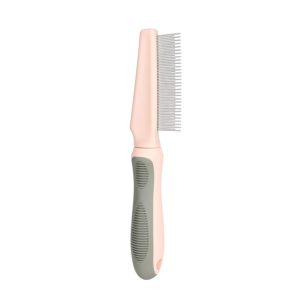
Brush designed to lift loose hair out of a cat's coat — the hair has to go somewhere…
When is dry skin a sign of a medical problem?
See your vet if the skin is red, inflamed, scabby, crusted, or broken, if your cat is scratching or biting herself, or if you see hair loss, especially in patches. These signs point away from simple dryness and towards allergies, parasites, infection, or another condition that needs diagnosis. Dry skin accompanied by weight loss, increased appetite, changed drinking, lethargy, or vomiting may reflect an underlying illness such as hyperthyroidism or kidney disease, so those signs deserve prompt attention. Persistent dandruff that does not improve with better hydration and diet is another reason to book a visit. Cats are good at hiding discomfort, so if the coat condition is worsening or not responding to home care after a few weeks, get it checked. Your vet can examine the skin, test for parasites, and run bloodwork if needed. Health topics that persist are always best discussed with your vet rather than managed indefinitely at home.
How do I tell dry skin from dandruff or parasites?
The distinction is not always obvious, and the three overlap. Simple dry skin usually shows as fine, uniform flakes with no redness and little or no itching, and it tends to worsen in dry, heated indoor air. Dandruff is essentially the same visible flaking, and the term is often used interchangeably, though persistent dandruff may have an underlying cause such as a skin condition or a dietary issue. Parasites look different: fleas leave dark specks in the coat and often cause intense itching, especially around the tail base, while mites typically cause crusting, scaling, and sometimes hair loss around the ears and face. Ringworm, a fungal infection, produces circular bald patches with scaly edges. Because the treatments are completely different, and because using the wrong one can delay proper care, a vet examination is the reliable way to tell them apart. If you are unsure, take a photo of the affected area in good light before your appointment, because skin conditions can look different by the time you get to the clinic, and a clear image helps your vet see what you saw.
Frequently asked questions
- Why does my cat have dandruff in winter? Indoor heating dries the air and the coat, so flaking is more common in cold months.
- Can I put coconut oil on my cat’s dry skin? Only if your vet agrees. Many cats lick it off, and excess fat can upset the stomach.
- Does wet food help dry skin? It can, by raising water intake, which supports skin and coat condition.
- Is dry skin a sign of illness in cats? Usually not, but it can accompany allergies, parasites, or conditions such as hyperthyroidism.
- How often should I bathe a cat with dry skin? Rarely. Over-bathing strips oils, so bathe only when needed with a cat-specific shampoo.