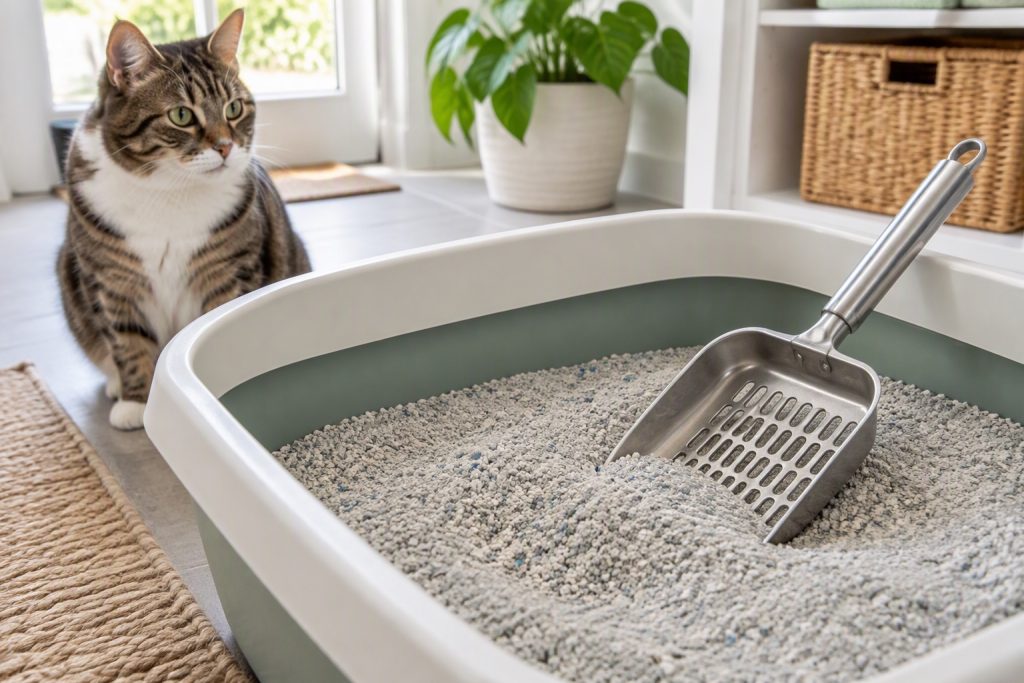
The best cat litter scoop is a sturdy one with a solid handle, slots sized to let clean litter fall through while holding clumps, and a shape that reaches the corners of the box. Metal scoops last far longer than plastic ones, which crack and bend. A scoop that is comfortable to hold and easy to rinse will make daily cleaning quicker, and daily scooping is the single biggest factor in keeping a litter box acceptable to your cat.
- Metal scoops outlast plastic ones.
- Slot size should hold clumps, pass clean litter.
- A long handle saves your back and knuckles.
- Scoop at least once, ideally twice, a day.
What makes a good cat litter scoop?
Four things matter: durability, slot size, shape, and handle. Durability comes first, because a scoop that bends or cracks will spill clumps and leave you cleaning the box twice. Slot size determines how well it works: slots that are too wide let clumps fall through, while slots that are too narrow clog with clean litter and make sifting slow. The bowl shape should be deep enough to hold a clump without dropping it, and the front edge should be thin enough to slide under a clump cleanly. The handle should be long enough that your hand stays clear of the litter, and thick enough to grip without slipping when wet. A scoop that is comfortable, rigid, and well-sized makes a chore quick, which matters because the more pleasant scooping is, the more often you will do it. Our guide on litter box placement covers the other half of the equation.
Tray, scoop, anti-splash mat and clumping litter. The whole litter corner, one box. Keeps the litter area contained,…
Metal or plastic scoop?
Metal scoops are generally the better long-term buy. They are rigid, so they slide under clumps without flexing, and they do not crack the way plastic does when you press on a stuck clump. Aluminium is lightweight, and stainless steel resists corrosion and odour. The downsides are cost and noise: a metal scoop can clang against the box and startle a nervous cat, and it may scratch plastic litter trays over time. Plastic scoops are cheaper and quieter, but they flex, and the tines often snap off at the weakest point. If you choose plastic, look for a thick, reinforced design rather than a thin, flexible one. Many owners keep a metal scoop for daily use and a spare plastic one as a backup. Either way, avoid scoops with hollow handles, which trap litter and moisture and are hard to clean.
What slot size is best?
Slot size is the detail most people overlook, and it makes a real difference. For clumping litter, the slots should be wide enough to let clean litter fall through quickly but narrow enough that a typical clump stays in the scoop. If the slots are too wide, small clumps slip through and you leave waste behind; if they are too narrow, you end up shaking the scoop for ages while clean litter clogs. For non-clumping litter, you are removing solid waste rather than clumps, so a scoop with slightly wider slots and a more solid bowl works better. If you use a fine-grained litter, choose a scoop with finer slots, and if you use pellets or a coarse litter, choose a scoop with wider slots and a sturdier front edge. Matching the scoop to the litter type is the difference between a fast job and a frustrating one.
How do I scoop properly?
Scoop at least once a day, and twice if you have more than one cat or a cat who is fussy about a clean box. Use the scoop to lift clumps out rather than stirring the litter, which breaks them apart and spreads the smell. Work from one end of the box to the other, sifting clean litter back as you go, and check the corners, where clumps often hide. Remove the waste into a sealed bag or a lidded bin, and take it out of the house promptly, since leaving it beside the box defeats the purpose. Top up the litter to the correct depth, usually around five to seven centimetres, because too little litter makes clumps stick to the base. Do a full litter change and wash the tray on a regular schedule rather than only topping up. Our article on fixing litter box smell has more on keeping odour down.
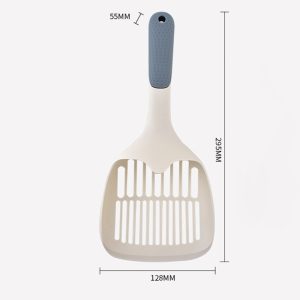
A large plastic scoop takes the daily pass, which is the one that keeps the smell down. Keep…
How do I keep the scoop clean?
Rinse the scoop after each use, or at least once a day, since dried-on litter builds up and holds odour. A quick rinse under warm water and a wipe with a pet-safe cleaner is usually enough, and a dedicated scoop hook or clip on the side of the box keeps it off the floor. Do not use harsh bleach or strong disinfectants on a scoop you will put back in the box, because residue can irritate your cat’s paws and respiratory tract. If the scoop develops a persistent smell or a rough, pitted surface, replace it. For a deep clean, soak it in warm water with a mild soap, scrub the slots with a small brush, and rinse thoroughly before drying. Never share a scoop between boxes without cleaning it, and if you have a cat with an infectious condition, use a separate scoop or disinfect between uses.
How often should I replace a scoop?
Replace a plastic scoop as soon as it flexes, cracks, or loses tines, which often happens within months of daily use. Replace a metal scoop when the handle loosens, the coating chips, or the bowl dents badly enough to catch clumps. As a rough guide, a good metal scoop can last several years, while a cheap plastic one may need replacing within a year or less. Beyond breakage, replace any scoop that has become rough, pitted, or permanently smelly, because a damaged surface traps bacteria and is hard to clean properly. It is also worth replacing the scoop if you have had an infectious illness or a parasite problem in the household, since the scoop can carry contamination. A spare scoop costs very little, so keeping one on hand means a broken tine never leaves you without a way to clean the box. If you keep a spare, store it dry and away from the litter, since a scoop left sitting in the tray will pick up moisture and start to smell long before it wears out.
Frequently asked questions
- Is a metal litter scoop better than plastic? Usually yes. Metal is more rigid and lasts far longer, though it is noisier and costs more.
- How often should I scoop the litter box? At least once a day, and twice daily in a multi-cat home or with a fussy cat.
- What slot size do I need? Narrow enough to hold clumps but wide enough to let clean litter pass, matched to your litter type.
- Can I wash a litter scoop in the dishwasher? Only if the manufacturer says so. Most scoops should be hand-washed and rinsed well.
- How do I stop litter sticking to the scoop? Use enough litter depth, keep clumps from sitting, and rinse the scoop daily.