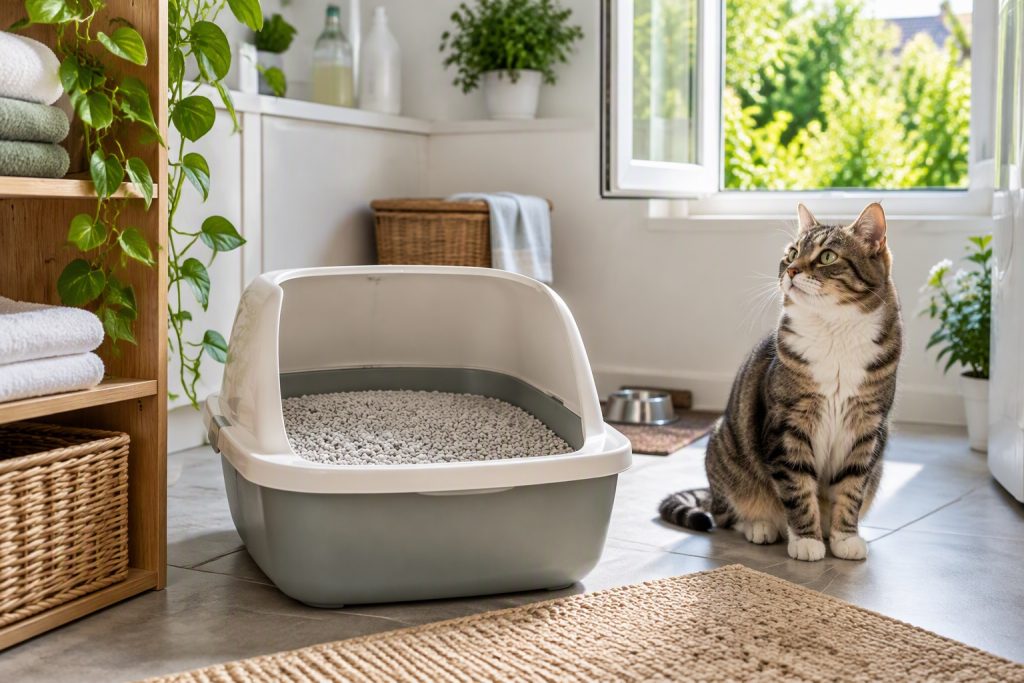
Litter box smells usually come from urine and faeces sitting too long, the wrong litter, or a box that needs deeper cleaning than it is getting. Scoop at least once or twice a day, change the litter regularly, wash the box with a mild pet-safe cleaner, and make sure the box is not in a hot, airless spot. If the smell is sudden and strong despite good hygiene, or the urine is unusually pungent, it can also signal a health issue.
- Scoop at least once or twice daily.
- Wash the box, not just the litter.
- Use a clumping, low-dust litter.
- A sudden strong smell can mean illness.
Why does my litter box smell so bad?
The most common reason is simply that waste is sitting too long. Urine and faeces release ammonia and sulphur compounds as they break down, and in a warm, poorly ventilated room those odours build fast. A second cause is the litter itself: some litters do not clump firmly, so urine soaks into the base and lingers, and scented litters can mask odour briefly while adding their own smell. A third is the box. Plastic scratches over time, and those tiny grooves trap urine and bacteria that no amount of fresh litter will remove, so an old box can smell no matter how often you clean it. Placement matters too, since a box in a hot, stuffy corner or beside a radiator will smell far worse. Finally, a cat with a urinary or digestive problem can produce stronger-smelling waste. Our guide on litter box placement explains how location affects odour.
Tray, scoop, anti-splash mat and clumping litter. The whole litter corner, one box. Keeps the litter area contained,…
How often should I scoop and change the litter?
Scoop at least once a day, and twice is better, especially in a multi-cat home. Removing solids and clumps promptly is the single most effective way to control smell, because it stops waste breaking down in the tray. As a rule, scoop twice daily and top up the litter to maintain a good depth of around five to seven centimetres, deep enough for your cat to dig and cover. A full litter change is needed roughly once a week for a clumping litter, or more often if you use non-clumping, which should be fully replaced every few days because it cannot be scooped cleanly. Wash the empty box each time you fully change the litter, using hot water and a mild pet-safe detergent, then dry it completely before refilling, since dampness encourages odour and bacteria. In a busy household with several cats, more frequent changes are needed. Consistency is what keeps the smell down.
Does the litter type affect smell?
Yes, significantly. Clumping litters, usually clay-based, lock urine into solid clumps you can remove, which keeps the tray fresher for longer than non-clumping types that leave wet litter behind. Crystal or silica gel litters absorb moisture and control odour well, though some cats dislike the texture. Natural litters made from wood, corn, wheat, or tofu vary in how well they control smell; some are excellent, while others break down faster. Scented litters are a mixed blessing: they can mask odour for a while, but many cats dislike the perfume, and the scent can irritate sensitive noses, sometimes causing a cat to avoid the box altogether. Fine, low-dust litters tend to track more but feel pleasant under paw, while coarse litters track less but may be less comfortable. The best litter is one your cat will use and that you can maintain consistently, so trial a couple of types and watch both the smell and your cat’s preference.
Which odour-control products actually work?
Some help, and some are a waste of money or even counterproductive. A covered box can contain smell but also traps it, and many cats dislike the enclosed feeling, so it often makes the problem worse. Charcoal filters in a hooded box do little once saturated and need regular replacement. Litter additives and deodorising powders can help neutralise ammonia, but choose pet-safe products and avoid anything strongly perfumed, which cats may find aversive. Enzyme-based cleaners are genuinely useful for washing the box and for accidents outside it, because they break down the proteins in urine rather than just masking them. Baking soda, used sparingly under the litter, can absorb some odour. The most effective tools remain mechanical: scoop often, change litter regularly, wash the box, and ventilate the room. A dedicated litter mat also traps stray granules and makes cleaning easier. Simple routines beat gimmicks almost every time.
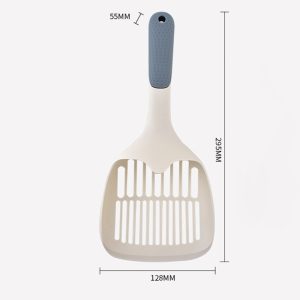
A large plastic scoop takes the daily pass, which is the one that keeps the smell down. Keep…
Can the box itself be the problem?
Absolutely. Plastic litter trays develop microscopic scratches from scooping and from claws, and those scratches hold onto urine and bacteria even after washing. Once a box has absorbed odour, no amount of cleaning fully removes it, and the only real fix is to replace the tray. A box that is too small also concentrates waste and gets dirty faster, and a box with high sides or a deep hood can trap smells and put cats off. How many boxes you have matters too, because a single tray shared by several cats fills quickly. Our guide on how many litter boxes for two cats explains the one-per-cat-plus-one rule. If your box is old, scratched, or too small, replacing it with a larger, easy-to-clean tray can make a noticeable difference. Also check that the box sits level and does not leak, since a cracked base will soak the floor beneath and smell persistently.
When does litter box smell signal a health problem?
A change in smell can be an early sign of illness. Unusually strong, sharp, or ammonia-heavy urine can point to a urinary tract infection, crystals, or kidney problems, and it often comes with other signs such as frequent trips to the box, straining, crying while urinating, or urinating outside the tray. Foul-smelling or greasy stools, or diarrhoea, can indicate a digestive issue, parasites, or a food intolerance. A cat who suddenly produces much more urine, or who drinks a lot more, may have diabetes or kidney disease. Any of these signs deserves a vet visit, especially in older cats. Blood in the urine is always urgent. Do not assume a strong smell is just a cleaning problem if the pattern has changed. Health topics that persist should be checked by a vet, because early treatment is far easier than managing a condition that has progressed.
Frequently asked questions
- Why does my litter box smell even after cleaning? The plastic may have absorbed odour in scratches, so replacing the tray is often the answer.
- Does scented litter help with smell? It masks odour briefly but many cats dislike it and may avoid the box.
- How often should I fully change the litter? About weekly for clumping litter, and every few days for non-clumping.
- Can I use bleach to clean the box? Avoid it; bleach fumes are harmful to cats. Use a mild pet-safe cleaner.
- Why does my cat’s urine smell so strong suddenly? It can signal a urinary infection or another condition, so see your vet.