

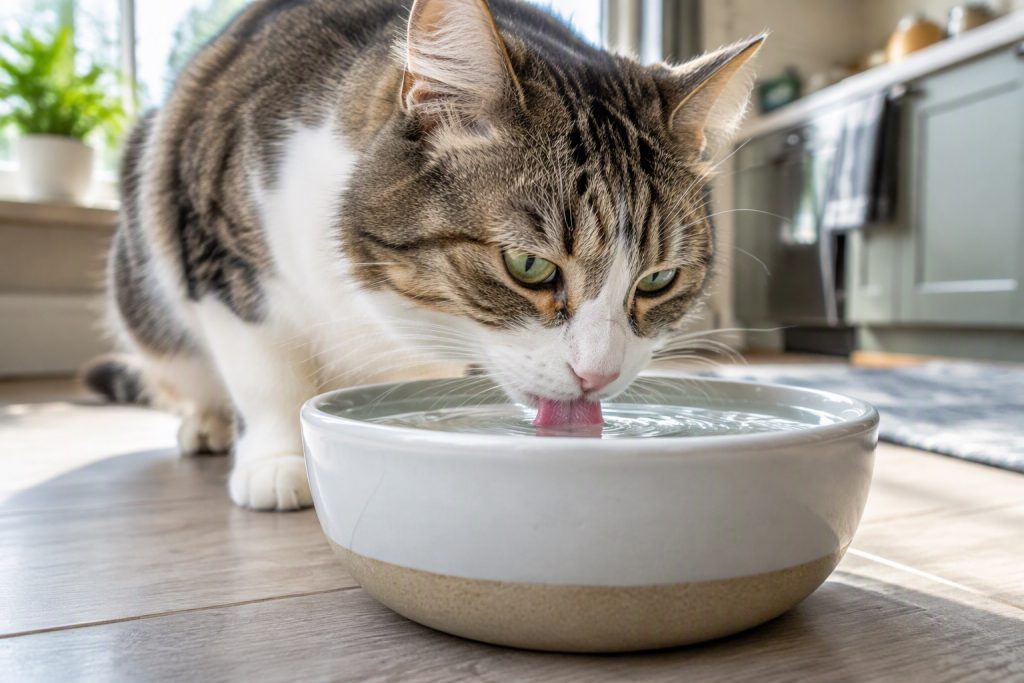
Signs of dehydration in a cat include tacky or dry gums, loss of skin elasticity, sunken eyes, lethargy, and reduced urine output. A dehydrated cat may also drink less than usual, eat poorly, and seem dull or weak. Mild dehydration can sometimes be addressed by encouraging drinking, but a cat who is significantly dehydrated, vomiting, or unwell needs veterinary care, because dehydration in cats can worsen quickly and is often a sign of an underlying problem.
- Tacky gums and lost skin elasticity are key signs.
- Sunken eyes and lethargy mean it is serious.
- Encourage drinking with wet food and fountains.
- Significant dehydration needs a vet promptly.
What are the signs of dehydration in cats?
The earliest signs are easy to miss, which is why it helps to know what to look for. Gums that feel tacky or dry rather than slick and wet are an early clue, and so is skin that is slow to spring back when gently lifted. As dehydration progresses, the eyes may look sunken or dull, the coat may feel dry and lose its sheen, and your cat may become lethargic, weak, or disoriented. Urine output drops, and the litter box may show smaller, darker clumps. A dehydrated cat often loses her appetite and may stop grooming. In severe cases, she may pant, breathe rapidly, have a rapid heart rate, or become unresponsive, which is an emergency. Kittens, older cats, and cats with kidney disease, diabetes, or thyroid problems dehydrate faster than healthy adults. Our article on a cat not drinking enough water covers the underlying causes in more detail.
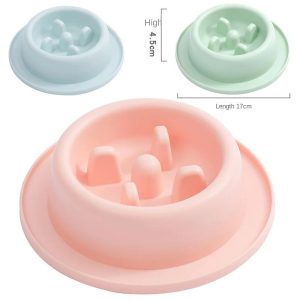
Round bowl with a removable flower insert. Made from PP. Made for daily feeding and fresh water. Keeps…
How do I check for dehydration at home?
Two simple checks are useful. The first is the gum test: lift your cat’s lip gently and touch the gum above a tooth. It should feel wet and slick; if it feels tacky, dry, or sticky, she may be dehydrated. The second is the skin tent test: gently pinch a small amount of skin between the shoulder blades, lift it, and release it. In a well-hydrated cat, the skin springs back immediately. If it stays up for a moment or returns slowly, that suggests dehydration. Both tests are rough guides rather than diagnoses, and they are less reliable in older cats or cats who have lost weight, since their skin is naturally less elastic. Also check the litter box for reduced urine, and look at her eyes for sunkenness. If you are unsure, or if your cat is also vomiting, has diarrhoea, or seems unwell, contact your vet rather than relying on home checks.
What causes dehydration in cats?
Cats have a naturally low thirst drive, inherited from desert ancestors, so many drink less than they should even when healthy. On top of that, several common situations increase the risk. Dry food provides very little moisture, and a cat eating only kibble may not compensate by drinking more. Vomiting and diarrhoea lose fluid quickly, as does a fever or hot weather. Cats with kidney disease lose fluid through increased urination, and cats with diabetes or hyperthyroidism often drink and urinate more but can still become dehydrated. Pain, nausea, dental disease, or a stressful environment can reduce drinking. Older cats are more prone, and so are cats recovering from illness or surgery. Some medications increase urine output. Because so many causes overlap, dehydration is often a sign that something else is going on, which is why persistent or repeated dehydration deserves a proper diagnosis.
How do I get a dehydrated cat to drink?
If your cat is only mildly dehydrated and otherwise well, several measures can help. Offer wet food, which contains around seventy-five per cent water, and add a little warm water to it to increase the moisture further. Place multiple water bowls around the home, especially in spots she passes often, and keep them away from the litter box and food. Many cats prefer a wide, shallow ceramic bowl to a deep plastic one, and some strongly prefer running water, so a fountain can make a real difference. Change the water daily, and try different bowl materials if she seems fussy. Flavour the water slightly with a little tuna water or low-sodium broth, but check with your vet first and avoid anything with onion or garlic. Never force water into a cat’s mouth, which risks choking and aspiration. Our article on how to keep a cat hydrated has more practical ideas.

Clear glass bowl holding dry food. Made from plastic. Made for daily feeding and fresh water. Keeps food…
When does dehydration need a vet?
Contact your vet if your cat is showing significant signs, such as sunken eyes, marked lethargy, weakness, or a skin tent that stays up. See a vet urgently if she is vomiting, has diarrhoea, is not eating, is panting, or seems disoriented, since these are signs of serious dehydration that may need intravenous fluids. A cat who has been dehydrated more than once, or who drinks and urinates excessively, also needs investigation, because diabetes, kidney disease, and hyperthyroidism are common causes. Kittens and older cats should be seen earlier, as they deteriorate faster. Do not try to rehydrate a very dehydrated cat with a syringe at home, because it is easy to get wrong and can cause harm. Your vet can assess the degree of dehydration, give fluids if needed, and treat the underlying cause. Health topics that persist are always best discussed with your vet.
How do I prevent dehydration day to day?
Prevention is largely about making water appealing and reducing reliance on dry food alone. Feed a mix that includes wet food, and add a little water to meals. Offer several water stations around the house, in quiet spots away from food and litter, and use wide, shallow bowls that do not press against your cat’s whiskers. Many cats drink more from a fountain, so it is worth trying one. Keep water fresh, clean the bowls daily, and change the water at least once a day. In hot weather, add extra stations and watch for increased need. For cats with kidney disease or other conditions, follow your vet’s dietary advice closely. Weigh your cat regularly and check the litter box, since reduced urine is an early warning. If she is on dry food only, moving part of her diet to wet food is one of the simplest changes you can make, and many cats drink noticeably more once a fountain is available.
Frequently asked questions
- How can I tell if my cat is dehydrated? Tacky gums, slow skin elasticity, sunken eyes, and reduced urine are the main signs.
- Can I treat dehydration at home? Mild cases may improve with wet food and more water, but significant dehydration needs a vet.
- Why is my cat not drinking? Cats have a low thirst drive, and dry food, stress, nausea, or illness can all reduce intake.
- Does wet food help hydration? Yes. It is around seventy-five per cent water and is one of the easiest ways to raise intake.
- When is dehydration an emergency? With weakness, sunken eyes, vomiting, or panting, contact a vet immediately.





