Cats descended from desert hunters and carry a naturally low thirst drive, so they often drink less than their bodies actually need. To keep a cat hydrated, feed wet food as part of the daily diet, offer moving water such as a fountain, set out several water stations in quiet spots, and refresh the water daily. Mild dehydration is common and easy to miss, but it puts real strain on the kidneys and urinary tract over time, which is why small daily habits matter more than any single fix.
- Feed wet food as part of the daily diet.
- Offer moving water; many cats prefer a fountain.
- Set out several bowls in quiet, separate spots.
- Refresh water daily and keep it away from food.
How much water does a cat need each day?
A healthy cat needs roughly 50 to 60 millilitres of water per kilogram of body weight each day, which for an average four-kilogram cat works out to around 200 to 240 millilitres. That is close to a small glass of water, and it sounds modest until you realise that most cats drinking only dry food take in far less than they need from the bowl alone. Cats get a large share of their moisture from food in the wild, where prey is about 70 per cent water. Dry kibble contains only around 10 per cent moisture, so a cat on an all-dry diet has to drink a great deal to compensate, and many simply do not. This is one reason vets so often recommend including wet food. If you are unsure whether your cat is drinking enough, our guide to the signs that your cat is not drinking enough water is a good place to start.
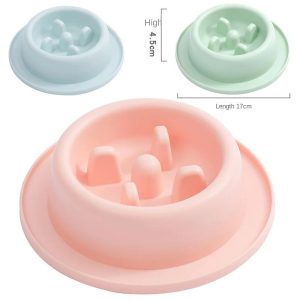
Round bowl with a removable flower insert. Made from PP. Made for daily feeding and fresh water. Keeps…
Why won’t my cat drink from a bowl?
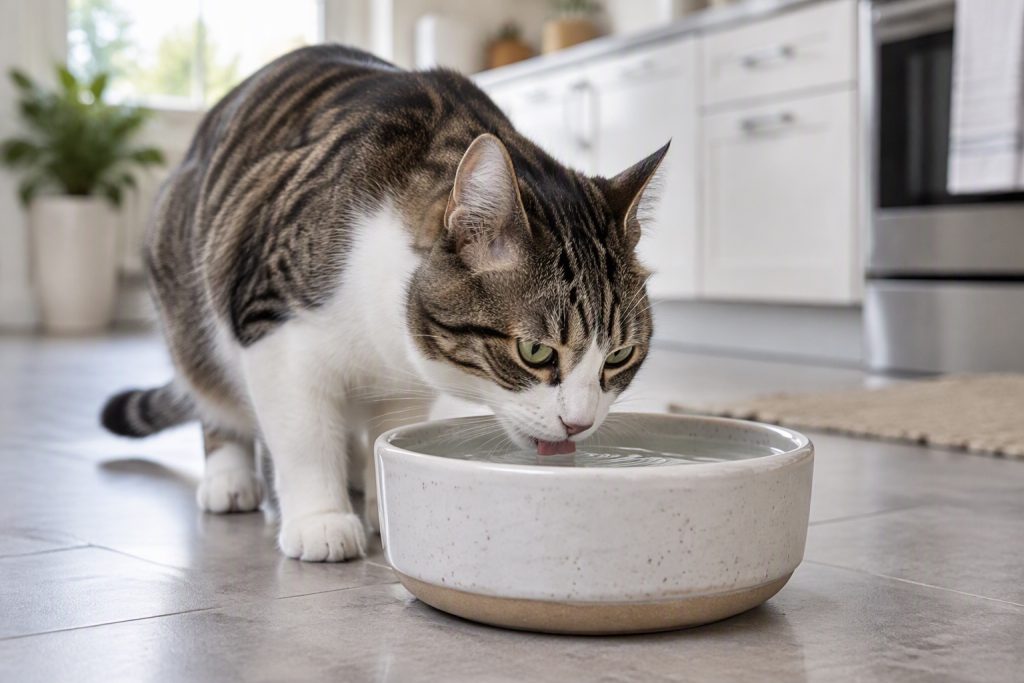
If your cat ignores a full, clean bowl of water, she is not being difficult. Cats are finicky about water for reasons rooted in survival. Standing water can carry bacteria, so cats are wired to prefer water that is fresh and moving, which is why a dripping tap or a fountain is often irresistible. Many cats also dislike water placed right next to their food, because in the wild a kill would contaminate a nearby water source. Whisker fatigue plays a role too: a narrow or deep bowl can press against sensitive whiskers, making drinking uncomfortable, so wide, shallow dishes work better. Finally, cats notice the taste and temperature of water, and stale, warm, or chemically treated water may simply be unappealing. Switching to a wide ceramic bowl, moving it away from the food, and changing the water twice a day often solves the problem with no other changes.
Does wet food help my cat stay hydrated?
Wet food is the single most effective way to raise a cat’s water intake, because it delivers moisture directly rather than relying on her to drink. A typical wet food is around 75 to 80 per cent water, so a cat eating a standard pouch or can takes in a meaningful amount of fluid with every meal. Studies of cat hydration consistently show that cats on wet diets consume far more total water than cats on dry food, even when the dry-fed cats drink more from the bowl. If your cat refuses wet food, you can transition slowly by mixing a spoonful into her usual food and increasing the proportion over a week or two. You can also add a little warm water to dry kibble, or offer a splash of unsalted broth, though always check that any added liquid is free of onion and garlic, which are toxic to cats.
How can I tell if my cat is dehydrated?
The clearest at-home test is the skin tent. Gently lift the loose skin between your cat’s shoulder blades and let it go. In a well-hydrated cat it springs back instantly; in a dehydrated cat it settles slowly or stays raised. You can also check the gums, which should be pink and moist rather than tacky or pale, and press a fingertip against a gum until it whitens, then count how long the colour takes to return. Other signs include sunken eyes, lethargy, a dry nose or mouth, and reduced appetite. Mild dehydration is easy to correct with wet food and fresh water, but if the skin stays tented, the gums are dry, or your cat is dull and off her food, that is a medical matter. Persistent dehydration can be a sign of underlying illness such as kidney disease, so it deserves a vet’s attention rather than guesswork.
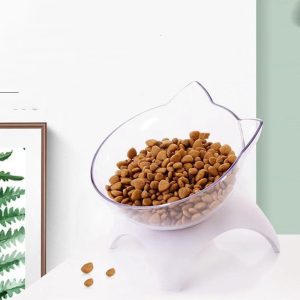
Clear glass bowl holding dry food. Made from plastic. Made for daily feeding and fresh water. Keeps food…
How do I encourage a cat who barely drinks?
Start by increasing the number of water sources. Cats are more likely to drink when water is convenient, so place bowls in several rooms along the paths she already walks, and keep them away from litter boxes and noisy appliances. Use wide, shallow bowls to avoid whisker discomfort, and fill them with fresh water twice a day. A fountain that keeps water circulating appeals to many cats who ignore still bowls. Try different materials too, since some cats prefer ceramic or stainless steel to plastic, which can hold onto odours. Adding wet food, or mixing a little water into it, raises her intake with no effort on her part. Keep the water cool but not ice cold, and if you have multiple cats, provide separate stations so no one is guarding a bowl. Small, consistent changes usually work better than any single gadget.
When does dehydration become a vet problem?
See your vet if your cat shows the physical signs of dehydration, such as a slow skin tent, dry gums, or sunken eyes, or if she stops eating and drinking altogether. A cat who is vomiting, has diarrhoea, is urinating much more than usual, or is losing weight alongside reduced drinking needs prompt attention, because those can point to diabetes, kidney disease, or another condition that only a vet can diagnose. Very young kittens and older cats dehydrate faster and have less reserve, so do not wait if either seems unwell. In the clinic, dehydration can be corrected quickly with fluids, and the underlying cause can be investigated. At home, your job is prevention: keep water available and appealing, feed some wet food, and treat any sudden change in drinking habits as a reason to make a call rather than to wait and see.
Frequently asked questions
- How can I tell if my cat is drinking enough? Watch her litter box and skin. A cat producing normal urine and whose skin springs back when lifted is likely fine.
- Is a water fountain better than a bowl? For many cats, yes, because moving water is more appealing, but some cats prefer a still, wide bowl, so offer both at first.
- Can I add water to dry food? Yes. A spoonful of warm water softens kibble and adds moisture. Change it if it sits uneaten.
- Do cats drink more in summer? They often do, and they need to. Offer extra fresh water and shade during hot spells.
- Is it bad if my cat only eats dry food? Not automatically, but dry-only cats are more prone to dehydration, so consider adding wet food.