

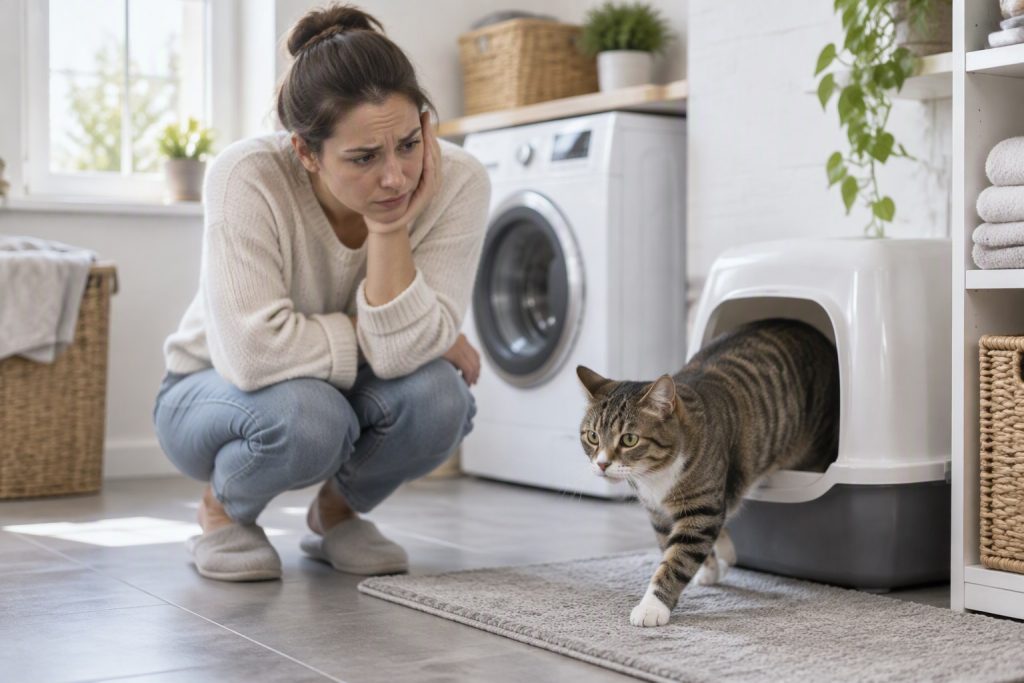
Constipation and diarrhoea sit at opposite ends of the same spectrum, and both describe a change in how often your cat passes stool and what it looks like. Constipation means infrequent, hard, dry stools that are difficult to pass; diarrhoea means loose, watery, or unusually frequent stools. The important difference is urgency. A single soft stool in an otherwise well cat is usually minor, while either problem lasting more than a day or two, or paired with vomiting, pain, or blood, needs veterinary attention.
- Constipation: hard, dry, infrequent stools.
- Diarrhoea: loose, watery, frequent stools.
- Either lasting over 48 hours needs a vet.
- Blood, vomiting, or pain means act promptly.
How do I tell constipation from diarrhoea in my cat?
Start with the litter box rather than the cat. Constipation produces small, firm, often dark stools that may look like pebbles or pellets, and your cat may strain for a long time with little result. She might visit the box repeatedly, crouch, and produce nothing, which owners sometimes mistake for a urinary problem. Diarrhoea is the opposite: stools are soft, unformed, or liquid, often with an unusual colour or smell, and the frequency increases. The litter box also tells you the volume. A constipated cat produces far less than usual, while a cat with diarrhoea may produce several small messy deposits. Beyond the box, look at the cat herself. A constipated cat is often uncomfortable, restless, and may vocalise while straining. A cat with diarrhoea may be flat, quiet, or dehydrated, with a dull coat and reduced appetite. Both can be serious, so the box is your best diagnostic tool.
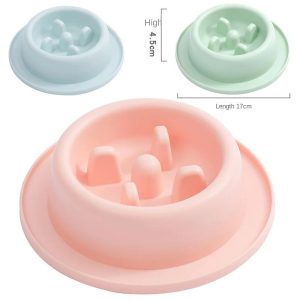
Round bowl with a removable flower insert. Made from PP. Made for daily feeding and fresh water. Keeps…
What causes constipation in cats?
The most common cause is dehydration, because a cat who does not drink enough produces hard, dry stool that moves slowly. Low fibre in the diet, a sudden diet change, and eating something indigestible such as hair, bone, or string all contribute. Hairballs are a frequent culprit in long-haired cats. Obesity and a sedentary lifestyle slow the gut, and older cats are more prone because gut motility decreases with age. Painful conditions matter too: a cat with arthritic hips may avoid the litter box posture, and a cat with an anal gland problem may hold on deliberately. More seriously, a pelvic injury, a narrowed colon from chronic constipation, a foreign body, or a mass can cause obstruction. That is why constipation that keeps returning, or that comes with vomiting and a total absence of stool, needs a vet rather than a home remedy. Our guide to cat constipation relief covers what is safe to try and what is not.
What causes diarrhoea in cats?
Sudden diet change is the most common trigger, because a cat’s gut needs a gradual transition over a week or more. Eating something spoiled, rich, or unusual, including table scraps and milk, is another frequent cause. Parasites such as worms, giardia, and coccidia are common, especially in kittens and cats with outdoor access. Bacterial and viral infections cause acute diarrhoea, sometimes with vomiting. Food allergies and intolerances produce more chronic, intermittent loose stool, often with itching or weight loss. Stress alone can trigger it, since a cat’s gut is highly responsive to upheaval. More serious causes include inflammatory bowel disease, pancreatitis, liver or kidney disease, hyperthyroidism, and cancer. Blood in the stool, black tarry stool, or diarrhoea with vomiting and lethargy are all red flags. Our article on when to worry about cat diarrhoea sets out the signs that mean same-day care.
What is the difference in treatment?
The two conditions need opposite approaches. For constipation, the goal is to soften the stool and speed transit: more water, more fibre in some cases, a wet-food diet, gentle exercise, and in some cats a prescribed stool softener or laxative from your vet. Never give a human laxative, as the doses and ingredients are not safe for cats. For diarrhoea, the goal is often to rest and soothe the gut: a short period of bland, easily digested food, plenty of fluids, and a gradual return to normal diet, with probiotics if your vet recommends them. Do not withhold water in either case. Antidiarrhoeal medication intended for humans should never be given to a cat without veterinary direction. In both cases, keep a note of what you saw and when it started, because the pattern over time is what helps your vet decide whether the cause is dietary, infectious, or something structural.
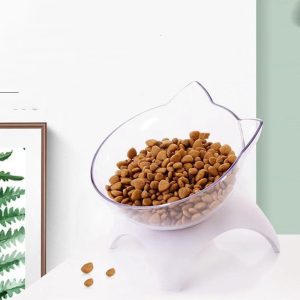
Clear glass bowl holding dry food. Made from plastic. Made for daily feeding and fresh water. Keeps food…
What can I safely do at home, and what should I avoid?
At home, the safest useful actions are water, observation, and a bland diet. For constipation, encourage drinking with a fountain or by adding water to wet food, increase gentle play to stimulate the gut, and keep the litter box clean and easy to reach. For diarrhoea, offer small amounts of plain cooked chicken or a veterinary bland diet for a day, keep water available, and avoid any sudden changes. Avoid milk, which most adult cats cannot digest. Avoid human medicines entirely. Avoid adding fibre or a new supplement without veterinary advice, because the wrong kind can worsen either problem. If your cat is not eating at all, is vomiting, seems painful when you touch her abdomen, or is lethargic, stop trying home care and contact your vet. Any symptom that persists beyond about two days, or that recurs repeatedly, should be examined rather than managed.
When does either problem become an emergency?
Treat constipation as urgent if your cat has not passed stool for more than two days despite trying, if she is straining repeatedly with nothing coming out, if she is vomiting, or if she seems in pain. Total absence of stool combined with vomiting can indicate obstruction, which is a surgical emergency. Treat diarrhoea as urgent if there is blood or black tarry material, if it is severe or very frequent, if your cat is vomiting as well, if she is a kitten or an older cat, or if she is showing signs of dehydration such as lethargy, sunken eyes, tacky gums, or skin that stays tented when gently pinched. Also act quickly if either problem follows eating something unusual, such as string, a toy, or a plant. When in doubt, a phone call to your vet costs nothing and is far better than waiting.
Frequently asked questions
- Can constipation and diarrhoea happen at the same time? Yes. A blockage can let liquid stool leak around hard stool, which looks like diarrhoea.
- How long can a cat go without pooping? Most cats pass stool daily. Beyond two days without a stool, call your vet.
- Is one soft stool a problem? Usually not, but watch the next few stools and whether your cat is otherwise well.
- Can I give my cat human laxatives? No. Human laxatives and antidiarrhoeals are not safe for cats without veterinary direction.
- Should I feed a cat with diarrhoea? Yes, unless your vet advises otherwise. Offer small, bland, easily digested meals.





