Cat constipation is when a cat passes hard, dry stools infrequently or strains without producing much. Mild cases often respond to more water, more fibre, and more exercise, but constipation that lasts more than a day or two, or comes with vomiting or lethargy, needs a vet. Never give human laxatives to a cat without veterinary advice.
- Hard, dry stools or straining are the main signs.
- More water and wet food often help.
- Never give human laxatives without vet advice.
- Straining with no stool can be an emergency.
How do I know if my cat is constipated?
The clearest signs are small, hard, dry stools passed less often than usual, and a cat who strains in the box without producing much. You may also notice her visiting the litter box repeatedly, crying or crouching for long periods, or passing stools that look like small pellets rather than normal logs. Some cats become restless, lose their appetite, or hide, and a constipated cat may vomit or seem uncomfortable when picked up. Because cats are private about toileting, the litter box is your best source of information, so check what she produces each day. A healthy cat usually passes a stool at least once a day, though some cats are normal at every other day. If you are seeing hard stools, straining, or a gap of more than two days, that is your signal to act rather than wait. Keep a simple note of what you see in the box each day, because that record will help your vet enormously if the problem continues.
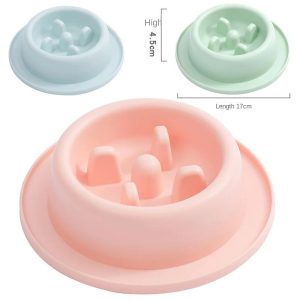
Round bowl with a removable flower insert. Made from PP. Made for daily feeding and fresh water. Keeps…
What causes constipation in cats?
Constipation has many causes, and identifying the right one shapes the treatment. Dehydration is the most common contributor, since a cat who does not drink enough produces dry, hard stool that is difficult to pass. A diet low in fibre or moisture, hairballs, and a sedentary lifestyle all play a role. In older cats, arthritis can make it painful to squat in the box, so they hold on and become constipated. Other causes include obesity, a blockage from swallowed hair or a foreign object, medication side effects, stress, and medical conditions such as kidney disease or a narrowed or damaged colon. In some cats the cause is never fully identified. Because the list ranges from simple to serious, persistent constipation deserves a proper examination rather than guesswork, and knowing the cause is the key to fixing it. Never assume the cause is trivial, because the difference between a mild case and a serious one is not always obvious from the outside.
How can I help my constipated cat at home?
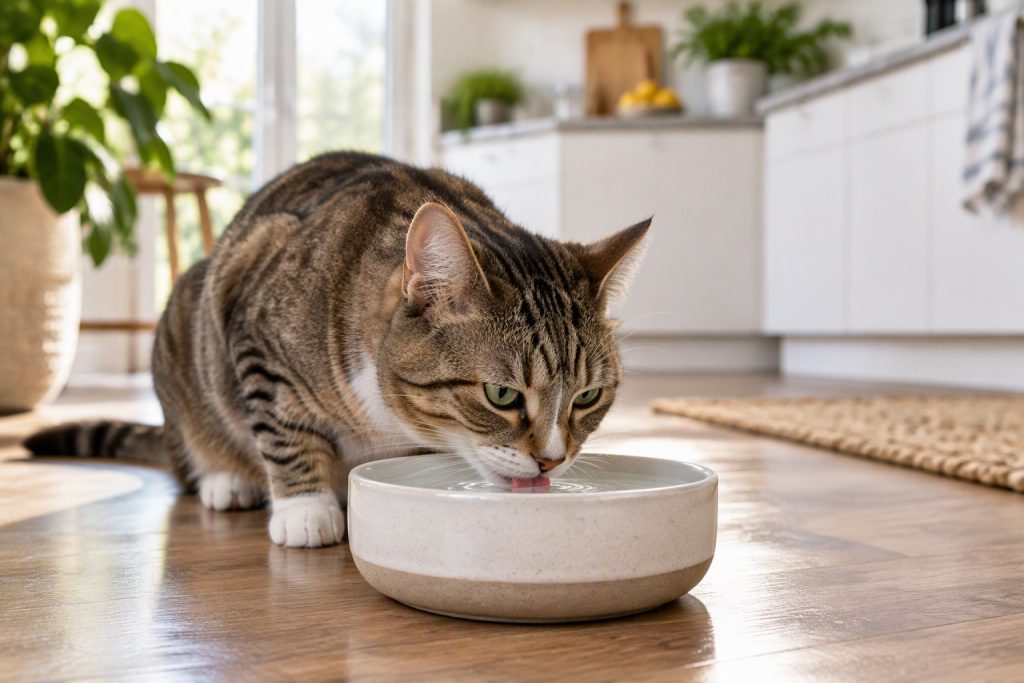
For mild, occasional constipation, the most effective home measures are increasing water intake and moisture in the diet. Offer fresh water in several places, try a water fountain, and add wet food or a little warm water to her meals. Gentle exercise encourages gut movement, so short play sessions help. A vet may suggest a specific fibre supplement or a stool softener, but do not reach for human products on your own, because some are unsafe for cats and the wrong dose can be harmful. Pumpkin and other fibre sources are sometimes recommended, but only in the amount your vet advises. If your cat has not passed a stool in more than two days, is straining hard, or seems unwell, skip home remedies and call your vet, because a blockage can become dangerous quickly. A cat who is completely blocked cannot pass stool at all, and the longer it goes on, the harder it becomes to treat.
When is constipation an emergency?
Constipation becomes an emergency when a cat strains repeatedly without passing anything, cries out, vomits, refuses food, or seems lethargic and painful. A complete blockage, sometimes called obstipation, means she cannot pass stool at all, and this is a serious condition that needs urgent veterinary care. Never assume a cat is merely constipated if she is also vomiting, off her food, or visibly uncomfortable, because these signs can indicate an obstruction or another serious problem. Repeated trips to the box with no result are a particular red flag. If your cat is an older male, also consider whether the straining could be a urinary blockage, which is life-threatening and looks similar. When in doubt, treat straining as urgent and call your vet or an emergency clinic rather than waiting overnight. It is far better to be seen and reassured than to delay while a serious problem develops quietly.
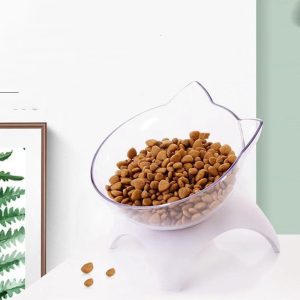
Clear glass bowl holding dry food. Made from plastic. Made for daily feeding and fresh water. Keeps food…
Does diet and water affect constipation?
Diet and hydration are central to preventing constipation, and improving them is often the single most effective long-term fix. Cats evolved to get most of their water from prey, and many drink less than they should, especially on a dry-food-only diet, which leaves stool hard and dry. Adding wet food, or a mix of wet and dry, increases moisture intake and is one of the most reliable changes you can make. Our guide to wet versus dry cat food explains the trade-offs, and our article on a cat not drinking enough water covers how to encourage more drinking. Fibre matters too: too little makes stool hard, while too much can bulk it up in a way that is harder to pass for some cats. Work with your vet to find the right balance, and make changes gradually to avoid upsetting her digestion. Any change in diet should happen over a week or more, mixing the new food in slowly so her gut can adjust without stress.
Can constipation keep coming back?
Yes, constipation often recurs, especially in older cats or those with an underlying condition, and repeated episodes can lead to a stretched, weakened colon that makes the problem worse over time. This is why managing it early matters, rather than treating each episode in isolation. Long-term prevention usually combines a moisture-rich diet, plenty of water, regular exercise, weight management, and sometimes medication or a prescription diet your vet recommends. Keeping the litter box clean and easy to access helps too, particularly for a cat with arthritis who struggles to squat. If your cat has recurring constipation, ask your vet about an ongoing plan rather than relying on occasional remedies. With consistent management, most cats stay comfortable, but the condition rarely resolves on its own without changes to diet and routine. If episodes keep returning, ask your vet to review the plan regularly, since what works at first may need adjusting as your cat ages.
Frequently asked questions
- How long can a cat go without pooping? A day or two is usually fine, but more than two days, or straining without a result, means you should contact your vet promptly.
- Can I give my cat pumpkin for constipation? Plain cooked pumpkin is sometimes recommended as a fibre source, but ask your vet for the right amount before offering it.
- Is milk good for a constipated cat? No. Many cats are lactose intolerant, and milk can cause diarrhoea rather than helping constipation.
- Can hairballs cause constipation? Swallowed hair can contribute, especially in long-haired cats, so regular grooming helps reduce the risk.
- Does wet food help constipation? Often, yes. The extra moisture softens stool and is one of the simplest changes you can make for a constipated cat.