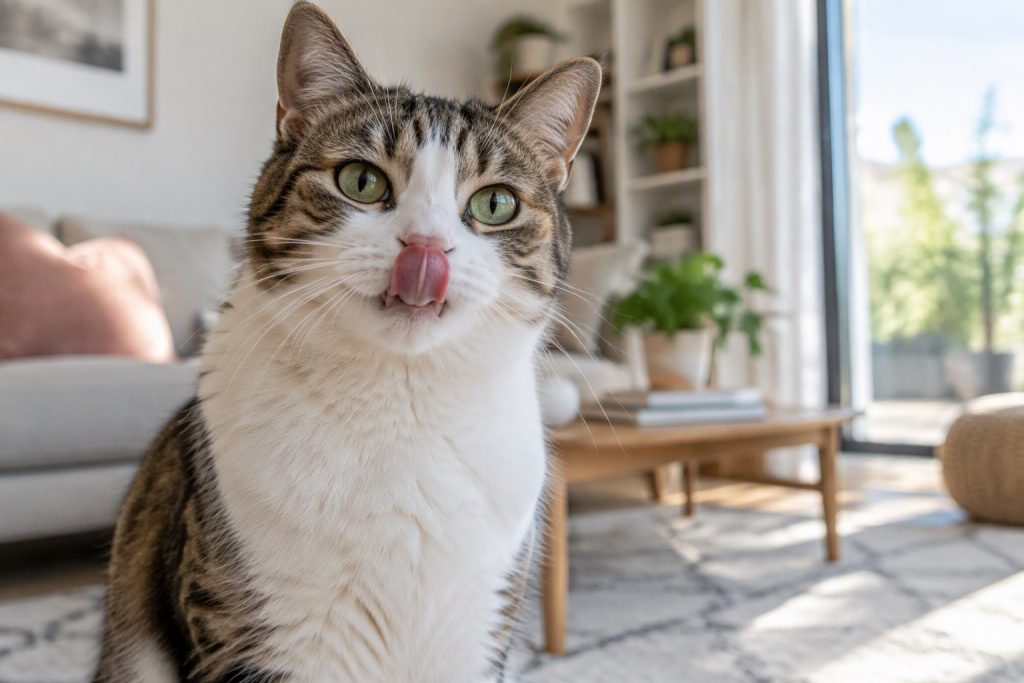
A cat licks its nose for everyday reasons most of the time: clearing food crumbs, moistening a dry nose, finishing a grooming pass, or reacting to a smell. It can also be a quiet signal that she feels slightly nauseous, stressed, or uncomfortable. Occasional nose licking is completely normal and usually nothing to act on. It becomes worth a vet visit when it is constant, when the nose is running or crusted, or when it comes with drooling, vomiting, sneezing, or a loss of appetite.
- Usually just cleaning or moistening the nose.
- Common after eating, grooming, or sniffing.
- Stress and mild nausea can trigger it.
- Frequent licking with other signs needs a vet.
Why does my cat lick its nose so often?
The nose is one of the busiest parts of a cat’s body. Cats have around two hundred million scent receptors, far more than we do, and they constantly sample the air to understand their world. Licking the nose is part of that process: it clears tiny particles from the surface, keeps the leathery skin supple, and helps reset the scent-detecting surface after a strong smell. Grooming is the second big reason. When a cat washes her face, she licks a paw and wipes it over her muzzle and nose, which means nose contact happens many times in a single grooming session. Eating is the third: after a meal, a cat licks her nose to clear residue and to savour the taste. All of this is ordinary housekeeping, and it tends to cluster around mealtimes, grooming, and after she has sniffed something interesting.
Made from cloth Key features 【Name】 : cat simulation animal sound shell toy[Fill]: No fill, 2 built-in BB…
Is nose licking a sign of nausea?
It can be, and this is the most common medical reason owners notice. Nausea in cats often shows up not as obvious retching but as subtle signals: licking the lips and nose, swallowing repeatedly, drooling, smacking the mouth, and turning away from food. If the licking is paired with any of those, it points toward an upset stomach rather than simple grooming. Causes range from something mild, like eating too fast or a sudden diet change, to something that needs investigation, such as pancreatitis, kidney disease, or an intestinal problem. A single episode after a hairball or a fast meal is usually harmless. Licking that repeats for hours, or that comes with vomiting, is a reason to call your vet, especially if your cat is also quieter than usual or hiding.
Can stress or boredom cause nose licking?
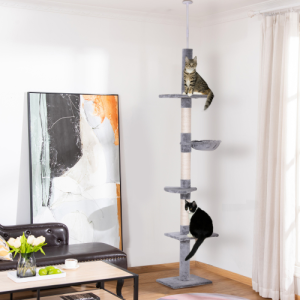
Yes. Cats discharge tension through small oral behaviours, and nose and lip licking is one of the most common. You may see it during a vet visit, when a stranger enters the home, when two cats in the house are in conflict, or when a routine changes such as a move, a new baby, or a holiday. It is a displacement behaviour, meaning she is doing something ordinary to cope with an uncomfortable feeling. Boredom works in a similar way: an under-stimulated indoor cat may lick more often simply because she has nothing else to do, and some cats redirect that restless energy into licking plastic bags, curtains, or other non-food items, a habit covered in our article on why cats lick plastic. If you suspect stress, look at the basics first. Is she getting two proper interactive play sessions a day? Does she have vertical space and a quiet hiding spot? Are the litter boxes in good places? Fixing those often reduces the behaviour on its own.
When should nose licking worry me?
Take it seriously when the licking is persistent rather than occasional, when it is new, or when it appears alongside other signs. Watch for a runny or crusted nose, sneezing, noisy breathing, drooling, pawing at the face, vomiting, diarrhoea, weight loss, bad breath, or a change in appetite. Nose licking with a discharge can point to an upper respiratory infection, allergies, a foreign body such as a blade of grass, or a dental problem. Licking with drooling and difficulty eating can suggest mouth pain or dental disease. Licking with vomiting can suggest gastrointestinal disease. Any of these combinations deserves a vet appointment. For anything that is persistent or that comes with pain, breathing difficulty, or a cat who will not eat, treat it as urgent rather than waiting to see.

Rainbow-striped plush cylinder. Keeps a bored indoor cat busy and burns off restless energy. Made from fleece and…
Does a dry nose mean my cat is sick?
Not on its own. The old idea that a warm, dry nose means illness is not reliable. A cat’s nose can be dry because she has just woken from a long nap, because the air in the room is dry from heating or air conditioning, because she has been sitting in the sun, or simply because of her individual skin type. A nose can also be wet and cold in a perfectly healthy cat. What matters more is a change from her normal combined with other symptoms. A nose that is suddenly very dry and cracked, or that is crusted or bleeding, is worth a look because it can indicate dehydration, a skin problem, or an infection. Judge the whole cat, not the nose alone: appetite, energy, litter box habits, and behaviour tell you far more than the temperature of her nose.
How can I reduce excessive nose licking?
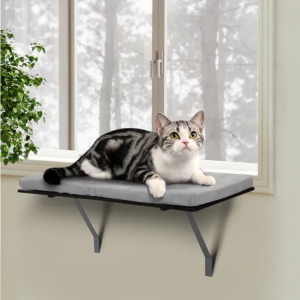
If your vet has ruled out a medical cause, focus on comfort and stimulation. Keep mealtimes calm and use a shallow dish so she is not rushing, and consider a puzzle feeder if she eats too fast. Offer fresh water in more than one place, and if she is a reluctant drinker, a fountain can encourage her to drink more, which supports general health. Add two short wand-play sessions a day and a window perch so she has something to watch, which reduces the boredom that drives displacement licking. Keep the air in your home from becoming too dry in winter. If the licking is clearly tied to stress, keep routines predictable and add hiding places. And always photograph or note anything unusual, because a short video of the behaviour is genuinely useful for your vet. For the related question of why cats make that soft rumble when content, see our article on why cats purr.
Frequently asked questions
- Why does my cat lick her nose right before vomiting? Licking the lips and nose is a classic nausea sign and often comes just before a cat is sick.
- Is nose licking a sign of a dental problem? It can be, especially if it comes with drooling, bad breath, or trouble eating. Have her mouth checked.
- My cat licks her nose constantly. Should I worry? Occasional licking is normal. Constant, new, or repeated licking with other signs needs a vet visit.
- Does a dry nose mean my cat has a fever? No. A dry nose is unreliable and can be caused by sleep, dry air, or sun. Judge the whole cat.
- Can stress really cause nose licking? Yes. It is a common displacement behaviour during tension, conflict, or change.