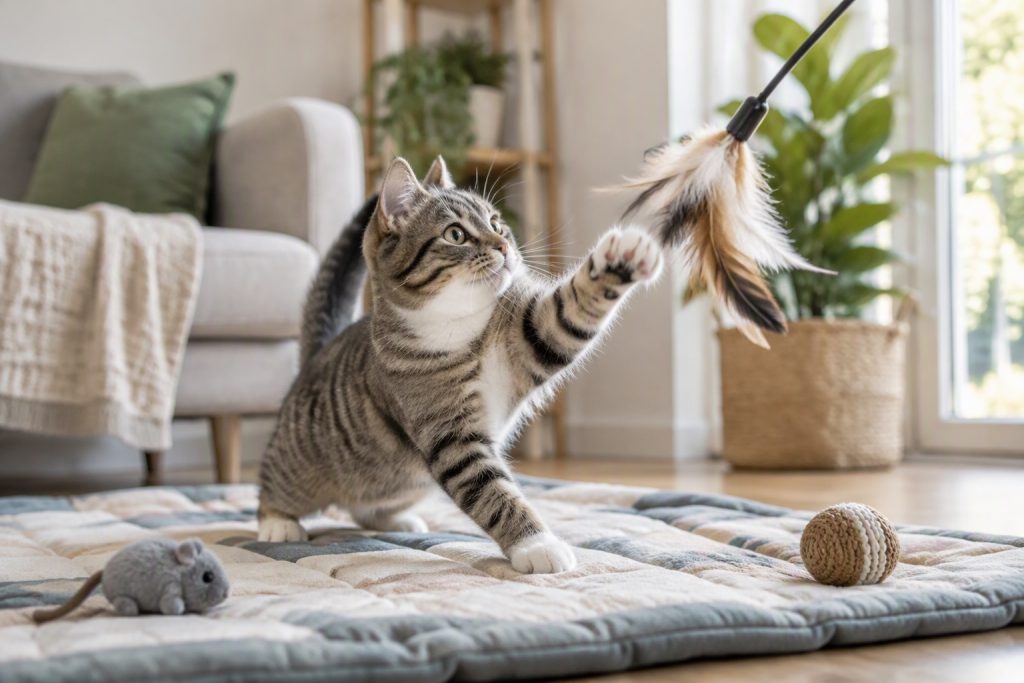
The best cat play mat is a soft, washable mat with built-in features that trigger hunting behaviour, such as crinkle, hanging toys, tunnels, or a track with a rolling ball. The right choice depends on how your cat plays: a pouncer does well with a padded mat and a kicker toy, a chaser loves a ball track, and a cat who likes to hide enjoys a mat with a tunnel or flaps. Choose something easy to clean and stable enough not to slide, and rotate it with other toys to keep it interesting.
- Match the mat to how your cat plays.
- Look for crinkle, tracks, tunnels, or hanging toys.
- Washable and non-slip are must-haves.
- Rotate toys so the mat stays interesting.
What should I look for in a cat play mat?
Start with how your cat hunts. Cats generally fall into a few play styles: the chaser who runs after rolling or dangling prey, the pouncer who stalks and jumps on a target, the swatter who bats at things with her paws, and the ambusher who likes to hide and surprise. A mat with a ball track suits the chaser and swatter, a padded mat with a kicker attachment suits the pouncer, and a mat with a tunnel or flaps suits the ambusher. After play style, prioritise practicality: the mat should be machine washable or at least easy to wipe, since it will collect fur and saliva; it should have a non-slip backing so it does not slide across hard floors; and it should be sturdy enough that a determined cat cannot tear it apart in a week. Avoid anything with loose small parts, glued-on pieces, or sharp edges.

A rotating ABS plastic and feather wand fits a cat that needs a target more than another thing…
How do I choose a mat for a bored indoor cat?
For a bored indoor cat, novelty and variety matter more than any single feature. A good strategy is a mat that offers more than one type of play, such as a padded base with a crinkle layer, a dangling toy, and a track, so she can shift between chasing, swatting, and pouncing in one session. Even better, combine the mat with other stimulation: a wand toy you move yourself, a puzzle feeder for meals, and a window perch for watching the world. Boredom in indoor cats usually comes from a lack of hunting outlets rather than a lack of toys, so the mat works best as part of a routine rather than as a solution on its own. Rotate the mat in and out of use every few days, and swap the loose toys on it, because familiarity is the enemy of interest. Our article on toys for bored cats has more ideas for keeping play fresh.
How much play does a cat actually need?
Most indoor cats do well with two structured play sessions a day, each lasting around ten to fifteen minutes, plus whatever they do on their own. The key is to mimic a hunt: move the toy like prey, let her stalk, pounce, and catch it, and finish by letting her win, which gives the satisfaction that ends a real hunt. A play mat supports this by giving her a stage, but it works best when you join in with a wand toy for part of the session. Kittens and young cats often want more, while seniors may want shorter, gentler sessions. The goal is to end the session while she is still interested, so she looks forward to the next one, rather than playing until she is bored or overstimulated. Our guide on how much play an indoor cat needs breaks this down further.
Are play mats safe for cats?
Most are, but a few checks keep them that way. Look for non-toxic materials, since cats chew and lick their toys, and avoid strong chemical smells, which suggest low-quality dyes or plastics. Check for small parts that could come loose and be swallowed, such as bells, plastic eyes, or glued-on pom-poms, and remove or reinforce anything loose. Supervise the first few sessions so you can see whether your cat is a chewer who might ingest fabric or foam, because swallowed material can cause a blockage. Wash the mat regularly to reduce bacteria and odour, and inspect it for tears, since exposed stuffing is both a choking hazard and tempting to eat. Finally, avoid mats with elastic cords or strings long enough to wrap around a limb or neck. With those precautions, a play mat is a safe and enriching addition.
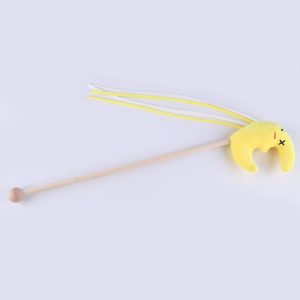
A plush toy that gives a cat a soft target to pounce on — a soft target takes…
How do I keep the mat interesting over time?
Cats lose interest in anything that is always available, so treat the mat like a toy that comes and goes. Keep it out for a few days, then put it away for a few days and bring it back, which makes it feel new again. Rotate the loose toys attached to or used with it, and change the location occasionally so she gets a different view and different ambush angles. You can also refresh the scent by rubbing a little catnip or silvervine on the fabric, which many cats find irresistible. Pair the mat with a treat reward after play, and use it as part of a predictable routine, since cats thrive on routine and will start to anticipate the session. If she ignores the mat entirely after several weeks, try a different style rather than persisting, because the wrong play style is the most common reason a mat gets abandoned.
How do I clean and maintain a play mat?
Cleaning depends on the material, so read the label first. Fabric mats with a crinkle layer or attached toys are usually best washed by hand in warm water with a mild, unscented detergent, then air-dried, because machine washing can crush crinkle layers and break plastic parts. Mats with a track or hard components should be wiped down with a damp cloth, and the track itself should be checked for fur and debris that can jam the ball. In between washes, vacuum or brush the surface to remove fur, and spot clean any accidents or drool immediately. Check seams and attachments each time you clean, and repair or retire anything that is coming apart. Keeping the mat clean matters not just for hygiene but for appeal, because a mat that smells of old saliva and dust will be ignored faster than a fresh one.
Frequently asked questions
- Do cats actually use play mats? Many do, especially if the mat matches their play style and you join in with a wand toy.
- How do I pick the right mat for my cat? Watch how she plays: chasers like tracks, pouncers like padded kicker mats, ambushers like tunnels.
- Can I leave a play mat out all the time? You can, but rotating it in and out keeps it interesting and prevents boredom.
- Are play mats safe if my cat chews them? Supervise chewers, remove loose parts, and avoid mats with strings or small bells.
- How often should I wash a play mat? Every week or two, or sooner if it is soiled, using a mild unscented detergent and air drying.