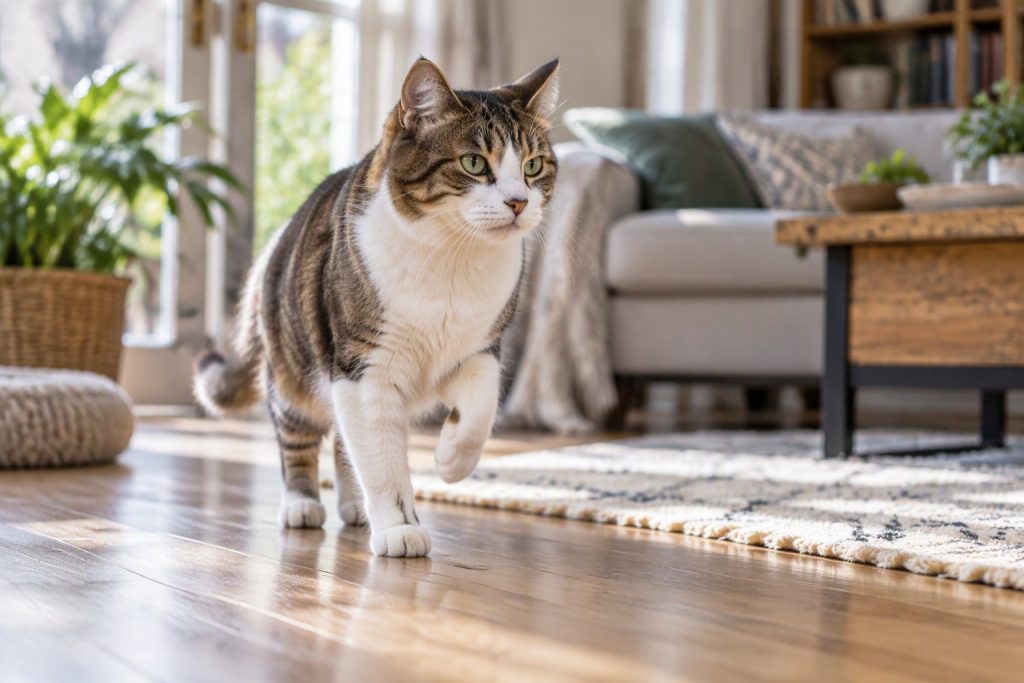
A limping cat should always be taken seriously, because cats hide pain well and a limp means something is causing discomfort. Common causes include a sprain or strain, a cut or foreign object in the paw, a broken claw, arthritis, and less often a fracture, infection, or nerve problem. If the limp is sudden and severe, if she will not put weight on the leg, if there is swelling or an open wound, or if she seems unwell, see a vet promptly. A mild limp that persists for more than a day also needs assessment.
- A limp always means pain or discomfort.
- Check the paw for cuts, thorns, or a torn claw.
- Sudden severe limping needs prompt vet care.
- A mild limp lasting over a day should be checked.
What are the most common causes of limping?
In younger cats, the usual causes are injuries: a sprain or strain from a jump or a fall, a cut or thorn in the paw, a torn or broken claw, or a bite wound from a fight, which can abscess and cause sudden lameness. In older cats, arthritis is the leading cause, and it often shows up as stiffness, reluctance to jump, and a subtle limp that worsens after rest. Other causes include a foreign object such as a grass seed lodged in the paw, a paw pad injury, an ingrown claw, an infection of the bone or joint, and less commonly a fracture, a nerve injury, or a tumour. Some cats limp because of referred pain from another part of the body, such as the spine or shoulder. Because the causes range from minor to serious, and because cats hide pain so well, a limp is not something to simply wait out.

A thickened cloth bed is stepped into rather than climbed over. Try it near the window first, then…
How can I tell how serious the limp is?
Watch her closely and check a few things. First, look at whether she is bearing weight: a cat who holds the leg up entirely and will not touch it down is more seriously affected than one who limps but still uses the leg. Second, look for swelling, heat, an open wound, bleeding, or a visibly abnormal angle, any of which suggests injury and needs prompt care. Third, check the paw pads and between the toes for cuts, thorns, or matted fur, and look at the claws for a torn or overgrown one. Fourth, note whether the limp came on suddenly, which suggests injury, or gradually, which suggests arthritis or a slow-developing problem. Finally, consider her overall state: if she is eating, grooming, and behaving normally, it is likely less urgent than if she is quiet, hiding, off her food, or crying. Our guide on cat arthritis signs helps if the limping is gradual.
What should I do at home while I wait for the vet?
Keep her quiet and restrict her movement, because a cat who keeps jumping and running can worsen an injury. Put her in a small, comfortable space with food, water, and a litter box close by, and remove anything she might jump onto. Do not try to diagnose or treat the leg yourself, and never give human painkillers, because paracetamol and ibuprofen are toxic to cats and can be fatal. Do not attempt to remove a foreign object from the paw unless it is clearly loose and superficial, because you risk pushing it deeper or causing bleeding. If there is a small cut, you can clean it gently with saline, but leave anything more significant to your vet. Offer a warm, soft bed so she can rest comfortably, and keep her indoors. If she is in obvious pain, call your vet for advice rather than waiting.
When is limping an emergency?
Seek urgent care if she will not put the leg down at all, if the leg looks deformed or is at an odd angle, if there is heavy bleeding, or if she is dragging the limb, which can indicate nerve damage. A limp that follows a fall from a height, a road accident, or a fight should always be assessed urgently. Other emergency signs include severe swelling, a leg that is hot to the touch, a cat who is crying or panting in pain, and any limp with lethargy, fever, or loss of appetite. If a claw is torn and bleeding heavily, apply gentle pressure and go to the vet. Sudden paralysis or weakness in the back legs is a serious emergency, because it can indicate a spinal problem or a clot, and it needs immediate attention. When in doubt, call ahead and describe what you see.

Cervical pillow, plush hammock, floor mat and paw cushion — four places to nap. Gives a cat a…
What will the vet do about the limp?
The vet will take a history and examine the whole cat, not just the leg, because limping can come from the spine or elsewhere. They will feel the limb for swelling, heat, and instability, check the joints through their range of motion, and look closely at the paw and claws. Depending on what they find, they may recommend X-rays to check for fractures, arthritis, or a foreign body, and blood tests if infection or another condition is suspected. If an abscess is present, they may drain it and prescribe antibiotics. For arthritis, the plan may include pain relief, joint support, weight management, and environmental changes such as ramps and softer bedding. For a minor sprain, rest and anti-inflammatories may be enough. Because cats are good at hiding pain, your vet may also discuss how to recognise subtle discomfort at home, which helps you act sooner next time.
How can I make home easier for a limping cat?
Adjust her environment so she does not have to strain the leg. Move food, water, and litter boxes to the floor level she is already on, and avoid making her use stairs. Provide ramps or steps to her favourite spots so she can get up without jumping, and lower anything she usually leaps onto. Offer a supportive, low-sided bed that is easy to step into, because a high-sided bed can be painful to climb over. Keep her weight in a healthy range, since extra weight puts more load on sore joints, and ask your vet about a joint-supportive diet or supplement. Keep her indoors so you can monitor her and prevent further injury, and keep play gentle and low-impact while she recovers. Our article on the best bed for an older cat has more on supportive bedding.
Frequently asked questions
- Should I wait to see if the limp goes away? No. Cats hide pain well, and a limp lasting more than a day should be checked.
- Can I give my cat human painkillers for a limp? Never. Paracetamol and ibuprofen are toxic to cats. Call your vet instead.
- Why is my older cat limping? Arthritis is the most common cause in senior cats, but it should be confirmed by a vet.
- What if my cat is limping but still eating and playing? She may still be in pain. A vet can assess her and provide relief.
- How do I know if it is an emergency? Not using the leg, a deformed limb, heavy bleeding, or dragging the leg are emergencies.