The early signs of arthritis in cats are subtle: reluctance to jump, stiffness after rest, reduced grooming, and a cat who seems slower or quieter than before. Cats hide pain well, so owners often mistake arthritis for normal ageing. It is not just old age, though, and it is worth a vet visit, because there is real help available, from pain relief to simple changes at home that make moving easier.
- Reluctance to jump is a key early sign.
- Cats hide pain, so watch for small changes.
- See a vet for diagnosis and pain relief.
- Easy-access bedding and low-sided trays help.
What are the early signs of arthritis in cats?
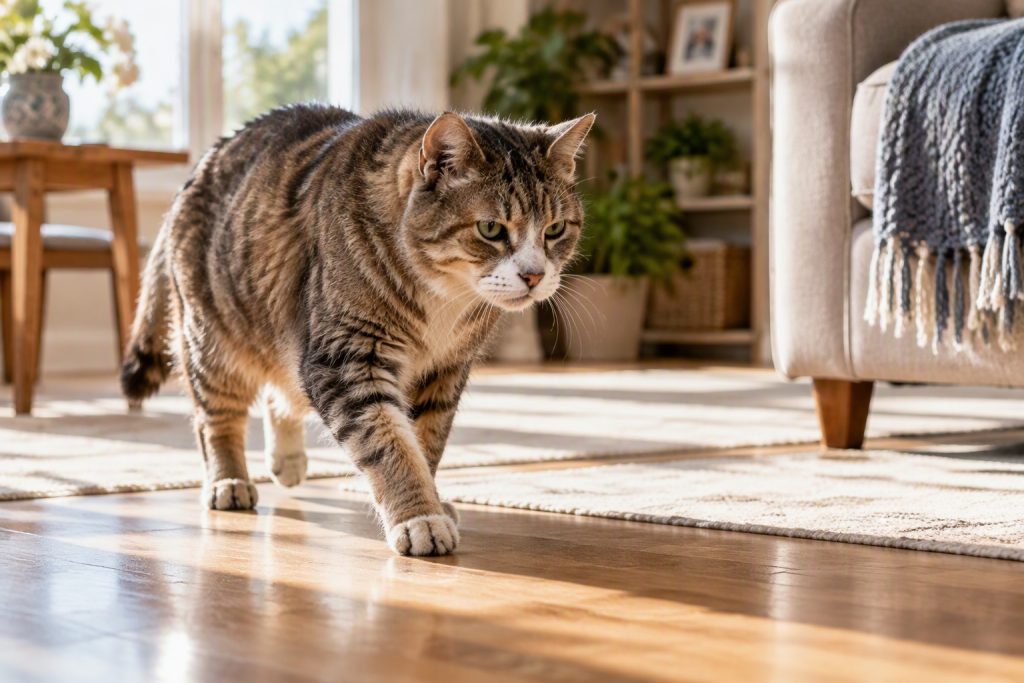
Arthritis in cats usually develops gradually, and the signs are easy to miss. The earliest clue is often a change in jumping: a cat who once leapt onto the worktop now hesitates, uses a chair as a step, or stops jumping altogether. You may notice stiffness when she gets up after resting, or a slow, careful walk. Grooming often declines, because twisting to reach the back and tail becomes painful, so the coat may look dull or greasy and dandruff appears. She might stop using a high perch, sleep more, or become irritable when picked up or touched on the hips. Some cats become withdrawn or start toileting outside the box because climbing in is uncomfortable. Others cry out or resist having their nails trimmed, since holding a paw hurts. Weight loss, reduced appetite, and a reluctance to play are also possible. Because these changes creep in slowly, comparing how she moves now with a year ago is often the clearest way to spot them.

A thickened cloth bed is stepped into rather than climbed over. Try it near the window first, then…
How do I tell stiffness from normal ageing?
Ageing and arthritis overlap, but they are not the same. Getting older does not have to mean pain, and many of the changes owners attribute to age are actually arthritis that can be treated. Normal ageing might mean a cat sleeps a little more or plays less vigorously, but she should still move comfortably and willingly. If she is stiff, hesitant, or slow, or if she avoids activities she used to enjoy, that points to pain rather than simple ageing. A useful test is to watch her rise from rest, jump down from a height, and walk across the room. Hesitation, a hunched posture, or a shortened stride suggests discomfort. Cats are masters at hiding pain, and they rarely limp the way dogs do, so subtle behaviour changes carry a lot of weight. If you are unsure, film her moving and show your vet, because video can reveal a stiffness you might otherwise dismiss as normal.
What can I do to make my cat more comfortable?
There is a great deal you can do, starting with a vet visit, because arthritis pain is treatable. Your vet can confirm the diagnosis and discuss options such as pain relief, joint supplements, or other therapies suited to your cat. Never give human painkillers, as many are toxic to cats. At home, make movement easier: provide ramps or steps to her favourite spots so she does not have to jump, and place everything she needs, food, water, bed, and litter tray, on one level and close together. Keep her warm, since cold worsens stiffness, and give her a soft, supportive bed with low sides so she can step in. Gentle, regular play keeps joints mobile, and gentle grooming helps where she can no longer reach. Our article on the best bed for an older cat looks at supportive options. Small changes add up to a noticeably more comfortable cat.
Should I change my cat’s bedding and litter tray?
Yes, this is one of the simplest and most effective changes. A senior cat with arthritis struggles with high-sided beds, deep litter trays, and anything she must climb into. Swap to a bed with a low, firm entry and good support, ideally with an orthopaedic-style filling that cushions sore joints, and place it somewhere warm, quiet, and easy to reach. For the litter tray, choose a large tray with low sides, so she can step in without lifting her legs high, and avoid covered boxes that require her to crouch and turn in a confined space. Keep the tray close to her resting area, since a long walk to the toilet may lead to accidents. Make sure food and water bowls are raised slightly if she finds bending uncomfortable. Also check that her usual routes are clear and non-slip, since smooth floors can be treacherous for a stiff cat. Our guide to senior cat care covers more adjustments.

Cervical pillow, plush hammock, floor mat and paw cushion — four places to nap. Gives a cat a…
Can diet and weight help arthritis?
Yes, weight is one of the most powerful factors in managing arthritis. Extra body weight puts more load on already painful joints, and even a small reduction can make a noticeable difference to how well a cat moves. If your cat is overweight, talk to your vet about a safe weight-loss plan, since crash dieting is dangerous for cats and can cause liver problems. Feed measured portions, cut back on treats, and use a complete diet appropriate to her age and condition. Some foods and supplements contain ingredients such as omega-3 fatty acids or glucosamine, which may support joint health, though evidence varies and they are not a substitute for veterinary pain relief. Your vet may recommend a joint-support diet as part of a broader plan. Keeping her lean, warm, and gently active is a genuine comfort measure, not just a cosmetic goal. Weigh her regularly so you can track progress.
When should I see a vet about arthritis?
See your vet as soon as you notice signs, rather than waiting for them to become severe. Early treatment keeps cats comfortable and mobile for longer, and it prevents the muscle loss that comes from avoiding movement. Book a visit if your cat hesitates to jump, seems stiff, grooms less, is irritable when touched, or has changed her habits in ways that suggest discomfort. Seek prompt care if she suddenly stops walking, cries out, drags a limb, or seems in acute pain, as that can indicate something more urgent than arthritis. Your vet can examine her joints, assess her mobility, and rule out other causes such as injury or nerve problems. They can then discuss pain relief and a management plan. Because cats are so good at masking pain, an annual check for older cats is wise, and any change in behaviour deserves a mention.
Frequently asked questions
- Can cats get arthritis? Yes, it is common, especially in older cats, and often under-diagnosed.
- Is arthritis in cats just old age? No. It is a painful joint condition that can be treated, not an inevitable part of ageing.
- What is the first sign of arthritis in a cat? Often reluctance to jump or stiffness after resting.
- Can I give my cat human painkillers? No. Many are toxic to cats; only use medication prescribed by your vet.
- Does weight loss help a cat with arthritis? Yes, reducing excess weight eases the load on painful joints.