

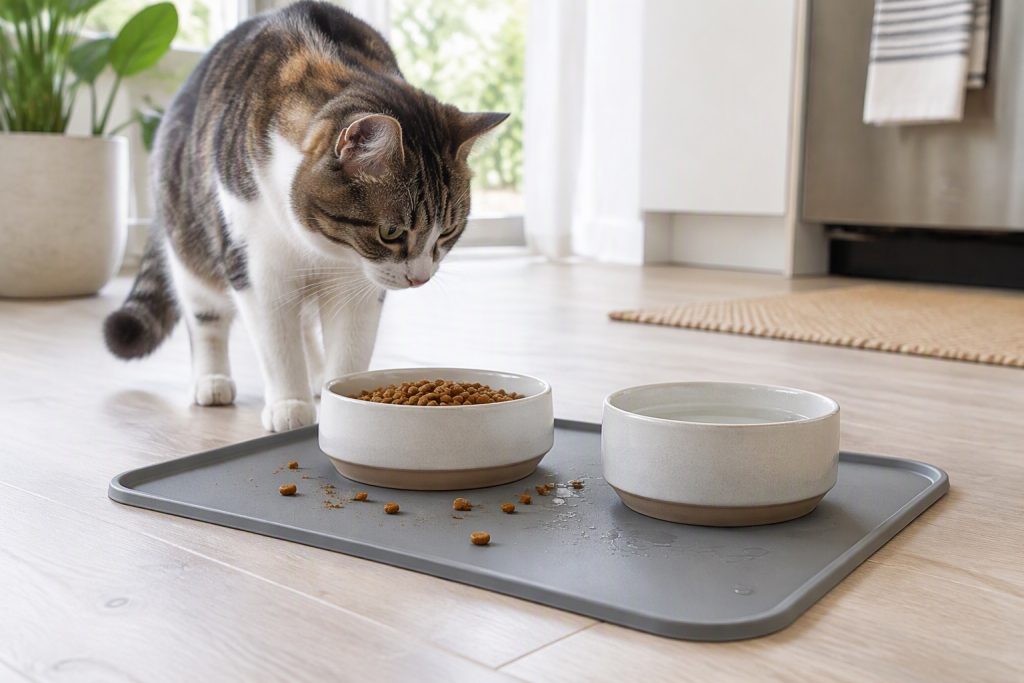
The best cat food mat is a waterproof, non-slip mat that catches spills, crumbs, and the occasional food launch, and that is easy to wipe or rinse clean. Look for a raised edge to contain water and loose kibble, a material that grips the floor so it does not slide, and a size that fits both the bowl and your cat’s messy eating style. Silicone is the most practical choice for most homes, while a fabric-topped mat suits cats who dislike the feel of silicone under their paws.
- Waterproof and non-slip are the top priorities.
- A raised edge contains spills and kibble.
- Silicone is easiest to clean for most homes.
- Size it to the bowl and your cat’s mess.
Why does a cat need a food mat at all?
A food mat solves several small, daily annoyances at once. Cats are messy eaters, and many will pull food out of the bowl to eat it off the floor, scatter kibble while chewing, or dribble water after drinking, all of which damages flooring and creates a hygiene problem. Wet food left on a hard floor can stain and become a bacterial breeding ground, and water tracked from a bowl can warp wood or seep into tile grout. A mat catches the mess in one place, so cleaning becomes a single wipe rather than a whole-floor job. It also protects your floor from scratches caused by a bowl being pushed around, and it gives the feeding station a defined, tidy boundary. For cats who push their bowl across the room, a non-slip mat with a raised rim keeps everything in place, which reduces frustration for both of you. Our article on the best raised cat bowl is a good companion read.
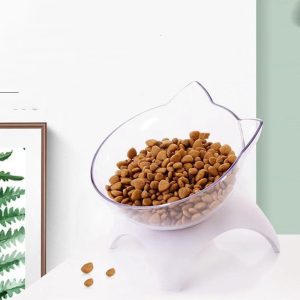
Clear glass bowl holding dry food. Made from plastic. Made for daily feeding and fresh water. Keeps food…
What material is best for a cat food mat?
Silicone is the most practical material for most homes. It is waterproof, non-slip, heat-resistant, and easy to wipe or rinse, and it does not absorb odours or harbour bacteria the way fabric can. Food-grade silicone is also safe if your cat licks it, which matters because many cats will. The main drawback is that some cats dislike the feel of silicone under their paws, especially if it is cool or slightly sticky, and a few will refuse to eat off it. Fabric-topped mats with a waterproof backing offer a more paw-friendly texture and look nicer in a kitchen, but they need washing more often and can hold smells. Rubber-backed mats are a good middle ground, offering grip and a soft feel. Whatever you choose, check that it is food-safe, free of strong chemical smells, and easy to clean thoroughly, because a mat that is hard to clean defeats its own purpose.
What size and shape should I look for?
Choose a mat large enough to hold the bowl plus the scatter zone. A mat that is barely bigger than the bowl will not catch much, so aim for one that extends at least fifteen to twenty centimetres beyond the bowl on all sides, and more for a cat who likes to drag food out. A rectangular mat fits neatly against a wall, while a round mat suits a single bowl in an open space. If you have multiple cats or several bowls, a larger mat or two separate stations work better than cramming everything onto one small mat, and separate stations also reduce food competition. A raised lip or rim is very useful for cats who splash water or push kibble around, because it keeps the mess contained. Check that the mat fits your feeding spot without blocking a walkway, and that it lies flat rather than curling at the edges.
How do I keep a food mat clean and hygienic?
Clean it more often than you might think, because food residue and water create a biofilm quickly. A silicone mat should be wiped after every meal and rinsed or washed with warm water and mild soap at least daily, then dried before the next use. Fabric mats need laundering every few days, or more often if wet food is involved, using a mild, unscented detergent, and they should be dried fully to prevent mildew. Lift the mat and clean underneath it too, because crumbs and moisture collect there and can damage flooring or attract pests. If your cat eats raw or wet food, clean immediately after each meal, since these spoil fast. Check the mat regularly for cracks, peeling, or a lingering smell that will not wash out, and replace it when cleaning no longer works. A clean mat is part of a healthy feeding setup, not just a cosmetic one.
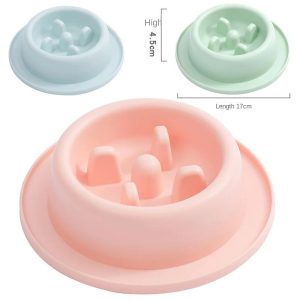
Round bowl with a removable flower insert. Made from PP. Made for daily feeding and fresh water. Keeps…
Are there any safety concerns with food mats?
A few, and they are easy to avoid. Choose food-grade materials, since cats lick their mats, and avoid anything with a strong plastic or chemical smell, which suggests low-quality manufacturing. Check for loose edges, peeling layers, or small pieces that could come off and be swallowed, especially if your cat is a chewer, and remove the mat if she starts chewing it. A mat that slides under the bowl can be frustrating, but a mat that grips too aggressively can be hard to lift for cleaning, so look for one that stays put but is easy to remove. Do not place a mat over a hot surface or near a heater, since some materials can warp or release odours. Finally, make sure the mat does not trap water against a wooden floor, because prolonged moisture can damage the finish. With those checks, a food mat is a simple and safe improvement to any feeding station.
Does a mat help with food storage or portioning?
A mat is about the feeding station, not storage, but the two work together. Keeping the feeding area clean and defined makes it easier to see how much your cat is actually eating, which helps with portion control and with spotting a drop in appetite. A tidy station also makes it simpler to rotate food properly, using older stock first. For storage itself, dry food should be kept in an airtight container in a cool, dark place, and wet food should be refrigerated once opened and used within the time your vet or the label recommends. A mat with a raised rim can hold a small amount of kibble if your cat is a grazer, but it is not a storage solution. Our article on cat food storage covers how to keep food fresh and safe. Together, a good mat and good storage keep mealtimes hygienic and your cat healthy.
Frequently asked questions
- Is silicone safe for a cat food mat? Yes, food-grade silicone is safe and easy to clean. Avoid mats with strong chemical smells.
- What if my cat will not eat off a silicone mat? Try a fabric-topped or rubber-backed mat, since some cats dislike the feel of silicone.
- How often should I wash a food mat? Wipe after every meal, and wash daily for silicone or every few days for fabric.
- Do food mats really help with mess? Yes. A non-slip mat with a raised edge contains spills, crumbs, and water in one place.
- Can a food mat stop my cat pushing her bowl around? A non-slip mat or a bowl with a rubber base reduces sliding, though some cats still enjoy pushing.





