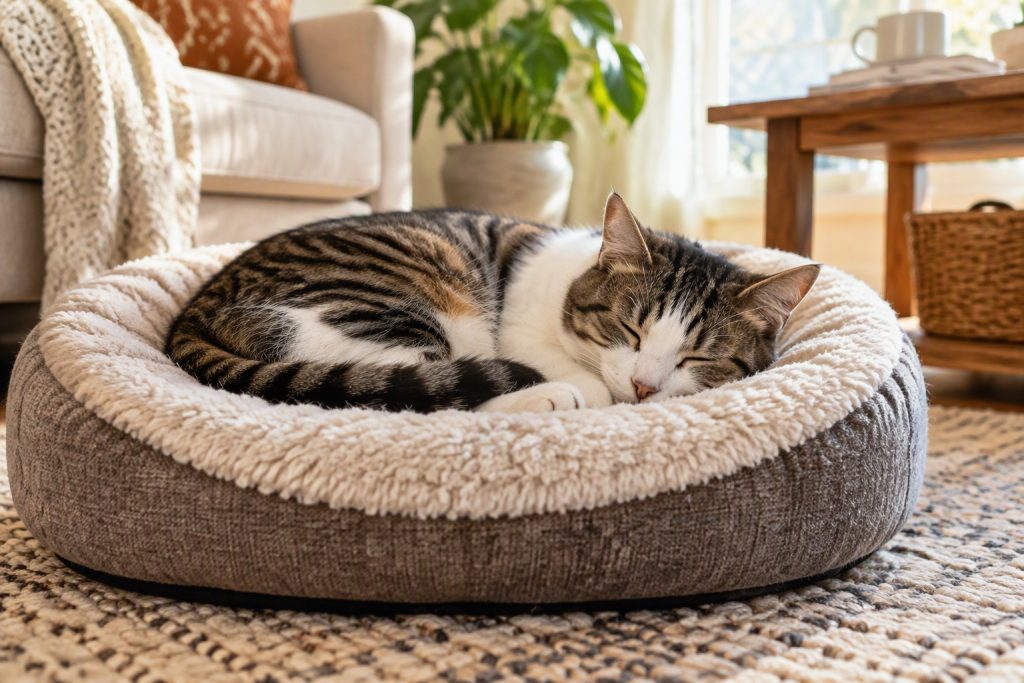
The best heated cat bed is a low-voltage pad or mat with an even, gentle warmth, a chew-resistant cord, and a washable cover, placed inside a bed your cat already likes. Look for one that reaches a comfortable warmth rather than a hot surface, that lets her step off easily, and that stays safe if left on. For most homes a self-warming mat is enough; a powered heated bed is worth it for older, thin, or arthritic cats who genuinely struggle to stay warm.
- Low-voltage, gentle, even warmth beats a hot surface.
- Chew-resistant cord and a washable cover are essential.
- She must be able to step off whenever she likes.
- Best for seniors, thin cats, and arthritis sufferers.
Do cats actually need a heated bed?
Most healthy adult cats do not need one, because they will find warmth on a radiator, a sunbeam, or your lap. A heated bed earns its place for cats who cannot generate or retain heat well: seniors, cats who have lost weight, cats recovering from illness or surgery, short-haired and hairless breeds, and cats with arthritis whose joints stiffen in the cold. For these cats, gentle warmth reduces shivering, eases stiffness, and encourages rest, which supports recovery and comfort. Kittens and very small cats also benefit, but only with supervision and low, safe temperatures. If your cat already sleeps comfortably and eats well, a warm, well-insulated bed may be all she needs. Think of a heated bed as a comfort and welfare tool for cats who need help, not a universal essential. Our article on whether cats need beds explains what a good bed must do.

Cervical pillow, plush hammock, floor mat and paw cushion — four places to nap. Gives a cat a…
What should I look for in a heated cat bed?
Safety comes first. Choose a low-voltage or pet-specific design, ideally one that runs on a reduced voltage supply rather than full mains, and check for a chew-resistant cord and any automatic shut-off or temperature-limiting feature. The surface should feel comfortably warm to your hand, never hot, and the warmth should be even rather than concentrated in one spot. The cover must be removable and machine-washable, because heated bedding collects dander and hair and a greasy cover will discourage her. Look for a low-sided or open design she can walk into and step out of easily, which matters most for older cats. Finally, check the size: she should be able to stretch out or curl up without hanging off the edge. A pad that fits inside a bed she already uses often works better than a whole new bed.
Self-warming versus electric: which is better?
Self-warming mats use a reflective layer to bounce her own body heat back, so they need no electricity and carry no burn or chew risk. They are cheap, safe to leave anywhere, and ideal for cats who just want a warmer surface. Their limitation is that they only work once the cat has been lying on them for a while. Electric heated beds add active warmth and are noticeably better for a cat who is genuinely cold or stiff, but they carry more considerations: cord safety, temperature limits, and power use. A good compromise for many homes is a self-warming mat inside a fleece-lined bed, upgraded to a low-voltage heated pad for a senior or arthritic cat. If in doubt, start passive and add power only if she still seems cold. Cats who overheat easily, such as long-haired breeds, often prefer the passive option.
Is a heated bed safe to leave on all day?
With the right product, yes, but a few rules reduce the risk. Use only a pet-specific heated bed, never a human electric blanket or an unattended hot water bottle, and follow the manufacturer’s guidance on leaving it plugged in. Place the cord where it cannot be chewed, trapped under furniture, or tripped over, and check it regularly for damage. Choose a design with a temperature limit or a low-voltage supply so a fault cannot create a hot spot. Never cover the pad with a heavy, heat-trapping blanket, because that defeats the design and can raise the surface temperature. Give her the option to move away, since a cat who cannot escape a heat source can overheat. Unplug it when you are away for long periods if you are at all unsure. If your cat has a medical condition, ask your vet whether supplemental heat is appropriate.
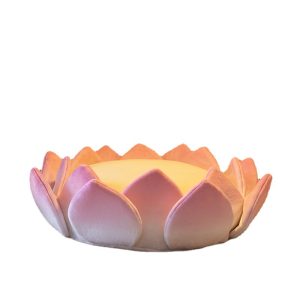
A thickened cloth bed is stepped into rather than climbed over. Try it near the window first, then…
How do I get my cat to use a heated bed?
Placement and familiarity matter more than the warmth itself. Put the bed where she already chooses to rest, in a quiet spot with a view of the room, and give it a few days to stop smelling new. Tuck in a worn item of your clothing or a blanket from her current favourite spot so it carries a familiar scent. Do not pick her up and put her in it, which usually backfires; instead, sit nearby and let curiosity do the work, and reward her with a treat or a stroke when she investigates. Warmth usually seals the deal within a few cold nights. If she still ignores it, try moving it to a different height, angle, or room, or put the pad inside her existing bed. Cats are particular about location, so a bed in the wrong spot will fail no matter how warm it is.
When is a heated bed not the right choice?
A heated bed is a comfort aid, not a treatment, and it is the wrong choice in several situations. A cat who cannot move away from heat, such as one who is weak, paralysed, or recovering from anaesthesia, should not be left on a powered pad without veterinary guidance. Cats who chew cords should never have an electric bed within reach, and cats who overheat easily, pant, or have long, dense coats may be better served by a plain, well-insulated bed. If your cat is seeking warmth obsessively, losing weight, or seems unwell, the underlying issue needs a vet, not a warmer bed. Never use a heated bed to compensate for a genuinely cold room where other problems, such as draughts or poor heating, should be fixed. And if you are managing a cat in warm weather, our guide on the best cooling mat is the seasonal counterpart.
Frequently asked questions
- Are heated cat beds safe? Pet-specific, low-voltage designs with a chew-resistant cord and a temperature limit are safe when used as directed.
- Can I leave a heated bed on all night? If the product is designed for it and the cord is safe, yes, but unplug it if you are unsure.
- What temperature is safe for a cat bed? It should feel comfortably warm to your hand, never hot. Choose products with a built-in limit.
- Do old cats like heated beds? Very often, because warmth eases stiff arthritic joints and helps them regulate temperature.
- Will my cat overheat on a heated bed? Not if she can step off and the surface is only gently warm. Avoid heavy blankets over the pad.