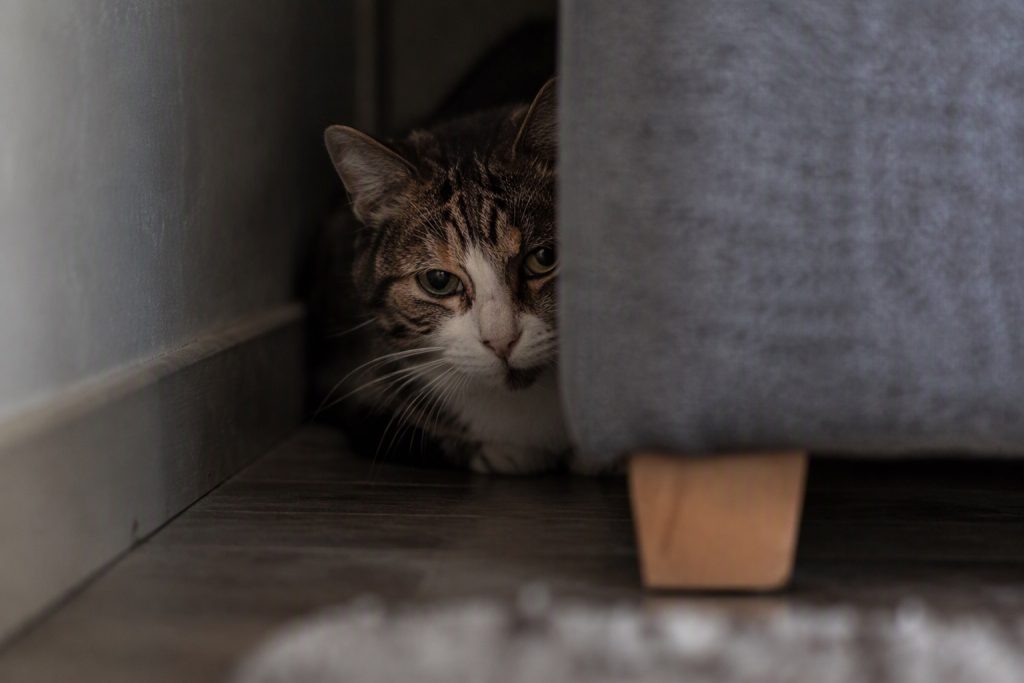
Hiding can be a sign of illness in cats, but it is not automatically one. Cats hide when they feel unsafe, stressed, or in pain, and pain and illness are two of the most common reasons a normally sociable cat suddenly disappears under a bed. The key question is whether the hiding is new and whether it comes with other changes such as not eating, not using the litter tray normally, or being unusually quiet. A cat who hides because a stranger is visiting is fine; a cat who hides for a day and will not eat needs attention.
- New hiding plus not eating is a strong illness signal.
- Cats hide when they are stressed, frightened, or in pain.
- A sudden change from her normal behaviour matters most.
- If it lasts more than a day with other signs, call your vet.
Why do cats hide when they feel unwell?
Hiding is a survival instinct. In the wild, a cat who is injured or ill is vulnerable, so her instinct is to find a quiet, enclosed place where a predator cannot reach her and where she can rest without being disturbed. This instinct does not disappear in a domestic cat, which is why a sick cat often retreats under a bed, behind a sofa, or into a wardrobe. She is not sulking or being antisocial; she is doing what feels safest when her body is telling her something is wrong. Because cats are also masters at masking pain and weakness, hiding is sometimes the only outward sign you get. That is exactly why a change in hiding behaviour deserves attention rather than being dismissed as a mood. The more you know her normal habits, the sooner you will notice.

Cervical pillow, plush hammock, floor mat and paw cushion — four places to nap. Gives a cat a…
How do I tell illness hiding from normal hiding?
Context and duration are your best guides. Normal hiding is triggered by something identifiable, such as visitors, a new baby, a loud appliance, or a move, and the cat returns to her usual routine once the trigger passes. Illness hiding tends to be new, unexplained, and persistent, and it usually comes with at least one other change: eating less, drinking differently, sleeping more, avoiding being touched, walking stiffly, or using the litter tray differently. A cat who hides but still comes out to eat, play, and groom is likely coping; a cat who hides and stops doing those things is not. Watch for how she reacts when you offer food or sit quietly nearby. If she will not come out even for a favourite treat, or if the hiding lasts more than a day alongside other signs, treat it as a health concern. Our guide on why cats hide under the bed covers the behavioural side.
What illnesses make cats hide?
Almost any condition that causes pain or malaise can lead to hiding. Dental disease and oral pain are very common culprits, because a cat with a sore mouth eats less and retreats. Arthritis makes movement painful, so older cats hide in warm, quiet spots and stop jumping up. Urinary problems, including infections and blockages, cause discomfort and litter tray avoidance, and a cat may hide after painful attempts to urinate. Kidney disease, hyperthyroidism, pancreatitis, and gastrointestinal problems all cause cats to feel unwell and withdraw. Fever, infections, and injuries from a fight or a fall also drive hiding. In older cats, cognitive changes can cause confusion and increased hiding. Because the list is long, you cannot diagnose at home; what matters is noticing the pattern and getting professional assessment early, when treatment is easiest.
What other signs should I watch for?
Hiding rarely appears alone. Look for reduced appetite or refusing food entirely, which is a red flag in any cat. Watch for changes in drinking and urination, vomiting, diarrhoea, constipation, or straining in the litter tray. Note any weight loss, a dull or greasy coat, or reduced grooming, and the opposite, excessive grooming in one area, which often signals pain. Check her posture: a hunched back, a lowered head, squinted eyes, and ears turned sideways are common pain signals. Listen for unusual vocalisation, and watch whether she avoids being picked up or touched in a particular place. Also note changes in sleep, activity, and interaction with you and other pets. Two or three of these together with new hiding is a clear reason to call your vet. Our article on telling whether a cat is in pain explains the subtle signs.

A thickened cloth bed is stepped into rather than climbed over. Try it near the window first, then…
When is hiding an emergency?
Some signs need immediate veterinary care rather than a routine appointment. Seek urgent help if your cat is hiding and also struggling to urinate, especially a male cat straining with little or no urine, because a blocked bladder is rapidly fatal. Breathing difficulties, open-mouth breathing, collapse, seizures, bleeding, a swollen or painful abdomen, repeated vomiting, or a sudden inability to use a limb are all emergencies. A cat who is hiding and is cold to the touch, unresponsive, or extremely weak should be seen at once. If she has had a fall, a fight, or possible access to a toxin, do not wait. In an emergency, do not try to force her out and handle her roughly; approach quietly, place her gently in a carrier, and call ahead so the clinic is ready. Trust your instincts if something feels seriously wrong.
How do I help a hiding cat without adding stress?
Give her control and keep the environment calm. Do not drag her out from under the bed, which increases fear, but do make sure she has an accessible, quiet, warm spot with food, water, and a litter tray within easy reach so she does not have to travel. Sit quietly nearby and talk softly, offering a favourite treat or a little wet food to tempt her. Keep other pets and children away, reduce noise, and avoid strong smells. Use a pheromone diffuser if it helps. If she comes out and wants contact, let her set the pace. If she is eating, drinking, and toileting normally and improves within a day, watch and wait. If not, or if you are worried at all, call your vet, because early assessment is far kinder than waiting. For anything persistent, professional advice is the right next step.
Frequently asked questions
- Is it normal for a cat to hide all day? Not if it is new. Occasional hiding is normal, but all-day hiding with reduced eating is a warning sign.
- Will my cat hide before she dies? Hiding is common in very unwell cats, but it is not a reliable sign of dying. It always warrants a vet check.
- How long can a cat hide before it is a problem? More than a day, especially with other changes, is worth a vet call.
- Should I force my cat out from hiding? No. Forcing her out increases fear. Tempt her gently and seek veterinary advice.
- What if she hides but still eats? That is more reassuring, but a sudden, persistent change in behaviour still deserves attention.