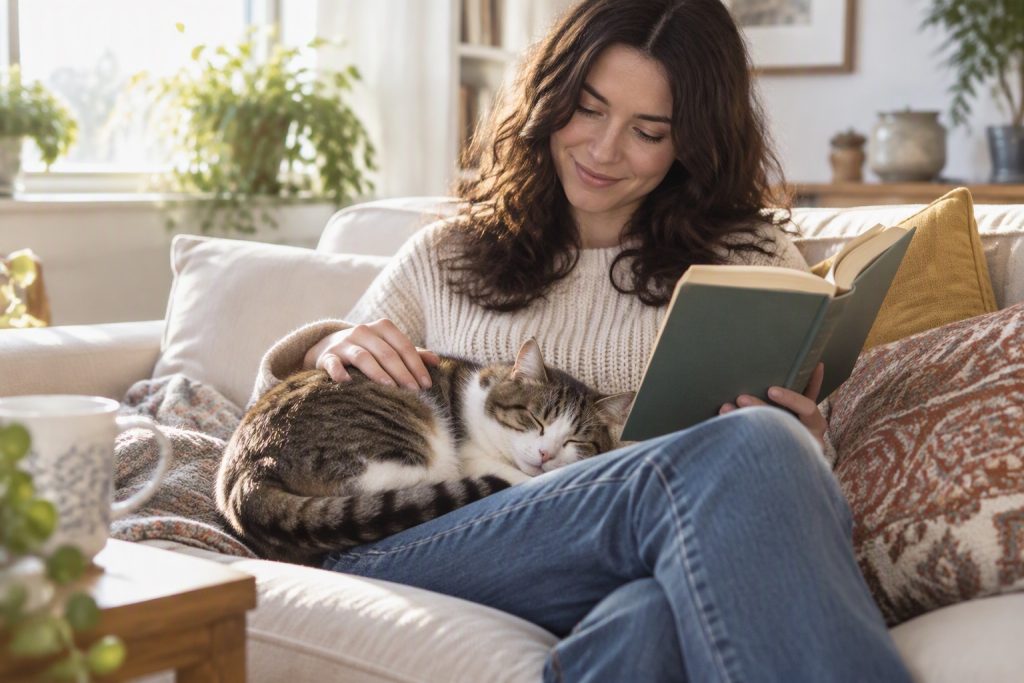
Your cat sleeps on your lap because your lap combines everything a cat wants: warmth, a soft surface, a familiar smell, and the safety of being close to a trusted companion. Cats are social animals who bond through proximity, and a lap is one of the highest compliments a cat can pay. It is usually a sign of trust and comfort rather than a problem, though a sudden new habit of constant lap-sitting can occasionally reflect a cat who feels cold or unwell.
- Your lap is warm, soft, and smells safely of you.
- Lap-sitting is a strong sign of trust and bonding.
- It can also be a cat seeking warmth when cold.
- A sudden clingy change is worth a health check.
Why does my cat choose my lap specifically?
A lap offers a combination that few other spots match. It is warm, because your body generates heat, and it is soft and contoured, which suits a cat’s preference for a surface that holds her shape. It smells strongly of you, and scent is how cats identify safety and belonging, so your lap carries the reassuring signal of a bonded companion. It also moves gently with your breathing, which many cats find soothing. On top of that, a lap is usually in a place where you are relaxed and still, which is exactly when a cat feels safe enough to sleep. Cats are also opportunists: if your lap has been a good, undisturbed sleep spot before, she will return to it. In multi-cat homes, the lap may become a prized resource, and the cat who claims it is often the most confident or the most bonded.
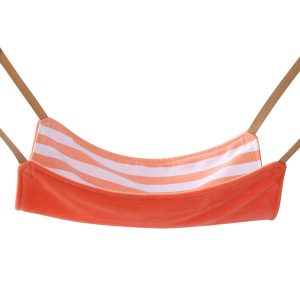
Cervical pillow, plush hammock, floor mat and paw cushion — four places to nap. Gives a cat a…
Is lap-sleeping a sign my cat loves me?
It is a strong sign of trust, though love is a human word for something feline. A cat who sleeps on your lap is choosing to be vulnerable in your presence, with her guard down and her body relaxed, and cats do not do that with anyone they consider a threat. She is treating you as a safe base, which is the foundation of the cat-human bond. That said, cats also sit on laps for warmth and comfort, so it is not purely affection. The clearest evidence is the quality of the interaction: slow blinking, kneading, purring, head-bunting, and a relaxed body all point to genuine comfort and attachment. Cats who have been well socialised as kittens and handled gently are more likely to become lap cats, while some cats never enjoy it, and neither reflects how much they care. Our article on why cats sleep on your chest looks at the closest version of this behaviour.
Does sleeping on my lap mean she is cold or unwell?
Often it is simply comfort, but a change matters. If your cat has always been independent and suddenly wants to sit on you constantly, especially while shivering, hunched, or pressing against you for heat, she may be cold. Older, thin, and unwell cats feel the cold more, and a cat seeking warmth obsessively can be showing early signs of illness such as thyroid or kidney problems. A cat in pain may also seek the comfort and warmth of a person, and cats who are anxious often cling more. Look for other changes: appetite, drinking, litter tray habits, grooming, activity, and whether she avoids being touched anywhere. If the clinginess is new, persistent, and comes with any of those signs, book a vet visit. If she is otherwise normal and just more affectionate, it is likely a seasonal or emotional shift. For anything persistent, always ask a vet.
Should I let my cat sleep on my lap?
If you enjoy it, yes, with a few sensible boundaries. Letting a cat sleep on your lap strengthens your bond and gives her a reliable place to rest, which is good for her welfare. The main costs are practical: a sleeping cat will keep you still, she may leave fur, and you may need to get up. It is entirely fine to move her gently when you need to, and doing so will not damage your relationship as long as you are calm and kind. Avoid waking her abruptly, and never punish her for sitting on you. If you dislike it, redirect her to a nearby heated bed or blanket rather than pushing her away roughly, so she still gets warmth and closeness. Cats who learn that a lap is sometimes available but not always cope fine. The real risk is only if you let a very heavy or elderly cat sleep on you for hours and both of you end up stiff.
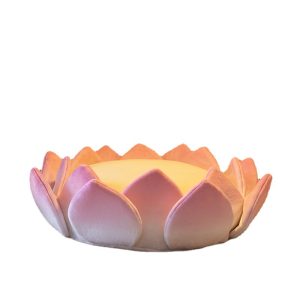
A thickened cloth bed is stepped into rather than climbed over. Try it near the window first, then…
How do I encourage or discourage lap-sitting?
To encourage it, sit still in a quiet spot at a time she is normally sleepy, drape a soft blanket over your lap, and let her come to you. Do not reach for her or pick her up; let her choose, and reward her with a calm stroke and a soft voice when she settles. Avoid sudden movements that break trust. To discourage it gently, offer a warm alternative right beside you, such as a heated bed or a folded fleece on the sofa arm, and place her there when she climbs on you. Be consistent, because mixed signals confuse cats. If she is only lap-sitting because the room is cold, warming the room or giving her a heated bed usually solves it. Some cats also knead while settling, and our article on why cats knead explains that comforting behaviour and how to protect your clothes.
When is lap-sitting a problem?
Lap-sitting itself is rarely a problem, but the reasons behind it sometimes are. See a vet if the behaviour is new and intense, if she is reluctant to leave your lap to eat or use the litter tray, or if she seems uncomfortable rather than relaxed, shifting, panting, or unable to settle. A cat who presses her head into you or hides her face may be in pain, and one who is unusually clingy after a change such as a move, a loss, or a new baby may be stressed. Watch for weight loss, increased drinking, or reduced grooming alongside the clinginess. For very old cats, wanting to be close more often can reflect failing senses or cognitive change, which is worth discussing with your vet. Otherwise, enjoy it: a lap cat is a happy cat, and the behaviour is one of the nicest parts of living with one.
Frequently asked questions
- Why does my cat only sleep on my lap and not my partner’s? She may prefer your warmth, stillness, or scent, or you may simply be the calmer, more available lap.
- Does lap-sitting mean my cat is bonded to me? It is a strong sign of trust, though warmth and comfort also play a part.
- Is it bad to move my cat off my lap? No, as long as you do it gently and calmly. It will not harm your bond.
- Why does my cat knead my lap? Kneading is a kittenhood comfort behaviour that usually signals she feels safe and content.
- Why has my cat suddenly become a lap cat? It may be cold weather, stress, or illness. If it is new and persistent, ask your vet.